
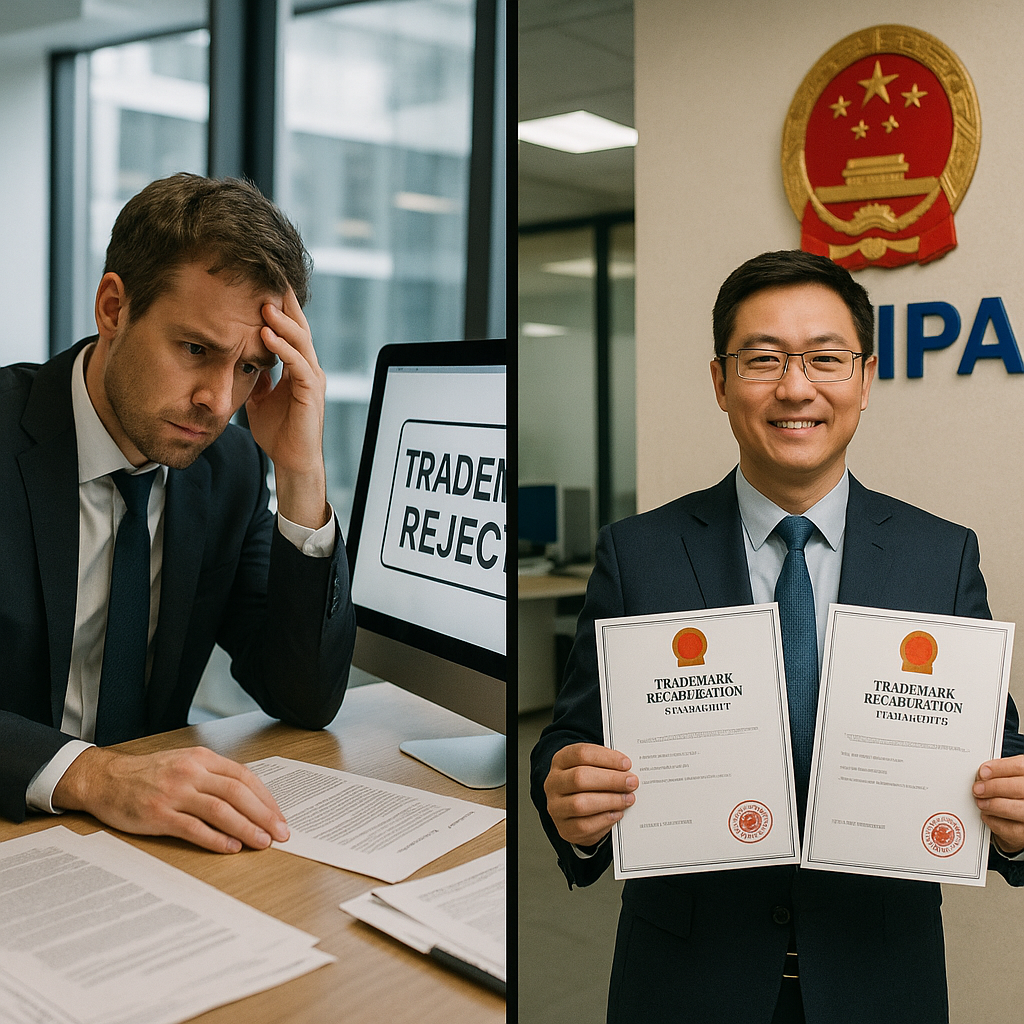
Picture this: You’ve spent years building your brand, crafting the perfect logo, and establishing your reputation in international markets. You’re ready to expand into China, one of the world’s largest consumer markets. You land in Shanghai, excited about the opportunities ahead, only to discover that someone has already registered your trademark—and they’re demanding a hefty sum to sell it back to you. Sound like a nightmare? It happens more often than you’d think.
Welcome to the complex world of intellectual property protection in China, where the rules are different, the stakes are high, and timing is everything. Unlike many Western jurisdictions where using a trademark first gives you rights, China operates on a fundamentally different principle: whoever files first, wins. This territorial approach to IP protection means that your hard-earned brand recognition elsewhere in the world offers zero protection in China unless you’ve taken proactive steps to secure your rights locally.
The good news? Once you understand the system, navigating China’s IP landscape becomes manageable. The better news? With the right strategies and tools, you can protect your intellectual property effectively and focus on what really matters—growing your business.
Understanding China’s IP Protection Framework
At the heart of China’s intellectual property system sits the China National Intellectual Property Administration (CNIPA), the government agency responsible for administering patents, trademarks, and other IP rights. CNIPA processes more trademark applications annually than any other IP office in the world, handling millions of filings each year. This massive volume reflects both China’s economic dynamism and the critical importance Chinese businesses place on IP protection.
But CNIPA isn’t working alone. China has established specialized intellectual property courts in major cities like Beijing, Shanghai, and Guangzhou, staffed with judges who possess deep expertise in IP law. These courts handle complex IP disputes, bringing consistency and sophistication to IP enforcement that was previously challenging to achieve through general courts. For foreign businesses, this specialization represents a significant improvement in the predictability and fairness of IP litigation outcomes.
The cornerstone of China’s trademark system—and the source of many foreign businesses’ frustrations—is the first-to-file principle. Unlike the United States, where trademark rights arise from use, China awards trademark rights to whoever files the application first, regardless of prior use elsewhere. This means a competitor, a former business partner, or even a complete stranger could register your brand name in China before you do. Once registered, that person holds legitimate trademark rights under Chinese law, leaving you in the uncomfortable position of either negotiating a buyback, rebranding entirely for the Chinese market, or engaging in costly litigation to challenge the registration.
This isn’t just a theoretical concern. Trademark squatting—registering famous foreign brands with the intent to sell them back to the rightful owners—has been a persistent challenge in China. While Chinese authorities have taken steps to combat bad-faith registrations, the first-to-file system remains in place, making early registration the single most important step any business can take before entering the Chinese market.
Key Rights and Registration Strategies
Understanding what you need to protect and how to protect it forms the foundation of any successful IP strategy in China. Let’s break down the major categories:
Trademarks represent your brand identity—your company name, logo, product names, and even distinctive packaging. In China, trademark registration is relatively straightforward but requires careful attention to detail. You must register your mark in the specific classes of goods or services you plan to offer. Many foreign businesses make the mistake of registering only in their primary business category, only to find competitors using their brand in adjacent categories. Smart trademark strategies involve registering defensively across multiple relevant classes and considering Chinese-language versions of your brand name, as consumers may transliterate your name in ways you didn’t anticipate.
Patents protect your innovations, whether they’re groundbreaking inventions, useful improvements, or distinctive designs. China recognizes three types of patents: invention patents (similar to utility patents in the U.S.), utility model patents (protecting practical innovations with a lower inventive threshold), and design patents (protecting ornamental designs). The examination process for invention patents can be rigorous and lengthy, but utility model patents offer faster protection for incremental innovations. Critically, China operates on a first-to-file system for patents as well, so filing early—even before your product launches—is essential.
Copyrights automatically arise when you create original works, but registration provides crucial advantages in enforcement. While China is a signatory to the Berne Convention, meaning your foreign copyrights receive some protection, registering your copyrights with the National Copyright Administration of China strengthens your position significantly. This applies to software code, marketing materials, product documentation, and any other creative works your business produces.
Trade secrets require a different approach entirely. Unlike registered IP rights, trade secrets depend on maintaining confidentiality. China’s Anti-Unfair Competition Law provides protection for trade secrets, but enforcement requires demonstrating that you took reasonable measures to keep the information secret. This means implementing robust confidentiality agreements, limiting access to sensitive information, and documenting your security measures.
The alignment with local practices matters enormously. Foreign businesses often try to apply their home country’s IP strategies directly to China, leading to gaps in protection. Understanding China business laws comprehensively helps prevent these costly oversights. Chinese IP law has evolved rapidly, but it developed from different philosophical foundations than Western IP systems. Taking time to understand these differences—and working with advisors who understand both systems—prevents costly mistakes.
Enforcement Paths and Remedies
Having IP rights means little if you can’t enforce them. China offers multiple enforcement avenues, each with distinct advantages:
Administrative enforcement through local IP offices provides a fast, relatively inexpensive path to stop infringement. These offices can investigate suspected infringers, order them to cease infringing activities, and confiscate infringing goods. Administrative enforcement works particularly well for clear-cut cases of counterfeiting or trademark infringement at the local level. The process typically moves faster than court litigation, making it attractive for situations requiring quick action.
Civil litigation through the courts allows you to seek damages and permanent injunctions. China’s specialized IP courts have dramatically improved the sophistication of IP litigation, with judges who understand complex technical and legal issues. Recent years have seen significant increases in damage awards, making litigation a more credible deterrent to infringement. However, litigation requires patience—cases can take a year or longer to resolve—and the costs can be substantial.
Criminal prosecution represents the most serious enforcement option, reserved for cases involving significant commercial counterfeiting or IP theft. Criminal penalties can include imprisonment and substantial fines. While the threshold for criminal prosecution is high, it sends the strongest possible message to would-be infringers.
For foreign businesses, establishing proactive monitoring and enforcement strategies is non-negotiable. This means regularly searching trademark databases for confusingly similar applications, monitoring marketplaces (both online and offline) for counterfeit goods, and maintaining relationships with enforcement authorities. Waiting until infringement is widespread makes enforcement exponentially more difficult and expensive.
The reality is that infringement happens. China’s vast manufacturing ecosystem and enormous e-commerce platforms create opportunities for bad actors. But businesses that establish monitoring systems, act quickly when they detect infringement, and maintain consistent enforcement see dramatically better outcomes than those that adopt a reactive, sporadic approach.
Recent Reforms and Their Impact
China’s IP system continues to evolve rapidly. Recent CNIPA guidelines and legal reforms reflect the Chinese government’s growing commitment to strengthening IP enforcement, driven by both domestic innovation needs and international pressure.
The 2023 revisions to the Patent Examination Guidelines brought significant changes, particularly regarding artificial intelligence and data-related innovations. These revisions clarified examination standards for AI algorithms and big data applications, reflecting China’s recognition of data as a new form of intellectual property. For technology companies, these changes mean clearer pathways to patent protection for software and AI-driven innovations.
Trademark examination has also become more rigorous, with CNIPA taking stronger stances against bad-faith trademark applications. New guidelines direct examiners to reject applications that appear designed to squat on others’ brands or to preemptively register marks related to emerging trends or popular culture. While enforcement of these standards remains imperfect, the direction is encouraging.
Perhaps most significantly, China has been substantially increasing penalties for IP infringement. Amendments to the Trademark Law and Patent Law have raised maximum statutory damages and introduced punitive damages for willful infringement. Courts are awarding larger damages than in previous years, making IP infringement a riskier proposition for potential infringers.
For foreign businesses, these reforms represent both opportunities and new responsibilities. The strengthened enforcement environment makes protecting your IP more viable, but it also raises the stakes for getting your IP strategy right from the beginning. Companies that filed defensive trademark applications years ago may need to revisit their registrations to ensure they align with current examination standards. Businesses relying on trade secrets need to ensure their confidentiality measures meet evolving legal requirements.
Building a Comprehensive Compliance Strategy
Theory meets practice in your compliance strategy. Here’s how smart businesses protect their IP in China:
Start with early registration. File trademark applications before you enter the Chinese market—ideally before you even announce your China plans publicly. Consider registering both English and Chinese versions of your brand, and think defensively about related marks that competitors might try to register. For patents, file as early as possible, leveraging international agreements like the Patent Cooperation Treaty to establish priority dates.
Use China’s specialized IP courts when litigation becomes necessary. These courts offer more sophisticated analysis and more predictable outcomes than general courts. If your business involves complex technology or operates in major cities, filing in Beijing, Shanghai, or Guangzhou’s IP courts typically provides advantages.
Build partnerships with local counsel who understand both Chinese IP law and your business context. IP protection isn’t just a legal exercise—it’s a business strategy that requires understanding local markets, competitor behavior, and enforcement realities. The best IP advisors combine legal expertise with practical business sense.
Integrate IP protection into your overall business planning. Too many companies treat IP as an afterthought or a purely legal matter. In China, IP strategy should influence decisions about manufacturing partnerships, distribution channels, product launches, and market entry timing. Involving IP considerations early prevents problems that become exponentially more expensive to fix later.
Leverage technology to monitor your IP and detect infringement early. E-commerce platforms in China generate enormous volumes of potentially infringing activity. Manual monitoring can’t keep pace. Modern AI-powered tools can scan marketplaces, identify potential infringement, and even initiate enforcement actions, dramatically reducing the burden on your team while improving protection outcomes.
Common Pitfalls and Best Practices
Learning from others’ mistakes saves time, money, and frustration. Here are the most common pitfalls foreign businesses encounter:
Delaying trademark registration until after market entry. By the time you’re ready to launch, someone may have already registered your mark. Registration takes months, so start early.
Failing to register Chinese-language versions of your brand. Chinese consumers will create their own transliterations of your name. Register the most common versions before others do.
Inadequate documentation for trade secrets. If you can’t prove you took reasonable measures to protect confidential information, Chinese courts won’t protect it as a trade secret either.
Choosing the wrong Chinese partners without proper IP protection in contracts. Joint ventures and manufacturing relationships require robust IP clauses, confidentiality provisions, and clear ownership terms.
Ignoring small-scale infringement. In China, letting infringement go unchallenged signals that you’re not serious about enforcement. Consistent enforcement, even of minor violations, builds credibility with both infringers and enforcement authorities.
Best practices flip these pitfalls into opportunities. Register early and comprehensively. Draft contracts with Chinese law in mind, not just translations of your home country templates. Build relationships with enforcement authorities before you need them. Most importantly, treat IP protection as an ongoing business process, not a one-time legal task.
Navigating China’s complex IP landscape doesn’t have to be overwhelming. Modern AI legal solutions like iTerms AI Legal Assistant bring sophisticated legal intelligence to your fingertips, helping you understand requirements, draft compliant agreements, and make informed decisions about IP protection. With bilingual legal comprehension specifically designed for China business scenarios, iTerms bridges the gap between Western business practices and Chinese legal requirements, making professional-grade IP guidance accessible and practical.
Your brand represents years of work, investment, and reputation. Don’t let someone else register it tomorrow. Take action today to secure your IP rights in China, and you’ll build a foundation for confident, sustainable business growth in one of the world’s most dynamic markets.