
When Sarah Chen, a Toronto-based entrepreneur, decided to expand her manufacturing operations to Shenzhen, she thought the hardest part would be finding the right factory partner. Instead, she found herself drowning in a sea of incomprehensible legal documents. The Chinese contract her potential partner sent contained terms like “合理补偿” and “不可抗力,” which her regular translator rendered as “reasonable compensation” and “force majeure.” But what did “reasonable” mean in Chinese legal context? Would a Chinese court interpret it the same way as a Canadian one? Six months and $15,000 in legal consultation fees later, Sarah finally signed a contract—but she knew there had to be a better way.
Sarah’s story isn’t unique. Every day, foreign business owners, expatriates, international legal professionals, and global corporate clients face the daunting challenge of navigating the intricate maze of Chinese-English legal terminology. The complexity doesn’t just stem from language differences—it’s rooted in fundamentally different legal systems. China operates under a civil law framework with socialist characteristics, while most Western countries follow common law traditions. Terms that seem equivalent on the surface often carry vastly different legal implications, enforcement mechanisms, and precedential weights. A “contract” in English common law involves offer, acceptance, and consideration, but the Chinese “合同” operates under different formation rules and validity requirements. This jurisdictional gap creates barriers that can invalidate agreements, complicate dispute resolution, and expose businesses to unexpected legal and financial risks.
For expatriates living in China, these barriers impact daily life. Signing an employment contract, purchasing property, or even resolving a consumer dispute requires understanding legal terminology that doesn’t translate neatly. International legal professionals serving clients with China operations struggle to provide accurate advice when legal concepts don’t map clearly across systems. Global corporate clients face the highest stakes—a single mistranslation in a multi-million dollar contract can trigger years of litigation and catastrophic financial losses.
The AI Revolution in Legal Translation
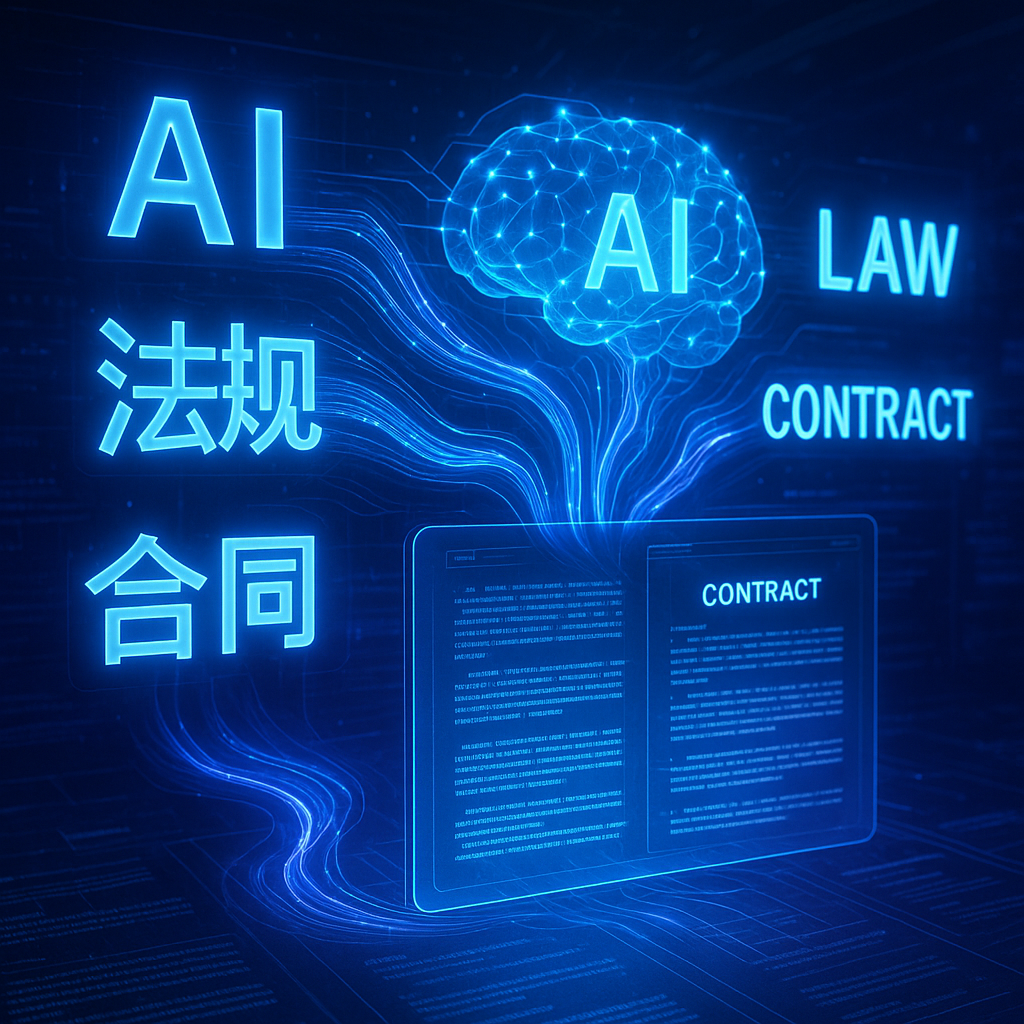
Enter the legal terminology AI translator—a game-changing technology that’s fundamentally transforming how we bridge Chinese-English legal barriers. Unlike traditional translation tools that simply convert words from one language to another, specialized AI legal terminology translators employ sophisticated neural machine translation (NMT) engines trained specifically on legal corpora. These systems don’t just translate; they understand legal context, recognize jurisdictional nuances, and map legal concepts across different legal frameworks.
The architecture of modern AI legal terminology translators combines several powerful components working in concert. At the core lies neural machine translation technology, which uses deep learning algorithms trained on millions of legal documents spanning contracts, court judgments, statutes, and regulatory filings. This training enables the AI to recognize patterns in how legal concepts are expressed across both languages and legal systems. When you input “breach of contract,” the system doesn’t just output “违约”—it understands whether the context requires “违反合同,” “违约行为,” or another variant depending on the specific legal scenario.
Domain-specific terminology management forms the second critical component. Leading AI legal translators maintain vast, continuously updated glossaries of legal terms with verified equivalents. These aren’t simple word-for-word translations but carefully curated mappings that account for legal system differences. For instance, the English term “consideration” in contract law doesn’t have a direct Chinese equivalent because Chinese contract law doesn’t require consideration for contract validity. A sophisticated AI translator recognizes this gap and provides appropriate context rather than forcing an inaccurate equivalence.
The third essential element is human-in-the-loop editing. While AI handles the heavy lifting of initial translation, human legal experts review and refine outputs to ensure accuracy and appropriateness. This hybrid approach combines the speed and consistency of AI with the nuanced understanding and cultural awareness of experienced legal professionals. Translation memory technology supports this process by storing previously translated segments, ensuring that the same legal phrase is always translated consistently across documents—critical for maintaining coherence in ongoing business relationships and litigation matters.
✓ Quality assurance mechanisms provide the final layer of reliability. Advanced AI translators employ multiple validation checks: terminology consistency verification, syntax error detection, completeness validation, and format preservation. Some systems even perform back-translation—translating the target text back to the source language to identify potential meaning shifts or ambiguities that require human review.
Transforming Legal Operations Across Stakeholder Groups
For foreign business owners and entrepreneurs like Sarah, AI legal terminology translators deliver transformative benefits. The most immediate impact is ⚡ speed—what once required days or weeks of back-and-forth with translators and legal consultants now takes hours. When reviewing a Chinese supply agreement, an AI translator can process a 50-page contract in minutes, providing an initial translation that legal counsel can then review and refine. This acceleration dramatically reduces time-to-market for new business initiatives and enables faster negotiation cycles.
💰 Cost savings prove equally compelling. Traditional legal translation services charge $0.15 to $0.30 per word for Chinese-English legal documents, meaning a typical commercial contract could cost $3,000 to $6,000 to translate. AI translators reduce these costs by 70-80%, making professional legal translation accessible to small and medium enterprises that previously couldn’t afford it. For global corporate clients managing hundreds or thousands of documents annually, the cumulative savings reach hundreds of thousands of dollars.
Consistency represents another crucial advantage. When dealing with multiple contracts, regulatory submissions, or litigation documents, maintaining consistent terminology is essential. Human translators working on different documents at different times may translate the same term differently, creating confusion and potential legal vulnerabilities. AI translators with robust translation memory ensure that “intellectual property rights” always translates to “知识产权” across all documents, and vice versa, eliminating ambiguity and strengthening legal positions.
For expatriates navigating personal legal matters in China, AI legal terminology translators provide empowerment and confidence. Reading an employment contract, understanding visa requirements, or comprehending a property lease agreement becomes manageable rather than overwhelming. The technology democratizes access to legal understanding, enabling individuals to make informed decisions about their lives and livelihoods without complete dependence on expensive legal counsel for every document.
International legal professionals serving clients with China operations gain a powerful research and drafting tool. When advising on cross-border transactions, these attorneys can quickly translate Chinese legal precedents, regulations, and industry standards to inform their counsel. The technology supports critical legal processes including contract drafting, where lawyers can generate bilingual contracts with confidence in terminological accuracy; court filings, where accurate translation of evidence and pleadings can determine case outcomes; and regulatory submissions, where precision in compliance documentation prevents costly delays and rejections.
The Technology Landscape: Tools and Standards
The AI legal translation industry has matured significantly, with several sophisticated platforms emerging as leaders. DeepL, renowned for its neural network translation quality, offers specialized legal translation capabilities with context-aware terminology handling. The platform’s CAT (Computer-Assisted Translation) tool integrates translation memory and glossary management, enabling legal teams to build proprietary terminology databases that reflect their specific practice areas and jurisdictional focus. For legal professionals translating Chinese contracts regularly, DeepL’s ability to learn from corrections and improve over time proves invaluable.
Smartcat represents another industry leader, offering a collaborative translation platform specifically designed for legal and business documents. Its AI translation engine handles Chinese-English legal terminology with impressive accuracy, while its workflow management tools enable seamless collaboration between AI translation, human post-editing, and quality review. Smartcat’s vendor management system allows law firms and corporate legal departments to build networks of specialized legal translators who can review and refine AI-generated translations within an integrated platform.
Quality standards play a crucial role in ensuring reliability. ISO 17100, the international standard for translation services, establishes rigorous requirements for translation processes, translator qualifications, and quality assurance protocols. While originally designed for human translation services, forward-thinking AI translation providers are adapting these standards to hybrid AI-human workflows. ISO 17100 compliance ensures that legal translations undergo proper validation, that translators possess appropriate qualifications and expertise, and that quality control mechanisms catch errors before documents reach clients.
For legal translation specifically, ISO 20771 adds critical requirements around competence, confidentiality, and risk management. Legal translations carry higher stakes than general content—errors can invalidate contracts, compromise privileged communications, or expose clients to regulatory penalties. Translators working under ISO 20771 standards must demonstrate legal knowledge in relevant jurisdictions, maintain strict confidentiality protocols, and follow documented procedures for handling sensitive legal information. When selecting an AI legal terminology translator, verifying ISO compliance provides assurance that the platform meets internationally recognized quality and security standards.
Data security represents a paramount concern when translating confidential legal documents. Leading platforms employ bank-level encryption, secure data centers, and strict access controls to protect sensitive client information. Many offer on-premise deployment options for clients with stringent data residency requirements, allowing legal departments to leverage AI translation capabilities while keeping documents within their own secure infrastructure.
Navigating Challenges and Best Practices
Despite remarkable advances, AI legal terminology translators still face significant challenges that users must understand and address. Term equivalence gaps remain perhaps the most persistent issue. As noted earlier, many legal concepts simply don’t map cleanly across Chinese and Western legal systems. The Chinese legal concept of “良好风俗” (good morals and customs) as a limit on contractual freedom has no precise English common law equivalent. AI translators must either provide literal translations that may confuse readers or offer explanatory translations that add interpretation beyond pure translation. Best practice involves maintaining updated, jurisdiction-specific glossaries that provide context and notes on equivalence gaps, enabling users to understand when and why exact equivalence isn’t possible.
Jurisdictional nuances compound these challenges. China has 34 provincial-level jurisdictions, each with some variation in regulatory implementation and local commercial practices. Contract enforcement mechanisms differ between regions, influenced by local court interpretation traditions and economic development levels. AI translators trained primarily on national-level legal texts may miss these regional variations. Users must supplement AI translation with local legal expertise, especially for documents that will be performed or enforced in specific Chinese provinces or cities.
Context dependency in legal language demands careful attention. A single Chinese character or phrase may carry different meanings depending on the legal context. “处理” can mean “handle,” “dispose of,” “process,” or “penalize” depending on whether it appears in a data privacy clause, asset disposal provision, contract management section, or penalty clause. Advanced AI translators analyze surrounding text to infer correct meaning, but users should always verify that translations make sense within the specific legal context of their documents.
Best practices for maximizing AI legal translation effectiveness include maintaining regularly updated glossaries that reflect your specific business context and legal terminology preferences. If your company has standard translations for key terms in your industry, input these into your AI translator’s custom glossary. This ensures consistency with your existing documentation and internal understanding.
Implement secure data handling protocols that align with your organization’s information security policies. Review your AI translation provider’s data retention policies, encryption standards, and compliance certifications. For highly sensitive documents, consider platforms offering zero-data-retention options where translations are processed in real-time without storage.
Always incorporate human review by qualified legal professionals. AI translation should serve as a powerful first draft and consistency check, not as a replacement for expert legal judgment. The most effective workflow combines AI translation for speed and consistency with attorney review for accuracy and strategic considerations. This hybrid approach delivers both efficiency and reliability.
Regular validation through back-translation helps identify potential meaning shifts or ambiguities. Periodically have critical translated passages back-translated to the source language to verify that meaning has been preserved. This quality check can catch subtle errors that might otherwise slip through.
The Future of AI Legal Translation and iTerms’ Vision
The trajectory of AI legal terminology translation points toward increasingly sophisticated domain-specific fine-tuning. Next-generation systems will train on specialized subcorpora for specific legal practice areas—IP law, employment law, data privacy, corporate governance—enabling even more precise translation within narrow domains. For businesses operating in specific industries, such as technology companies navigating Chinese data privacy regulations or manufacturers managing supply chain contracts, domain-specific AI translators will provide unprecedented accuracy and reliability.
Secure, auditable AI translation ecosystems are emerging as the new standard. Blockchain-based audit trails will document every translation decision, enabling forensic review if disputes arise about document meaning or translation accuracy. These systems will provide courts and arbitrators with transparent records of how documents were translated, who reviewed them, and what changes were made—critical evidence in cross-border litigation.
Integration with broader legal technology platforms represents another frontier. Rather than standalone translation tools, AI legal terminology translators will embed directly into contract lifecycle management systems, legal research platforms, and matter management software. This integration will enable seamless workflows where contracts can be drafted, translated, reviewed, and executed within unified platforms like iTerms AI Legal Assistant.
iTerms AI Legal Assistant stands at the forefront of this evolution, embodying a vision of AI-powered legal intelligence that truly bridges Chinese-English legal barriers. Built on FaDaDa’s decade of experience serving over 100,000 global clients and 200+ Fortune 500 companies, iTerms brings trusted legal technology expertise specifically tailored to international markets navigating China’s complex legal landscape. The platform’s advanced AI doesn’t just translate terms—it understands the jurisdictional context, recognizes equivalence gaps, and provides practical guidance that empowers businesses to operate with confidence.
Through its comprehensive Contract Intelligence Center and AI Legal Consultation Engine, iTerms demonstrates how AI legal terminology translation becomes most powerful when integrated into end-to-end legal solutions. Rather than simply converting Chinese legal documents to English, iTerms helps international businesses understand what those documents mean for their operations, what risks they present, and what actions they should take. This holistic approach reflects iTerms’ positioning as the definitive AI legal bridge for China business and living—not just a translation tool, but a complete legal intelligence platform.
As AI legal terminology translators continue evolving, they’re not replacing human legal expertise—they’re amplifying it, making it more accessible, more consistent, and more affordable. For foreign business owners, expatriates, international legal professionals, and global corporate clients, these tools represent secret weapons that level the playing field, enabling confident navigation of Chinese-English legal barriers that once seemed insurmountable. With platforms like iTerms leading the charge, the future of cross-border legal services is more accessible, more reliable, and more empowering than ever before.