
Last month, a mid-sized electronics manufacturer in California thought they had found the perfect workaround for Chinese tariffs. They imported components from China, assembled them in Vietnam, and shipped the finished products to the U.S. market. Everything seemed perfectly legal—until U.S. Customs classified their “Vietnamese” products as Chinese origin, slapping them with a 25% tariff they never budgeted for. The unexpected cost? Over $300,000 in the first quarter alone.
This isn’t an isolated incident. As global trade tensions escalate and tariff landscapes shift daily, understanding China’s Rules of Origin (ROO) has become a make-or-break issue for international businesses. These rules determine where a product “comes from” for tariff purposes—and getting them wrong can devastate your profit margins, trigger compliance investigations, and derail your entire supply chain strategy.
For foreign business owners manufacturing in or trading with China, expatriates managing cross-border operations, international legal professionals advising clients, and corporate decision-makers overseeing China operations, ROO knowledge isn’t optional anymore. It’s survival.
Understanding Rules of Origin: More Than Just Geography
Rules of Origin aren’t simply about where a product was physically made. They’re complex legal frameworks that establish a product’s “economic nationality” for customs and trade purposes. When you import goods into any country, customs authorities need to determine origin to apply the correct tariff rate, enforce trade restrictions, compile trade statistics, and verify eligibility for preferential trade agreements.
In China’s context, ROO matter in two critical scenarios. First, when you’re importing goods into China from other countries—the origin determines applicable tariffs and whether goods qualify for reduced rates under Free Trade Agreements (FTAs) China has signed. Second, when you’re exporting from China to other markets—where the origin classification affects tariffs your buyers pay and their willingness to source from you.
The stakes have never been higher. With the U.S.-China trade relationship under constant flux, the European Union tightening regulations on Chinese products, and regional trade agreements like the Regional Comprehensive Economic Partnership (RCEP) creating new opportunities and complexities, a single origin misclassification can trigger:
- Unexpected tariffs ranging from 7.5% to 100% or more
- Customs audits and penalties for non-compliance
- Detained shipments at borders causing delivery delays
- Loss of preferential FTA treatment you were counting on
- Reputational damage with customers and partners
- Legal liability for customs violations
The California electronics manufacturer’s mistake wasn’t unique. They had assumed that assembling components in a third country automatically changed the product’s origin. They learned the hard way that origin depends on meeting specific legal tests—not assumptions.
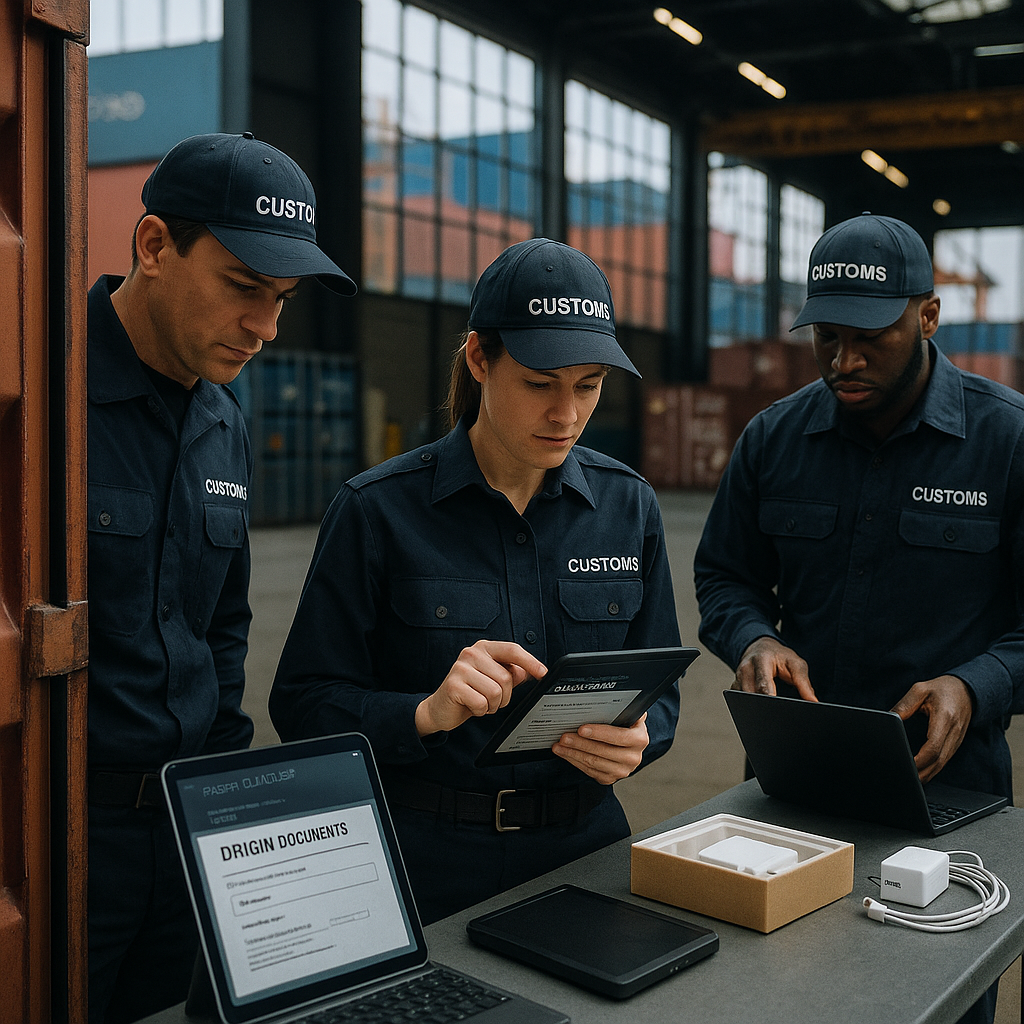
The Two Pillars: Substantial Transformation and Tariff Classification Change
China, like most countries, uses two primary methods to establish origin: substantial transformation and change in tariff classification (CTC). Understanding these concepts is essential for compliance.
Substantial Transformation asks a deceptively simple question: Did processing create “a new and different article having a distinctive name, character, or use” from the imported materials? This test focuses on the economic reality of what happened during manufacturing.
Take a real example: A company imports steel coils from China into Thailand, where they’re cut, shaped, welded, and powder-coated into finished bicycle frames. The process takes 45 days and involves significant labor and equipment. The bicycle frames have a completely different name (not “steel coils”), character (shaped, welded structures versus flat metal), and use (bicycle components versus raw material). This qualifies as substantial transformation—the frames are “Thai origin,” not Chinese.
Contrast this with a scenario where Chinese-made smartphone screens are simply packaged with Chinese-made phone bodies in Vietnam, with minimal assembly taking two hours per unit. Despite the Vietnam stop, customs authorities would likely rule these as Chinese origin because no substantial transformation occurred—the essential character and use of the components didn’t fundamentally change.
China’s regulations specify that substantial transformation should primarily be based on Change in Tariff Classification (CTC). Under the Harmonized System (HS) used globally, products are classified with codes—often 6 to 10 digits. A CTC occurs when manufacturing processes result in a product classified under a different tariff heading than its inputs.
For instance, if you import raw cotton (HS 5201) into China and manufacture it into finished cotton fabric (HS 5208), the change from Chapter 52.01 to 52.08 represents a tariff classification change. This shift typically demonstrates that substantial transformation occurred, establishing Chinese origin for the fabric.
However, CTC alone isn’t always sufficient. Chinese regulations and international agreements often specify additional requirements. Some rules require manufacturing to meet specific “process rules”—particular production steps that must occur in the country claiming origin. Others set “value-added thresholds”—requiring that a certain percentage (commonly 30-40%) of the product’s value be added in that country.
A textile manufacturer learned this lesson expensively. They imported yarn from China into Cambodia, where it was woven into fabric—a clear CTC from yarn to fabric. However, under RCEP rules for textiles, merely weaving isn’t enough. The fabric also needed to meet a “yarn-forward” rule requiring that yarn itself be produced in an RCEP member country, or alternatively, the manufacturing process needed to add at least 40% local value. Because the Chinese yarn was non-originating and the value-added fell short, the fabric didn’t qualify for RCEP preferential treatment despite the CTC.
The De Minimis Principle: Small Inputs, Big Implications
One of the most misunderstood aspects of ROO is the de minimis concept—a provision that allows small amounts of non-originating materials to be disregarded when determining origin. This can be a lifesaver for complex products with numerous inputs, but it requires careful calculation.
Under RCEP, which includes China, Japan, South Korea, ASEAN nations, Australia, and New Zealand, de minimis rules vary by product category but generally allow 10% of non-originating content by value (or weight for some goods) without disqualifying the product from originating status.
Here’s a practical scenario: A Japanese electronics company manufactures LED displays in Vietnam for export to China under RCEP’s preferential tariff rates. The displays incorporate:
- Vietnamese-made LED panels (60% of product value)
- South Korean circuit boards (25% of product value)
- Chinese-made plastic casings (8% of product value)
- American-made connectors (7% of product value)
The American connectors are non-RCEP content. However, because they represent only 7% of the product’s value—below the 10% de minimis threshold—they can be disregarded. The product qualifies as RCEP-originating, eligible for preferential tariff treatment when exported to China, as long as all other requirements are met.
Without understanding de minimis, the company might have unnecessarily redesigned their supply chain or missed out on significant tariff savings.
For textiles and apparel, de minimis rules are often stricter. RCEP, for example, typically requires yarn-forward or fabric-forward rules with limited de minimis provisions. A garment manufacturer in Indonesia discovered that even though non-originating thread represented only 3% of their shirt’s value, textile-specific rules under RCEP prohibited using de minimis to overlook it. The shirts required RCEP-origin thread to qualify for preferential treatment.
Practical Compliance: Mapping Your Supply Chain
Theoretical knowledge means nothing without practical application. Here’s how to ensure your business stays compliant:
Step 1: Map Your Entire Supply Chain
Document every input and component, noting the country where each was produced, the supplier’s location, the HS classification code, the value or weight as a percentage of the final product, and any manufacturing processes applied.
This mapping often reveals surprises. A furniture manufacturer exporting from China to Australia discovered that 15% of their “Chinese” furniture components actually originated in Malaysia and Vietnam. This required recalculating origin to maintain RCEP eligibility.
Step 2: Assess Inputs Against ROO Rules
For each input, determine if it’s originating or non-originating under the relevant rules. Check if non-originating inputs undergo sufficient transformation (CTC, specific processes, value-added thresholds), calculate whether non-originating content falls within de minimis limits, and identify any special rules for your product category.
An automotive parts supplier exporting from China to Thailand learned that RCEP’s rules for auto parts required a Change to Tariff Classification (CTC) plus 40% regional value content (RVC). Their initial calculation showed only 38% RVC, forcing them to source additional inputs from RCEP countries or increase China-based processing to meet the threshold.
Step 3: Document Everything Meticulously
Customs authorities worldwide are increasingly sophisticated and aggressive in verifying origin claims. You need bulletproof documentation including certificates of origin issued by authorized bodies, commercial invoices showing transaction details, bills of lading and shipping documents, manufacturing records proving where and how production occurred, purchase orders and supplier declarations for inputs, and value calculations with transparent breakdowns.
Step 4: Maintain Accurate, Accessible Records
Most countries require maintaining origin documentation for at least 3-5 years. Chinese regulations specify similar retention periods. Implement systems to archive documents systematically, indexed by shipment, product, and date.
A logistics company serving multiple exporters in China implemented a cloud-based document management system specifically for origin documentation. When customs authorities in the EU requested verification of origin claims for shipments made 18 months earlier, they provided complete documentation within 48 hours—avoiding penalties and maintaining their reputation.

Common Pitfalls That Destroy Profit Margins
Even experienced traders make costly mistakes. Here are the traps to avoid:
Pitfall 1: Relying on Vague Supplier Statements
“Made in China” labels or generic supplier declarations aren’t sufficient. You need detailed supplier declarations specifying the origin of inputs, manufacturing processes performed, HS classification codes, and percentage of value or weight by origin.
An importer of medical devices into China accepted Chinese suppliers’ claims that components were “locally sourced.” During a customs audit, it was revealed that 40% of key components actually originated in Germany and the U.S. The importer faced retroactive tariffs and penalties exceeding $180,000.
Pitfall 2: Misclassifying Inputs
Getting the HS code wrong for even one component can invalidate your entire origin calculation. A change that looks like a CTC might not be if you’ve misclassified an input.
A chemical manufacturer classified a specialty polymer input under HS 3907 when it should have been 3904. This misclassification meant their final product—classified under 3907—didn’t actually undergo a CTC as claimed. The error cost them preferential tariff treatment on six months of exports before discovery.
Pitfall 3: Ignoring Process Rules and Value-Added Requirements
CTC alone doesn’t always suffice. Many trade agreements specify additional requirements: particular manufacturing processes that must occur, minimum percentages of value added in the country, or specific materials that must be regionally sourced.
A textile exporter from China to Japan under RCEP qualified for CTC but failed to meet the “yarn-forward” process rule. They lost preferential treatment on $2 million worth of exports over nine months before catching the error.
Pitfall 4: Assuming Third-Country Processing Changes Origin
Simply routing goods through a third country with minimal processing rarely changes origin. Substantial transformation is required—mere repackaging, labeling, or basic assembly usually doesn’t qualify.
An e-commerce seller tried to avoid Section 301 tariffs by shipping Chinese-made consumer electronics to Mexico for repackaging before U.S. entry. U.S. Customs determined the products remained Chinese origin, applying full tariffs plus penalties for attempted circumvention.
Pitfall 5: Failing to Update for Supply Chain Changes
Origin determinations aren’t static. When suppliers change, sourcing shifts, or manufacturing processes are modified, you must recalculate origin immediately.
An electronics manufacturer optimized costs by switching from Japanese to Chinese suppliers for three key components. They forgot to update origin calculations for exports to South Korea under the Korea-China FTA. The change pushed non-originating content above thresholds, disqualifying products from preferential treatment—a mistake discovered only during a routine customs audit months later.
Your Compliance Action Plan
Don’t wait for a customs audit to discover problems. Implement these steps immediately:
Immediate Actions (This Week):
- Identify all products you import into or export from China
- Document the origin claims you’re currently making
- Gather supplier declarations for all inputs and components
- Review recent customs declarations for accuracy
Short-Term Actions (This Month):
- Conduct a complete supply chain mapping exercise for your top 20 products by value
- Verify HS classification codes for all inputs and finished products
- Calculate origin for each product using applicable ROO criteria
- Identify gaps in documentation and begin filling them
- Train your procurement, logistics, and compliance teams on ROO requirements
Ongoing Actions:
- Establish a system for routine origin audits (quarterly minimum)
- Monitor changes in trade agreements, tariff schedules, and ROO regulations
- Update origin calculations whenever supply chains change
- Maintain comprehensive, organized documentation for at least 5 years
- Consider obtaining advance rulings from customs authorities for complex products
Navigating Complexity with Confidence
China’s Rules of Origin represent one of the most complex aspects of international trade law. The intersection of domestic regulations, bilateral and multilateral trade agreements, customs procedures, and constantly shifting geopolitical trade tensions creates a legal landscape where even experienced professionals struggle.
The cost of getting it wrong extends beyond immediate tariff exposure. Non-compliance can trigger customs audits that consume hundreds of hours and tens of thousands in professional fees. It can damage relationships with customers who count on your origin claims for their own compliance. It can even result in criminal liability in severe cases of fraudulent misrepresentation.
This is where iTerms AI Legal Assistant becomes invaluable. Built on FaDaDa’s decade of experience serving over 100,000 global clients including 200+ Fortune 500 companies, iTerms brings China-specific legal expertise together with advanced AI technology to demystify China’s complex legal landscape.
Whether you’re a foreign business owner establishing operations in China, an expatriate managing cross-border compliance, an international legal professional advising clients, or a corporate decision-maker overseeing China trade, iTerms provides the specialized knowledge and practical guidance you need.
Through our AI Legal Consultation Engine, you can get real-time, contextual answers to specific ROO questions tailored to your industry and scenario. Our Contract Intelligence Center helps you draft, review, and refine trade agreements with origin-related clauses that protect your interests and ensure compliance with Chinese law. And our bilingual legal comprehension technology bridges the gap between Western and Chinese legal concepts—ensuring nothing gets lost in translation.
Rules of Origin might seem like a technical customs matter, but they’re fundamentally about risk management and legal compliance. In today’s volatile trade environment, having a trusted legal technology partner that understands both Chinese regulations and international best practices isn’t a luxury—it’s essential for survival.
Don’t let a hidden trap in China’s Rules of Origin cost your business thousands in unexpected tariffs. Take control of your compliance today, because in international trade, what you don’t know can definitely hurt you.