
A distribution agreement in China is not merely a commercial contract—it serves as a legal fortress in a market where unwritten norms, relationship dynamics, and regulatory complexities can determine the success or failure of a foreign business overnight. One missing clause, one ambiguous definition, or one overlooked protective measure can transform what should be a profitable partnership into a costly, long-term legal ordeal.
All too often, foreign companies discover that their Chinese distributor has registered the foreign trademark under its own name, introduced competing products into the same channels, or withheld critical customer data. Such outcomes frequently stem from seemingly professional agreements that lack the specific, robust clauses required to navigate the Chinese business and legal environment. These oversights can cost a company not only market territory but potentially its entire brand presence in the country.
Understanding the Foundation: Core Components of Distribution Agreements in China
A distribution agreement in China operates within the framework of the Contract Law of the People’s Republic of China and various sector-specific regulations. Unlike Western markets where commercial practices often fill contractual gaps, Chinese courts interpret contracts strictly based on written terms. This fundamental difference makes precision in contract drafting not optional but essential.
The core purpose of a China distribution agreement extends beyond simply appointing someone to sell your products. It establishes the legal relationship between your company and your Chinese partner, defines territorial boundaries, sets performance expectations, protects your intellectual property, and creates enforceable obligations that Chinese courts will recognize. Without these clearly articulated terms, you’re essentially operating on trust alone—a risky proposition in any business environment, particularly in cross-border trade.
One critical decision foreign companies face is choosing governing law and dispute resolution methods. While you might instinctively want your home country’s law to govern, Chinese courts and arbitration bodies show greater familiarity and comfort with contracts governed by Chinese law. More importantly, enforcement becomes significantly easier when your contract aligns with local legal frameworks. For dispute resolution, arbitration through recognized bodies like the China International Economic and Trade Arbitration Commission (CIETAC) offers more predictability than court litigation, with arbitral awards generally being enforceable under international conventions.
The Territory Trap: Defining Exclusivity and Geographic Scope
Many foreign companies lose their China market not because their products fail but because their territorial definitions in distribution agreements create unintended consequences. When drafting exclusivity and territory clauses, precision transforms from a legal nicety into a business necessity.
Exclusivity in China distribution agreements requires careful calibration. Granting your distributor exclusive rights across “China” might sound straightforward, but does that include Hong Kong, Macao, and Taiwan? Does it cover online sales channels or only brick-and-mortar retail? What happens when your distributor creates sub-distribution networks that compete with your direct sales efforts? These ambiguities create conflicts that damage relationships and profitability.
Chinese competition law adds another layer of complexity. The Anti-Monopoly Law of the People’s Republic of China scrutinizes vertical agreements that may restrict competition. Overly broad exclusivity provisions—particularly those preventing distributors from handling competing products or imposing absolute territorial restrictions—can trigger regulatory investigations. Foreign companies must balance their desire for market control against the reality that Chinese authorities actively monitor distribution arrangements for anti-competitive behavior.
The solution lies in precise definitions. Specify territory as “the Mainland of the People’s Republic of China (excluding Hong Kong, Macao, and Taiwan)” if that’s your intent. Define exclusivity parameters clearly: exclusive for which sales channels, for which customer segments, and subject to which performance benchmarks. Understanding different distribution models available in China helps you structure these parameters effectively. Build in provisions allowing you to service key accounts directly or to appoint additional distributors if minimum sales targets aren’t met. These protective mechanisms maintain your flexibility while providing your distributor with reasonable market protection.
Your Brand’s Legal Shield: Intellectual Property Protections
Intellectual property disputes represent the most devastating outcome of poorly drafted China distribution agreements. Unlike jurisdictions where first-to-use provides IP rights, China operates on a first-to-file principle. If your distributor registers your trademark before you do, Chinese law may recognize them as the rightful owner.
Every distribution agreement must explicitly address brand ownership and usage rights. State unequivocally that you own all trademarks, trade names, logos, and associated intellectual property. Grant your distributor a limited, non-exclusive license to use these marks solely for purposes of selling your products within the designated territory and during the contract term. Make clear that this license terminates immediately upon contract expiration or termination, with no residual rights remaining.
Quality control provisions directly connect to IP protection. Chinese law allows trademark owners to control product quality as part of their IP rights. Your distribution agreement should establish specific quality standards, grant you the right to conduct regular inspections, require prior approval for any modifications to products or packaging, and mandate immediate cessation of sales if quality issues arise. These provisions aren’t bureaucratic requirements—they’re your legal tools for preventing brand damage and maintaining IP enforcement rights.
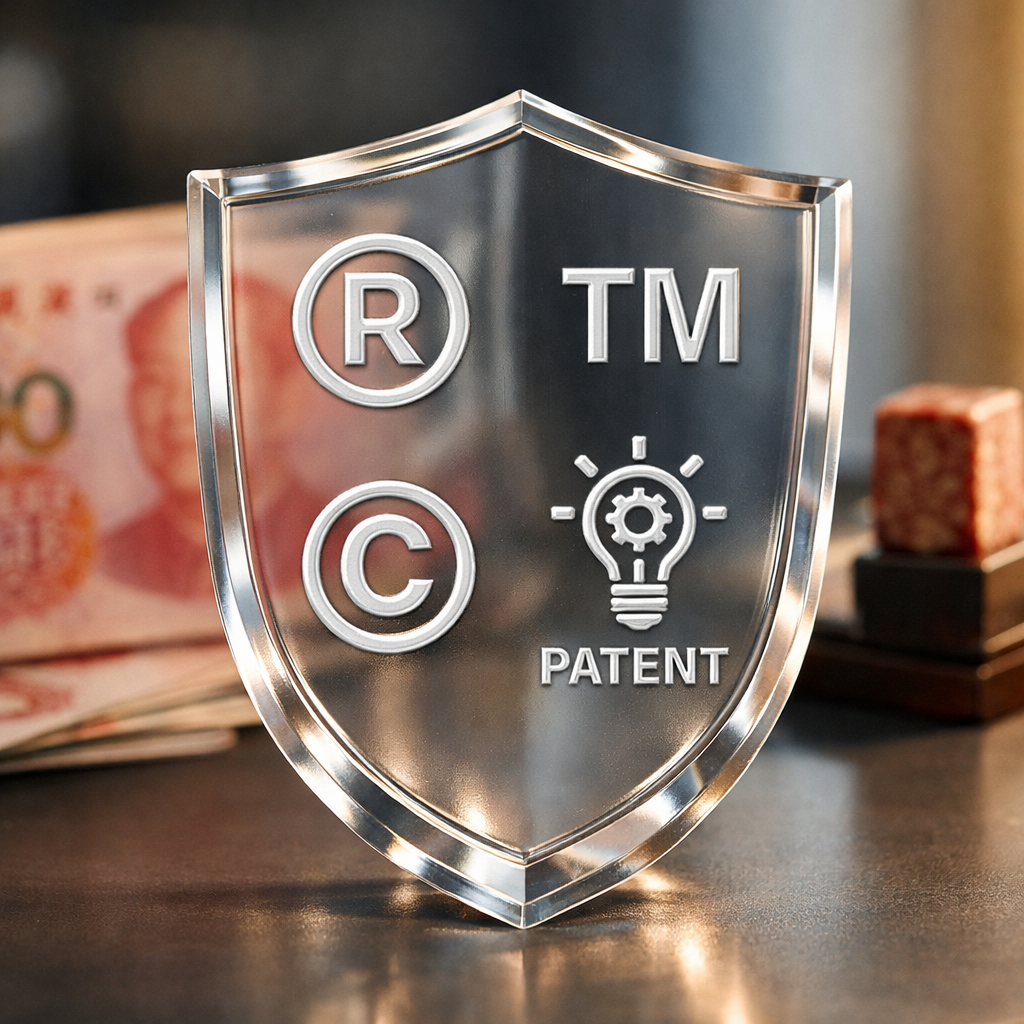
Smart foreign companies register their trademarks, patents, and copyrights in China before signing any distribution agreement. They conduct thorough due diligence on potential distributors to ensure no conflicting IP registrations exist. They build termination triggers tied to IP violations, making any unauthorized trademark registration or IP infringement an immediate breach allowing contract termination without penalty. These proactive measures cost far less than the legal battles required to reclaim your IP rights after problems emerge.
Defining Success: Product Scope and Performance Terms
Distribution relationships fail most often not from dramatic breaches but from misaligned expectations about products, pricing, and performance. Precise contractual language prevents these foreseeable conflicts.
Product scope requires detailed specification. Rather than granting distribution rights for “consumer electronics,” list specific product models, SKUs, or product categories. Include mechanisms for adding new products through written amendments. Define clearly what happens with discontinued products, end-of-life inventory, and replacement product lines. Learn more about structuring wholesale distribution agreements that protect your product portfolio. This specificity prevents distributors from claiming rights to products you never intended to include while protecting both parties from future disputes.
Pricing structures in China distribution agreements must account for market realities while maintaining your control. Establish whether you’re selling to distributors at fixed prices, tiered pricing based on volume, or dynamic pricing adjusted quarterly. Define payment terms precisely—not “net 30 days” but “payment due within 30 days of invoice date via bank transfer to the following account.” Specify currency (typically RMB for China domestic sales), foreign exchange risk allocation, and procedures for price adjustments. Address how tariffs, import duties, and regulatory fees affect pricing.
Sales targets and performance benchmarks justify exclusivity grants and provide objective measures for relationship health. Rather than vague expectations, establish specific quarterly or annual sales minimums, market share goals, or customer acquisition targets. Create tiered structures where additional territorial rights or product lines become available upon achieving performance milestones. Most importantly, link exclusivity continuation to target achievement—distributors who fail to meet minimum commitments forfeit their exclusive rights, allowing you to appoint additional partners without breaching your agreement.
Planning for Change: Contract Duration and Exit Strategies
Business circumstances change, and distribution agreements must accommodate evolution while protecting both parties. Clear terms regarding duration, renewal, and control changes prevent disputes when relationships need adjustment or termination.
Contract term provisions should specify exact start and end dates rather than relying on phrases like “one year from signing.” Include clear renewal mechanics: automatic renewal unless either party provides written notice 90 days before expiration, or affirmative renewal requiring mutual written agreement. Address what happens with inventory, customer relationships, and ongoing orders during the transition between contract terms.
Change of control clauses protect you when your distributor’s ownership changes. If the entrepreneur you trusted sells their company to a competitor or private equity firm, do you want that distribution relationship to continue? Build in provisions requiring advance notice of any ownership changes exceeding a certain percentage, granting you the right to approve new controlling parties, and providing termination rights if you reasonably reject proposed changes.
Termination and exit strategies require careful drafting under Chinese law. Chinese courts may interpret ambiguous termination clauses in favor of distributors, particularly long-standing partners. Specify multiple termination grounds: material breach (defined clearly), failure to meet sales targets for consecutive periods, bankruptcy or insolvency, IP violations, or competitive activities. Require written notice periods appropriate to termination grounds—perhaps immediate termination for IP violations but 60-90 days for non-renewal decisions.
Wind-down provisions and transition support prevent messy separations. Address inventory repurchase obligations (who buys back unsold stock at what price), customer transition procedures, marketing material returns, and post-termination support periods. These clauses seem unnecessary when relationships are strong but become invaluable when they sour.
Protecting Both Parties: Post-Termination Obligations and Compliance
What happens after your distribution agreement ends matters as much as the relationship during the contract term. Post-termination obligations protect your market position while complying with Chinese legal constraints.
Non-compete and non-solicitation clauses require careful drafting under Chinese law. Chinese courts scrutinize restrictions on former business partners’ ability to earn a living. Reasonable post-termination non-compete clauses typically limit duration to 1-2 years, restrict only direct competition in the specific product categories covered by your agreement, and may require compensation to the distributor for the restriction period. Non-solicitation provisions preventing the distributor from hiring your employees or soliciting your customers face similar reasonableness standards.
Payment terms deserve attention beyond simple due dates. Address how pricing changes affect pending orders, establish letter of credit or other secured payment mechanisms for large transactions, and create clear procedures for disputed invoices. China’s import/export regulations impose specific documentation requirements—ensure your distribution agreement assigns responsibility for customs declarations, export licenses, and compliance certificates.
Consumer protection compliance represents a growing concern for foreign companies selling in China. The Consumer Rights Protection Law imposes strict liability for defective products, mandatory warranty periods, and substantial penalties for false advertising. Your distribution agreement should clearly allocate responsibility for consumer complaints, product returns, warranty service, and regulatory penalties between you and your distributor. Including comprehensive quality clauses provides additional protection against defect-related disputes. Don’t assume common law indemnification principles apply—Chinese courts may hold both manufacturer and distributor jointly liable unless your contract explicitly allocates responsibility.
Navigating the Regulatory Landscape
Chinese regulatory compliance extends beyond consumer protection into anti-bribery, competition law, and sector-specific regulations. Distribution agreements must address these requirements explicitly.
Anti-bribery and anti-corruption provisions reflect both Chinese law and foreign laws like the U.S. Foreign Corrupt Practices Act that may apply to your company. Require your distributor to comply with all applicable anti-corruption laws, prohibit payments to government officials for obtaining or retaining business, mandate accurate books and records, and establish your right to audit for compliance. These provisions protect you from criminal liability for your distributor’s actions.
Competition law compliance becomes particularly important for exclusive distribution arrangements. Document the business justifications for exclusivity—such as required distributor investments in specialized training, equipment, or service infrastructure. Avoid provisions that fix resale prices, require distributors to purchase exclusively from you when alternatives exist, or create absolute territorial protections preventing all parallel imports. These restrictions may trigger Anti-Monopoly Law scrutiny.
Practical Drafting Guidance
Creating an effective China distribution agreement requires attention to technical details that non-lawyers often overlook. Product lists should reference specific model numbers and descriptions rather than categories. Update these through written amendments rather than informal communications. Territory definitions must account for China’s complex administrative structure—provincial boundaries, special economic zones, and municipality classifications all matter for enforcement. Advanced AI contract analysis tools can help identify missing provisions and ensure comprehensive coverage.
Regulatory scrutiny of distribution agreements has intensified as Chinese authorities focus on fair competition and consumer protection. Avoid agreements that appear to create monopolistic territorial control, particularly in industries China identifies as strategic priorities. Build flexibility into performance terms so you can adjust to changing market conditions without renegotiating entire agreements.
The courts’ interpretation of distributor protections versus consumer law creates additional complexity. While Chinese law doesn’t recognize “commercial buyer” exemptions from consumer protection the way some Western jurisdictions do, well-drafted agreements can allocate risks and liabilities clearly between manufacturers and distributors. Professional legal review ensures your distribution agreement aligns with current judicial interpretations.
Conclusion: The Value of Precision
Distribution agreements represent your legal foundation for accessing China’s massive consumer market. Every clause matters because Chinese courts enforce contracts based on written terms, not business customs or verbal understandings. Missing provisions don’t get filled by “reasonableness” standards—they create gaps that can cost you market territory, intellectual property, customer relationships, and substantial financial resources to repair.
The critical clauses—territory definitions, IP protections, performance terms, termination rights, and regulatory compliance provisions—require precise drafting informed by both Chinese law and practical business realities. Generic templates downloaded from the internet or agreements drafted for other markets create dangerous vulnerabilities. China’s unique legal landscape demands China-specific solutions.
Foreign business owners and entrepreneurs entering China’s market need not navigate these complexities alone. Advanced AI-powered legal solutions like iTerms combine deep expertise in Chinese legal frameworks with sophisticated technology to create distribution agreements that protect your interests while maintaining enforceability. Rather than learning from costly mistakes like Sarah Chen, smart companies invest in proper legal infrastructure from the start.
Your China distribution agreement isn’t just a contract—it’s your protection against market loss, IP theft, and regulatory liability. Ensure every clause counts, because in China’s business environment, the clause you omit may be exactly the protection you need most.