
When you’re planning to invest in China, the first question isn’t about opportunity—it’s about permission. Can you own 100% of your factory? Are you allowed to operate that tech service independently? The answer lies in a single regulatory document that determines what doors are open and which remain firmly closed: China’s Negative List for Foreign Investment.
Starting November 1, 2024, China implemented its latest version of this critical framework, cutting restricted sectors from 31 to 29 and making a landmark move that fundamentally changes the manufacturing landscape for foreign investors. This isn’t just another regulatory update buried in policy announcements. It’s a decision point that directly affects whether you can structure your China venture as a wholly foreign-owned enterprise (WFOE) or must navigate the complexities of joint ventures and licensing requirements.
Understanding this list isn’t about legal theory—it’s about knowing exactly what you can build, own, and control in the world’s second-largest economy. The stakes are real: get your sector classification wrong, and you might invest months into a business structure that Chinese authorities will never approve. Get it right, and you can move forward with clarity and confidence.
What the Negative List Really Means for Your Investment
China’s Negative List operates on a simple but powerful principle: if your industry isn’t explicitly listed as restricted or prohibited, you’re generally free to invest under standard foreign investment regulations. Think of it as China’s way of saying “everything not forbidden is permitted“—a significant shift from the historical approach where everything required specific approval.
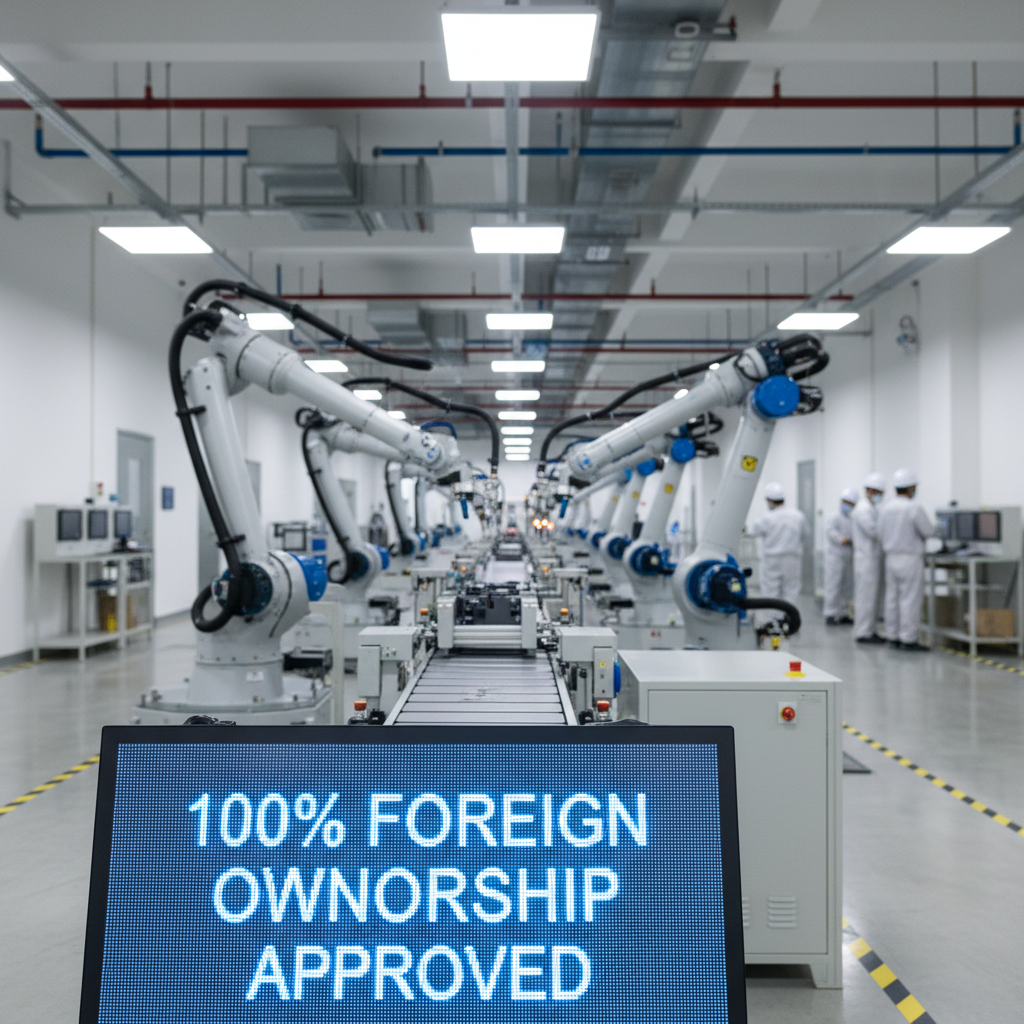
The 2024 edition represents the most streamlined version yet. By reducing restricted sectors to just 29, China is sending a clear signal about its commitment to opening markets. But the real headline for foreign manufacturers is what’s been removed entirely: all remaining restrictions on foreign investment in the manufacturing sector.
This is transformative. For years, certain manufacturing subsectors required Chinese partners or capped foreign ownership percentages. A foreign automotive parts manufacturer might have been limited to 49% ownership, forced into joint ventures that diluted control and complicated decision-making. A pharmaceutical company looking to produce in China faced ownership restrictions that made fully independent operations impossible.
Starting November 2024, those barriers are gone. Foreign investors can now establish 100% foreign-owned manufacturing operations across the entire sector—from automotive to pharmaceuticals, from electronics to machinery. You can own your facility outright, control your intellectual property without partner complications, and make operational decisions independently.
This doesn’t mean manufacturing in China is suddenly without complexity. You still need to navigate environmental regulations, obtain necessary permits, comply with product standards, and manage labor laws. But the fundamental question of ownership structure—whether you can go it alone—is now answered clearly: yes, you can.
The practical implications ripple through every stage of your China strategy. Site selection becomes simpler when you don’t need to factor in a local partner’s preferences. Technology transfer concerns diminish when you’re not required to share proprietary processes with a joint venture partner. Exit strategies become more straightforward when you own 100% of the equity.
For sectors not on the Negative List, the path forward is relatively clear: register your business entity, obtain required licenses for your specific operations, and proceed with establishment. The Negative List essentially functions as your initial screening tool—check your sector first, and if it’s not listed, you’re cleared for the standard foreign investment process.
Where Restrictions Still Apply—and What That Actually Means
But here’s the reality check: 29 sectors remain on the restricted or prohibited list, and they’re not minor footnotes. These are significant industries where China maintains tight control over foreign participation, and navigating them requires a fundamentally different approach.
Telecommunications and internet services remain heavily restricted. You cannot own a telecommunications company independently in China. Period. Foreign investors must enter through joint ventures with Chinese partners, and even then, ownership is capped—typically at 49% for value-added telecommunications services like cloud computing and data centers. For basic telecommunications (the actual network infrastructure), foreign investment is generally prohibited entirely.
This creates real dilemmas for tech companies. Your cloud service business can’t operate independently. Your data storage solution needs a Chinese majority partner. Your telecommunications equipment might be sellable in China, but running the service that uses it? That requires navigating joint venture structures where you don’t have majority control.
Education represents another heavily controlled sector. Foreign investors cannot establish compulsory education institutions (primary and secondary schools) independently. For higher education and vocational training, foreign participation is permitted but usually requires Chinese partnership and cannot be purely profit-driven. International schools serving foreign nationals operate under different frameworks, but expanding into the broader Chinese education market means accepting structural limitations from day one.
Healthcare and medical services present a more nuanced picture. Foreign investment in medical institutions is permitted, but often requires extensive regulatory approvals and licensing. Certain specialized medical services face ownership caps or require Chinese partners. The regulatory burden isn’t just about ownership percentages—it’s about proving qualifications, meeting facility standards, obtaining practice licenses for foreign medical professionals, and navigating regional variations in how rules are applied.
Cultural and media sectors remain largely closed. You cannot own a newspaper, magazine, or broadcasting station as a foreign entity. Film production, distribution, and exhibition all face significant restrictions. Even book publishing is off-limits for full foreign ownership. China views media and culture as sensitive sectors tied to social stability and national values, and that perspective directly shapes what foreign investors can and cannot do.
What does “restricted” actually mean in practice? It typically involves one or more of these requirements:
Joint venture mandates: You must partner with a Chinese entity that meets government approval criteria. Your partner selection isn’t entirely free—they need proper licensing and governmental vetting.
Ownership caps: Your equity stake cannot exceed a specified percentage, usually 49% or 50%, meaning you don’t control the entity even if you provide most of the capital and expertise.
Licensing requirements: Beyond standard business registration, you need sector-specific licenses that involve lengthy approval processes, demonstrated qualifications, and ongoing compliance obligations.
Regional variations: Some restrictions apply nationally, but provinces or cities might have pilot programs or special economic zones with different rules. What’s restricted in Shanghai might be partially open in Hainan Free Trade Port.
The practical challenge isn’t just understanding that restrictions exist—it’s navigating what they mean for your specific business model. A healthcare investor needs to determine whether their particular service falls under restricted categories. An education company must assess whether their online learning platform qualifies as educational services subject to ownership caps or as software-as-a-service that’s unrestricted.
This is where many foreign investors stumble. They see their industry mentioned on the Negative List and assume it’s a complete barrier, when actually there might be viable pathways through joint ventures or restructured business models. Or conversely, they assume they’re unrestricted and only discover mid-process that their specific subsector actually requires Chinese partnership.
Practical Strategies for Navigating the Negative List Successfully
Knowing the Negative List exists is one thing. Actually using it to make sound investment decisions requires a methodical approach that goes beyond simply reading the published categories.
Start with precise sector classification. The Negative List uses China’s industrial classification system, which doesn’t always align neatly with how you describe your business back home. You might call yourself a “digital marketing agency,” but what matters is how Chinese regulators classify your activities. Are you providing advertising services (generally open)? Operating internet content platforms (restricted)? Offering telecommunications services (heavily restricted)? The classification determines everything that follows.
Don’t rely on approximate matches. Get the exact classification code for your business activities. Chinese industry classification systems are detailed and specific. Two businesses that seem similar might fall into entirely different regulatory categories with vastly different foreign investment rules.
Conduct true due diligence before committing resources. This means more than reviewing the Negative List itself. Investigate how your sector’s restrictions are actually enforced in practice. Talk to companies already operating in your space. Understand whether restrictions are applied uniformly or vary by region.
Some sectors technically restricted might have approved precedents for foreign investment under specific conditions. Other sectors not listed might face informal barriers or extensive licensing requirements that create de facto restrictions. The gap between regulatory text and implementation reality can be significant.
For restricted sectors, map out your partnership requirements early. If you need a Chinese joint venture partner, identify potential partners before finalizing your China strategy. Evaluate their licensing status, financial stability, and alignment with your business objectives. Joint venture failures often trace back to rushed partner selection driven by regulatory necessity rather than strategic fit.
Understand the ownership structure implications fully. If you can only own 49%, you need to address governance and control through other mechanisms. Shareholder agreements become critical. Board composition, reserved matters requiring unanimous consent, intellectual property licensing arrangements, management contracts—these become the tools for protecting your interests when you don’t have majority ownership.
Foreign investors sometimes make the mistake of focusing entirely on equity percentage and ignoring operational control mechanisms. You might have 49% ownership but through well-structured agreements maintain significant operational influence over technology, quality standards, supply chain, and key personnel decisions.
For unrestricted sectors, don’t assume simplicity. Being off the Negative List means you can establish a WFOE, but you still need proper licensing for your specific operations. A software company not on the Negative List still needs internet content provider (ICP) licensing if operating websites in China. A manufacturing company needs environmental approvals and product certifications.
Prepare for regional variations and pilot programs. China frequently tests policy changes in specific zones before national rollout. Hainan Free Trade Port, Shanghai Free Trade Zone, and other designated areas sometimes have different rules than the nationwide Negative List. A sector restricted nationally might be partially open in these special zones.
This creates opportunities but also complexity. You might establish operations in a pilot zone with favorable terms, but expanding nationally could hit restrictions. Or you might use a special zone as proof-of-concept before broader rollout becomes feasible under changing national policies.
Build compliance into your structure from the start. Attempting to circumvent Negative List restrictions through complicated corporate structures or nominee arrangements is both illegal and practically dangerous. Chinese authorities actively investigate and penalize attempts to evade foreign investment restrictions.
If you’re in a restricted sector, build a compliant structure even if it’s more cumbersome. The regulatory risk of non-compliance far outweighs the inconvenience of joint venture governance or licensing requirements. Foreign investors have faced forced unwinding of non-compliant structures, financial penalties, and reputational damage that destroyed years of China market building.
Making Decisions in an Evolving Regulatory Environment
The 2024 Negative List fits into China’s broader reform agenda aimed at attracting foreign investment amid shifting global economic dynamics. The removal of manufacturing restrictions isn’t random—it reflects strategic priorities around supply chain stability, advanced manufacturing development, and addressing concerns about declining foreign direct investment, which dropped 27.1% in 2024.
This context matters for your investment decisions. The Negative List will continue evolving. Sectors restricted today might open tomorrow as priorities shift. Manufacturing opened in 2024; telecommunications, education, or healthcare might see relaxed restrictions in future updates if policy goals change.
But betting your investment strategy on anticipated future liberalization is risky. Make decisions based on current rules, not hoped-for changes. If a sector is restricted now, structure your entry accordingly. If liberalization comes later, you can adjust. Entering with a non-compliant structure hoping for regulatory changes is a recipe for costly complications.
Stay informed about policy updates. The Negative List undergoes regular revision—typically annually or biannually. Foreign investment catalogues, free trade zone regulations, and sector-specific policies all interact with the Negative List to create the complete regulatory picture. Following official announcements from the Ministry of Commerce (MOFCOM) and National Development and Reform Commission (NDRC) helps you anticipate changes before they’re implemented.
For businesses already operating in China, each Negative List update creates review points. Does your current structure remain compliant under the new version? Do newly liberalized sectors create expansion opportunities? Could removed restrictions allow you to restructure from joint venture to WFOE ownership?
The regulatory environment for foreign investment in China is more sophisticated than many investors realize. It’s not simply “open” or “closed”—it’s a detailed framework that requires careful navigation. The Negative List is your starting point, but thorough legal guidance ensures you’re building on solid ground.
Platforms like iTerms AI Legal Assistant provide exactly this kind of China-specific legal intelligence. When you’re trying to determine whether your manufacturing operation can be 100% foreign-owned, or what partnership structure works for a restricted sector, or how licensing requirements apply to your particular business model, you need answers grounded in actual Chinese regulatory practice—not generic international business advice.
The questions foreign investors face aren’t academic. They’re immediate and consequential. Can I own this? Do I need a partner? What licenses apply? How do provincial rules differ from national ones? Getting clear, accurate answers before committing capital and resources is the difference between a smooth establishment process and a derailed investment.
China’s market remains enormous and opportunity-rich, but access comes with rules. The Negative List defines those rules clearly. Your job is to understand how they apply to your specific situation and structure your entry accordingly. The investors who succeed in China aren’t those who find shortcuts around regulations—they’re the ones who navigate regulations competently from the start.
Starting November 2024, foreign investors have more freedom in manufacturing and a clear framework for every other sector. The opportunity is real. The pathway is defined. Your next step is making sure you’re on the right path before you start walking.