
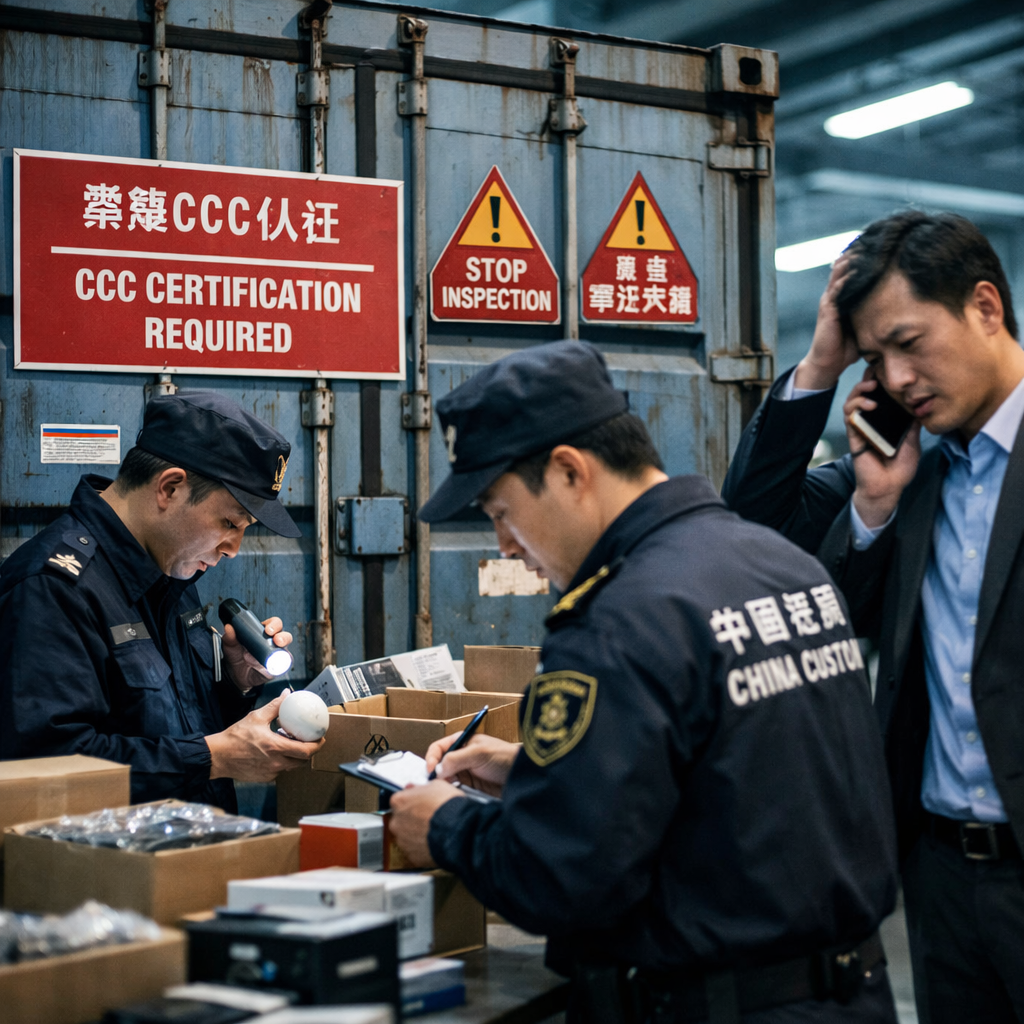
You’ve invested months negotiating with manufacturers, finalized production timelines, arranged logistics, and your containers are finally en route to Shanghai. Then your freight forwarder calls with news that stops everything cold: “Your shipment has been detained at customs. The products require CCC certification.”
For international businesses entering the Chinese market, this scenario isn’t hypothetical—it happens daily. A single missing certification can transform a profitable shipment into a costly warehouse nightmare, complete with storage fees, potential fines, and customers questioning your reliability. Understanding China Compulsory Certification (CCC) requirements isn’t just about regulatory compliance; it’s about protecting your business from preventable financial disasters.
What CCC Certification Actually Means for Your Business
China Compulsory Certification, commonly known as CCC or 3C certification, represents China’s mandatory safety certification system for products entering or being manufactured within the country. Administered by the Certification and Accreditation Administration of China (CNCA) under the State Administration for Market Regulation, CCC certification ensures products meet specific safety, health, environmental protection, and national security standards before they can be legally sold or used commercially in China.
Think of CCC as China’s equivalent to Europe’s CE marking or North America’s UL certification—but with one critical difference: CCC is legally mandatory for covered products, not optional. The General Administration of Customs of China (GACC) and the Administration of Quality Supervision, Inspection and Quarantine (AQSIQ) actively enforce these requirements at entry points, meaning non-compliant products face immediate rejection.
The purpose extends beyond consumer safety. CCC certification protects Chinese consumers from substandard products, ensures fair market competition, and aligns imports with national technical standards. For your business, it represents the gateway to market access—without it, your products legally cannot enter China’s commercial channels, regardless of their quality or how much you’ve invested in production.
Which Products Actually Need CCC Certification?
The most common mistake international businesses make is assuming their products don’t require CCC certification. The official CCC Catalogue covers 16 major product categories, encompassing thousands of specific items. Rather than memorizing lists, you need to understand the systematic approach to determining applicability.
Products typically requiring CCC certification include electrical and electronic equipment (power adapters, household appliances, IT equipment), automotive parts and vehicles (passenger cars, motorcycles, tires, safety glass), safety equipment (fire extinguishers, alarm systems), and construction materials (cables, circuit breakers). Recent regulatory expansions have added power banks, certain industrial batteries, and specific telecommunications equipment to the mandatory list.
Here’s what this means in practice: A European electronics manufacturer shipping Bluetooth speakers to Chinese retailers discovered their products needed CCC certification only after customs detained the shipment. The speakers contained rechargeable lithium batteries—a covered category. The company faced not just delayed delivery, but the choice between shipping products back (losing money on freight both ways) or arranging emergency testing and certification in China (expensive and time-consuming).
To determine if your product requires certification, consult the official CNCA catalogue at www.cnca.gov.cn. The catalogue uses Chinese GB (Guobiao) standards classifications, which don’t always align perfectly with international product categories. This is where many businesses encounter confusion—a “power supply unit” in Western terminology might fall under multiple GB classifications depending on its voltage, application, and design specifications.
The Compliance Process: What You Must Do Before Shipping
Obtaining CCC certification isn’t a simple paperwork exercise—it’s a comprehensive evaluation process that requires advanced planning, typically taking 8-12 weeks from application to certificate issuance.
First, engage a CNCA-recognized testing laboratory. Unlike some international certification schemes where you can choose any accredited lab, CCC testing must occur at designated facilities approved by Chinese authorities. These laboratories conduct rigorous safety tests based on relevant GB standards, evaluating electrical safety, electromagnetic compatibility, mechanical strength, flammability, and chemical composition depending on your product type.
Second, compile comprehensive technical documentation. This includes detailed product specifications, manufacturing process descriptions, quality control procedures, component sourcing information, and test reports. All documentation requires Chinese language versions, and technical terminology must use approved translations—a detail that has derailed numerous applications when companies relied on machine translation rather than professional legal translation services.
Third, prepare for factory inspection. CCC certification includes mandatory on-site audits of manufacturing facilities. Inspectors verify that your production environment, quality control systems, and testing equipment meet Chinese regulatory requirements. For international manufacturers, this means your overseas facility must demonstrate compliance with Chinese standards, not just your home country’s requirements.
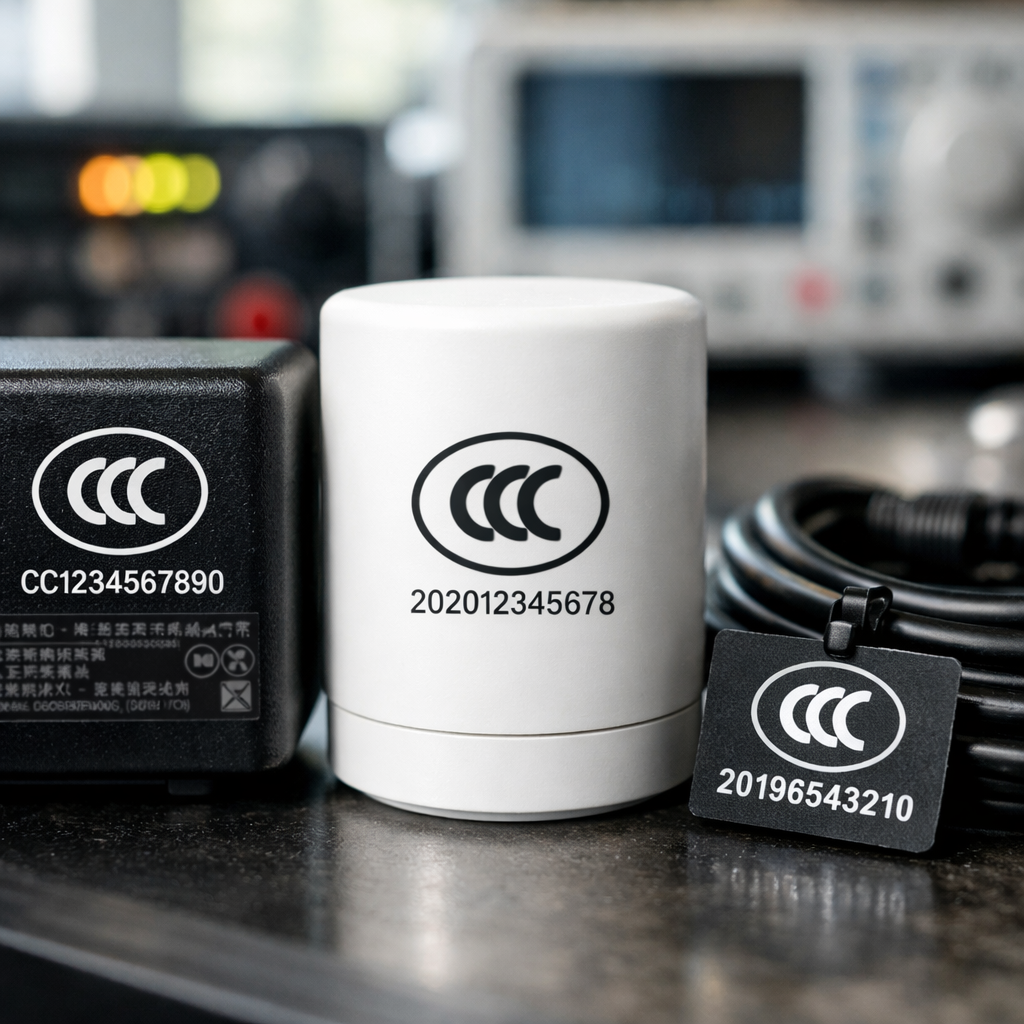
Fourth, obtain the actual certificate and apply the CCC mark to your products. The mark must appear on each product unit, not just packaging, and must follow specific size, placement, and design requirements. Customs officers physically inspect products for proper marking—incorrect or missing marks trigger immediate detention.
Finally, maintain compliance through annual surveillance. CCC certification isn’t permanent. Authorities conduct yearly factory inspections and periodic product testing to ensure ongoing compliance. Many businesses successfully obtain initial certification, then lose it due to inadequate surveillance preparation, suddenly finding their established import channels blocked.
Import Implications: When Compliance Becomes Critical
Understanding CCC requirements becomes most critical at the customs entry point. Chinese customs authorities have zero tolerance for non-compliant products in covered categories. When your shipment arrives without required CCC certification, three scenarios typically unfold.
Immediate rejection means customs refuses entry, and you must arrange re-export at your expense. This costs not just return freight, but storage fees accumulating daily at Chinese ports, potential demurrage charges if containers exceed free time, and the commercial damage of failing to deliver promised products to Chinese customers or distributors.
Conditional release applies in limited circumstances where you can demonstrate certification is in process. This requires substantial documentation proving you’ve engaged testing laboratories, submitted applications, and can realistically complete certification within a specified timeframe. Even when granted, conditional release usually requires posting bonds or guarantees, and products cannot enter commercial channels until full certification is achieved.
Confiscation and penalties occur when companies attempt to circumvent requirements through mislabeling, false declarations, or knowingly importing non-compliant products. Chinese authorities treat this as serious commercial fraud, with consequences including product seizure, substantial fines, and potential criminal liability for repeated violations.
A Canadian automotive parts supplier learned this the hard way when attempting to import brake pads labeled as “maintenance samples” to avoid CCC requirements. Customs identified the misclassification, confiscated the entire shipment, and imposed fines exceeding the shipment’s value. The company’s Chinese business license faced suspension, and rebuilding reputation with customers took over a year—a scenario detailed in compliance challenges facing China manufacturing operations.
Verification and Enforcement: The Reality of CCC Oversight
Chinese authorities employ sophisticated verification systems to detect non-compliant products. Electronic database checks cross-reference product descriptions, HS codes, and CCC certificate numbers at import declaration. Any discrepancy triggers manual inspection and potential shipment holds.
Physical inspection occurs randomly and risk-based. Products from manufacturers with compliance histories receive lighter scrutiny, while first-time importers or companies in categories with frequent violations face more intensive examination. Inspectors verify the CCC mark’s authenticity, check certificate validity dates, and may conduct spot testing on-site.
Counterfeit CCC marking represents a serious violation that some desperate businesses attempt when facing deadlines. Authentic CCC marks include specific certification body codes, certificate numbers, and security features. Customs officers use UV scanners and database verification to identify fake marks. The consequences extend beyond the immediate shipment—companies caught using counterfeit marks face industry blacklisting that affects all future import activities.
Post-import market surveillance continues even after customs clearance. The State Administration for Market Regulation conducts ongoing product quality inspections in retail and commercial settings. Products found lacking valid CCC certification after market entry trigger recalls, vendor penalties, and potential legal action against importers and distributors.
CCC Is Not CE: Understanding the Fundamental Differences
A dangerous misconception persists among international businesses: “Our products have CE certification, so we’re covered for China.” This misunderstanding has cost companies millions in rejected shipments and emergency compliance expenses.
CE marking indicates compliance with European Union safety, health, and environmental protection requirements. CCC certification demonstrates compliance with Chinese GB standards. These are separate regulatory frameworks with different technical specifications, testing methodologies, and enforcement mechanisms. One does not substitute for the other.
Testing requirements differ substantially. CE certification often relies on self-declaration with testing at any accredited laboratory worldwide. CCC requires testing at CNCA-designated Chinese laboratories using specific GB standards. A power adapter certified to European EN standards may fail Chinese GB standards due to different voltage tolerances, insulation requirements, or electromagnetic emission limits.
Factory inspection requirements also diverge. CE marking generally doesn’t mandate factory audits for most product categories. CCC always includes comprehensive factory inspection as part of initial certification and annual surveillance. Your production facility’s compliance with ISO standards doesn’t automatically satisfy CCC factory audit requirements.
Documentation and marking obligations follow different rules. CE marking allows flexibility in placement and size. CCC marks must meet precise specifications regarding dimensions, location, and accompanying information. Using an incorrect CCC mark format, even with valid certification, can trigger customs detention.
The enforcement landscape differs dramatically. CE non-compliance primarily affects sales within EU member states, with enforcement varying by country. CCC non-compliance absolutely prevents market entry into China, with consistent enforcement across all customs entry points and unified penalties nationwide.
Practical Guidance: Protecting Your Business from CCC Complications
Smart businesses build CCC compliance into their China market entry strategy from day one, not as an afterthought when shipments are ready. Start by conducting a thorough product assessment 6-8 months before your planned first shipment. Engage a qualified Chinese legal consultant or certification agency to definitively determine whether your products fall within CCC scope. Don’t rely on general internet research or assumptions based on similar products—category classifications can be surprisingly specific.
Develop a realistic certification timeline. Standard CCC certification requires 8-12 weeks minimum, but complications frequently extend this. Budget 16-20 weeks for first-time applications to accommodate potential test failures, documentation revisions, and factory inspection scheduling. One common failure point: underestimating document preparation time. Technical specifications, quality manuals, and manufacturing process descriptions must be translated accurately into Chinese using approved terminology—a process requiring specialized legal and technical translation expertise, not basic translation services.
Build relationships with appropriate testing laboratories early. Different CNCA-designated labs specialize in different product categories, have varying capacity and turnaround times, and charge different fees. Early engagement lets you compare options and avoid delays caused by lab capacity constraints during peak periods.
Track CCC catalogue updates systematically. CNCA periodically revises the mandatory product list, adding new categories or removing others. On January 1, 2027, sixteen new product types enter mandatory CCC requirements. Products currently entering China without certification may suddenly require it, catching unprepared businesses off-guard. Establish monitoring systems to catch regulatory changes affecting your product lines.
Prepare comprehensive documentation for customs. Even with valid CCC certification, customs clearance requires proper documentation presentation. Maintain organized files including CCC certificates, test reports, factory inspection records, and product conformity declarations. Train your customs brokers or freight forwarders on CCC requirements specific to your products—general logistics knowledge often misses category-specific compliance details.
Consider the total cost of compliance in your pricing strategy. CCC certification isn’t cheap—testing fees, factory inspection costs, annual surveillance expenses, and consultant fees typically range from $5,000 to $30,000 depending on product complexity and category. Factor these costs into your China market pricing from the beginning rather than discovering they eliminate your profit margins after commitment.
How iTerms AI Legal Assistant Helps Navigate China’s Certification Landscape
Understanding whether your products require CCC certification, interpreting technical GB standards, and navigating Chinese customs regulations involves complex legal interpretation that goes beyond simple yes/no answers. Every product scenario involves specific details—voltage ratings, material compositions, intended uses, component sourcing—that affect certification requirements.
This is exactly where iTerms AI Legal Assistant’s specialized Chinese legal intelligence becomes invaluable. Our AI-powered platform doesn’t just explain what CCC certification is; it helps you determine applicability for your specific products, understand the compliance implications for your business model, and identify the steps required to achieve and maintain certification.
Through our AI Legal Consultation Engine, you can describe your product in detail and receive scenario-based guidance on certification requirements, potential compliance obstacles, and practical next steps tailored to your situation. Our system understands the nuances between similar product categories and can clarify whether your specific product configuration falls within CCC scope—the kind of detailed analysis that prevents costly mistakes.
When you need formal documentation, our Contract Intelligence Center helps create China-compliant agreements with testing laboratories, certification agencies, and Chinese distributors that properly address CCC compliance responsibilities. These aren’t generic templates, but contracts reflecting current Chinese regulatory requirements and your specific business circumstances.
Built on FaDaDa’s decade of experience in Chinese legal technology and serving over 100,000 global clients, iTerms provides the bridge between your business objectives and China’s complex regulatory environment. We transform confusing regulations into actionable intelligence, helping you make confident decisions about China market entry.
Before your next shipment faces customs detention, get the clarity you need. Understanding CCC requirements isn’t just about avoiding rejection—it’s about building a sustainable, compliant presence in China’s market with confidence from day one.