
- 1. Ownership Restrictions That Limit Your Strategic Control
- 2. Intellectual Property Risks in an Enforcement-Variable Environment
- 3. Contract Enforceability When Local Interpretation Differs
- 4. Regulatory Compliance in a Rapidly Shifting Policy Environment
- 5. Tax Complexity and Profit Repatriation Constraints
- 6. Employment Law Rigidity and Rising Labor Costs
- 7. Data Privacy Compliance Under PIPL and Cybersecurity Requirements
- 8. Export Control and Technology Transfer Restrictions
- 9. Anti-Corruption Compliance and Third-Party Risk Management
- 10. Legal System Differences and Judicial Independence Concerns
- Navigating China's Legal Landscape: A Practical Checklist
China’s market beckons with undeniable allure. A consumer base exceeding 1.4 billion people, world-class manufacturing infrastructure, and rapid digital innovation create opportunities that few international businesses can afford to ignore. Yet beneath this promising surface lies a legal landscape far more treacherous than most foreign entrepreneurs anticipate.
The gap between expectation and reality has cost countless businesses millions in losses, failed ventures, and abandoned market entries. Understanding these legal disadvantages isn’t pessimism—it’s essential preparation. The companies that succeed in China aren’t those that ignore the risks, but those that recognize them early and build protection into their strategy from day one.
1. Ownership Restrictions That Limit Your Strategic Control
Foreign businesses entering China face an immediate constraint that shapes every subsequent decision: you cannot own 100% of your company in many key sectors. The foreign investment negative list explicitly restricts or prohibits full foreign ownership in industries ranging from telecommunications to education, from publishing to automotive manufacturing.
This isn’t just a bureaucratic inconvenience. Ownership limits force you into joint ventures or partnerships with local entities, fundamentally altering your business structure. A U.S. technology company planning to establish operations in China’s data center sector discovered this reality when regulators required Chinese majority ownership despite the sector’s recent liberalization. The result? Delayed market entry, protracted negotiations over control provisions, and ultimate compromise on strategic direction.
The practical impact extends beyond ownership percentages. Joint ventures create friction in decision-making, expose proprietary information to partners who may become competitors, and complicate profit distribution. When disputes arise—and they frequently do—the local partner often holds structural advantages in resolution processes.
Even in sectors without explicit ownership caps, the entity selection process carries hidden constraints. Wholly foreign-owned enterprises (WFOEs) face longer approval timelines in certain regions, require higher registered capital, and encounter informal pressure to demonstrate how the business benefits Chinese economic priorities. These aren’t written rules, but they’re consistently enforced through administrative discretion.
The strategic lesson: ownership structure isn’t just a registration detail. It determines your speed to market, your ability to protect intellectual property, your control over operations, and ultimately your exit options. Businesses that underestimate this constraint often find themselves locked into partnerships they cannot easily dissolve, with partners who understand the local system far better than they do.

2. Intellectual Property Risks in an Enforcement-Variable Environment
China’s intellectual property laws appear robust on paper. The country has established comprehensive patent, trademark, and copyright systems. Beijing courts handle complex IP litigation. The government publishes statistics showing millions of IP registrations annually.
Yet foreign businesses consistently identify IP theft as their primary operational concern in China. The disconnect isn’t about law—it’s about enforcement consistency, local protectionism, and practical remedies when violations occur.
Consider trademark squatting, where individuals register foreign brand names before the actual brand enters China. By the time your company launches Chinese operations, someone else owns your trademark domestically. Recovering it requires expensive litigation, often settled through substantial payments to squatters who contribute nothing except opportunistic registration. A European luxury goods company spent three years and over $2 million resolving trademark disputes that could have been prevented with proactive registration costing less than $5,000.
Patent protection faces different challenges. Chinese competitors may manufacture products suspiciously similar to patented foreign designs, but enforcement varies dramatically by region. In manufacturing hubs where local employment depends on these factories, authorities may delay investigations, minimize violations, or impose penalties too small to deter continuation. The official policy protects IP; the local implementation protects jobs and tax revenue.
Trade secret protection creates even greater vulnerability. When joint ventures require technology transfer, or when local partners gain access to proprietary processes, enforceability becomes theoretical. Chinese employees may face non-compete clauses, but enforcement against individuals working for domestic competitors remains inconsistent. One automotive parts manufacturer discovered its entire production process replicated by a former partner within 18 months of partnership dissolution—the legal victory came three years later, long after market advantage disappeared.
Proactive IP protection in China requires registering everything immediately, compartmentalizing knowledge shared with partners, implementing physical security around proprietary processes, and accepting that some technology transfer is inevitable. The businesses that succeed aren’t those expecting Western-style IP enforcement, but those building protection into operational structure rather than relying solely on legal remedies.
3. Contract Enforceability When Local Interpretation Differs
Chinese contract law follows civil law traditions fundamentally different from common law systems. This distinction creates dangerous assumptions for foreign businesses drafting China contracts based on Western templates or expectations.
The most critical difference: Chinese courts prioritize statutory law and administrative regulations over contractual provisions when conflicts arise. A meticulously drafted risk allocation clause may be overridden by Chinese labor law. An indemnification provision carefully negotiated may be deemed unenforceable if it contradicts consumer protection regulations. Your contract doesn’t operate in isolation—it functions within a regulatory framework that may not align with your negotiated terms.
Dispute resolution mechanisms also function differently than foreign businesses expect. Many contracts include arbitration clauses selecting international forums, assuming this provides neutral ground. Yet Chinese courts retain authority to refuse enforcement of foreign arbitral awards on public policy grounds, national interest considerations, or procedural technicalities rarely invoked in Western jurisdictions. A U.S. manufacturer won a $8 million arbitration award against a Chinese supplier in Singapore, only to find Chinese courts refused enforcement, citing vague “public interest” concerns after three years of litigation.
Contract language creates additional vulnerability. Many foreign businesses draft English-language contracts with Chinese translations, designating English as controlling in case of conflict. Chinese courts, however, routinely prioritize Chinese-language versions or reinterpret English terms through Chinese legal concepts that may carry different meanings. The term “reasonable notice” might mean 30 days in Western contract interpretation but could be judicially determined as 90 days under Chinese labor law application.
The solution isn’t avoiding contracts—it’s drafting them with Chinese enforceability as the primary consideration. This means Chinese-language primary versions, explicit reference to applicable Chinese laws, realistic dispute resolution expectations, and relationship-building elements that prevent disputes from reaching courts in the first place. In China’s business environment, the best contract is the one you never need to enforce through litigation.
4. Regulatory Compliance in a Rapidly Shifting Policy Environment
China’s regulatory environment operates with a pace and unpredictability that challenges traditional compliance frameworks. Policies can change dramatically without extended notice periods, with enforcement beginning immediately and retroactive compliance sometimes expected.
The education and tutoring sector provides a stark illustration. In July 2021, China announced comprehensive restrictions on private tutoring companies, effectively eliminating an entire industry worth over $100 billion. Foreign-invested education companies that had spent years obtaining licenses, building facilities, and developing operations faced immediate business model obsolescence. No grandfathering provisions. No transition periods. Just sudden regulatory extinction.
This pattern repeats across sectors. The technology industry faces evolving data localization requirements, with regulations issued in tranches that progressively restrict cross-border data flows. Gaming companies encounter abrupt changes in content approval processes and playing time restrictions. E-commerce platforms discover new consumer protection obligations with minimal implementation guidance.
The challenge isn’t just rapid change—it’s the gap between national policy and local implementation. Beijing may announce regulatory reforms, but provincial and municipal authorities interpret these policies through local priorities. A national policy opening certain sectors to foreign investment may encounter unexplained obstacles at the local approval level. A regulatory relaxation announced centrally may be implemented restrictively by provincial commerce bureaus protecting local industries.
Foreign businesses need parallel compliance strategies: monitoring national policy developments while building relationships with local regulators who control actual implementation. This requires maintaining regulatory intelligence capabilities, engaging local legal counsel who understand enforcement patterns, and building operational flexibility that allows rapid adjustment when policies shift.
The businesses that thrive in China’s regulatory environment treat compliance as an ongoing strategic process, not a one-time legal exercise. They allocate resources to regulatory monitoring, scenario planning for policy changes, and maintaining relationships with authorities who provide early guidance on enforcement priorities.
5. Tax Complexity and Profit Repatriation Constraints
China’s tax system presents foreign businesses with layers of complexity that extend far beyond nominal corporate income tax rates. Transfer pricing scrutiny, value-added tax (VAT) complications, and profit repatriation restrictions create financial risks that may not become apparent until years after establishing operations.
Transfer pricing enforcement has intensified dramatically as Chinese tax authorities deploy sophisticated analytics to identify multinational profit allocation strategies. If your Chinese subsidiary purchases goods or services from foreign parent companies, every transaction faces potential challenge. Tax authorities may determine that pricing doesn’t reflect arm’s-length standards, reallocating profits to China and assessing back taxes plus penalties. One industrial equipment company faced a $12 million tax adjustment three years after establishing its WFOE, when authorities challenged the royalty rates paid to its U.S. parent for technical services.
VAT administration creates operational friction that many foreign businesses underestimate. China’s VAT system requires special invoice issuance, with strict rules about timing, documentation, and refund processes. Export businesses expect VAT refunds on exported goods, but obtaining these refunds involves extensive documentation requirements, multi-month processing delays, and frequent requests for supplementary evidence. Working capital gets tied up in VAT refund processes, creating cash flow pressures that smaller businesses struggle to absorb.
Profit repatriation faces both regulatory and practical constraints. While China has liberalized foreign exchange controls in recent years, repatriating profits still requires demonstrating tax compliance, audit completion, and adherence to registered capital requirements. The process involves multiple approval steps, currency conversion documentation, and bank verification procedures that can extend repatriation timelines to months. During periods of currency pressure, informal administrative delays may extend even longer.
Dividend distribution carries its own requirements. Chinese subsidiaries must maintain reserve funds, settle losses from previous years, and satisfy various statutory obligations before profits become distributable. Foreign shareholders expecting regular dividend payments discover that Chinese legal capital requirements, combined with administrative approval processes, make quarterly distributions nearly impossible and even annual distributions complex.
Effective tax management in China requires sophisticated planning: establishing appropriate transfer pricing documentation before operations begin, structuring intercompany transactions with Chinese tax enforceability in mind, maintaining meticulous VAT documentation, and planning profit repatriation strategies that accommodate regulatory reality rather than foreign headquarters’ expectations.
6. Employment Law Rigidity and Rising Labor Costs
China’s labor law framework tilts significantly in favor of employees, creating termination difficulties, social insurance obligations, and compliance costs that foreign employers frequently underestimate.
Terminating employees in China is legally complex and expensive. Unlike at-will employment common in the U.S., Chinese law requires specific grounds for termination and mandates statutory severance payments. Employers cannot simply terminate underperforming employees—they must document performance issues through formal warning processes, provide improvement opportunities, and demonstrate that termination grounds meet legal standards. Many foreign managers accustomed to flexible employment relationships discover that removing problematic employees requires months of documentation and often results in labor arbitration.
Severance calculations multiply the challenge. Employees with significant tenure accumulate substantial severance obligations—one month’s salary for each year of service, with no cap on the years counted. A marketing director with eight years’ service and a monthly salary of RMB 40,000 is entitled to RMB 320,000 ($45,000) in severance upon termination, regardless of performance issues that led to dismissal.
Social insurance contributions represent another significant cost that increases annually. Employers must contribute to pension, medical insurance, unemployment insurance, work injury insurance, and maternity insurance on behalf of each employee. These contributions can reach 30-40% of gross salary, significantly exceeding the “employee cost” that foreign businesses calculate when planning China operations. A technology company budgeting RMB 200,000 annual salary per employee faces actual costs exceeding RMB 270,000 when social insurance, housing fund contributions, and statutory bonuses are included.
Non-compete clauses face enforceability challenges despite legal authorization. While Chinese law permits non-compete agreements with key employees, enforcement requires paying monthly compensation during the non-compete period (typically 30-50% of the employee’s previous salary). Many foreign employers draft non-compete clauses without budgeting these ongoing payments, rendering the agreements unenforceable when employees join competitors.
Labor law policy also shifts rapidly. Recent regulations have targeted “996” work culture (9am-9pm, six days per week), increased protections for gig economy workers, and strengthened collective bargaining provisions. Foreign employers must continuously adapt to evolving standards while competitors operating under older norms may benefit from delayed local enforcement.
Successful foreign employers in China invest heavily in HR compliance infrastructure, maintain detailed employment documentation, budget realistically for total employment costs, and build positive employee relationships that reduce termination necessity. The businesses that struggle are those applying foreign employment practices without adapting to China’s employee-protective legal framework.
7. Data Privacy Compliance Under PIPL and Cybersecurity Requirements
China’s Personal Information Protection Law (PIPL), effective since November 2021, created data compliance obligations that parallel Europe’s GDPR in complexity while incorporating uniquely Chinese requirements around data localization and government access.
Cross-border data transfer restrictions pose the most immediate operational challenge. Any personal data collected in China requires security assessment or certification before transfer abroad. This applies to employee HR data, customer information, user analytics—essentially any information that can identify individuals. A multinational retailer discovered it could no longer automatically sync Chinese customer purchase data to U.S. parent company systems without obtaining security assessments that took six months and required restructuring its entire data architecture.
Data localization mandates require critical information infrastructure operators to store data domestically. Determining whether your business qualifies as a CIIO involves ambiguous criteria about scale, sector, and national security implications. The safer approach treats any large-scale data collection as subject to localization requirements, but this necessitates establishing Chinese data centers, implementing data segregation technologies, and often duplicating data systems that create operational inefficiencies.
Consent requirements under PIPL exceed most foreign businesses’ existing practices. Companies must obtain explicit consent for data collection, clearly specify purposes, allow data portability, and respond to deletion requests—all through interfaces in Chinese language that meet specific transparency standards. Marketing operations that depend on customer data analytics face significant compliance burdens that weren’t present just three years ago.
The government access dimension creates unique concerns. While PIPL theoretically protects personal information, Chinese cybersecurity laws simultaneously provide authorities broad powers to access data for national security purposes. Foreign businesses face an impossible tension: protecting user privacy under PIPL while potentially complying with government data requests that lack the procedural protections familiar in Western jurisdictions.
Penalties for non-compliance reach RMB 50 million or 5% of annual revenue—substantial enough to threaten business viability. Enforcement has already begun, with significant fines levied against major technology platforms and increasing attention to foreign-invested companies’ data practices.
Compliance requires comprehensive data mapping to understand what information you collect, where it’s stored, and where it flows. Implement technical controls that segregate Chinese data from global systems. Establish consent management processes that meet Chinese standards. And accept that your global data strategy may require China-specific variations that create operational complexity but ensure legal compliance.
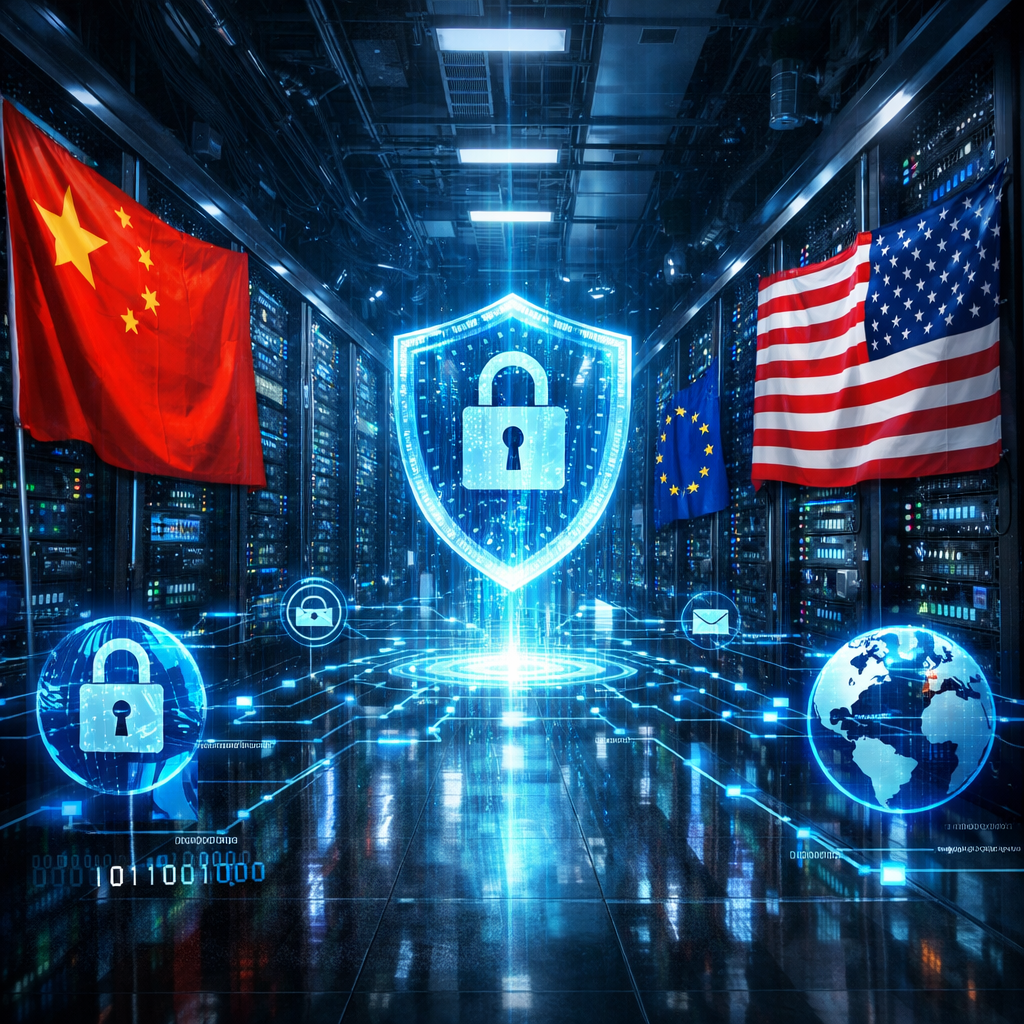
8. Export Control and Technology Transfer Restrictions
China’s evolving export control regime creates compliance obligations that extend beyond physical goods to technology, technical data, and even knowledge transfer through employment relationships.
The Export Control Law, effective December 2020, established frameworks for controlling dual-use items, military products, and technologies deemed critical to national security. Foreign businesses operating in China face restrictions when seeking to export products or technology developed using Chinese inputs, even when the final product is manufactured abroad.
A semiconductor equipment company discovered this reality when attempting to transfer technical specifications from its Chinese R&D center to European headquarters. Chinese authorities classified certain specifications as controlled technology requiring export licenses—a process that took eight months and ultimately required redesigning development workflows to keep sensitive technical data segregated within China.
Technology transfer pressures also operate through informal channels. Joint ventures in advanced manufacturing sectors may face expectations to share technology with Chinese partners that exceed formal legal requirements. Foreign businesses declining such transfers encounter administrative obstacles: delayed approvals for facility expansions, increased regulatory scrutiny, or exclusion from government procurement opportunities.
The U.S.-China technology competition adds another dimension. Products developed in China using U.S.-origin technology components may face re-export control challenges. Chinese subsidiaries of U.S. companies navigate competing compliance obligations from both governments, creating scenarios where following one jurisdiction’s rules risks violating the other’s.
Supply chain resilience concerns are driving some foreign businesses to restructure operations, but exit from China carries its own technology transfer risks. Closing Chinese facilities requires transferring equipment and technical data, but export controls may prohibit moving certain items abroad. Terminating Chinese employees with access to sensitive technology triggers non-compete obligations that are expensive to enforce and difficult to monitor.
Managing these risks requires comprehensive technology classification, understanding which technical data qualifies as controlled, implementing access restrictions around sensitive information, and maintaining detailed documentation that demonstrates compliance with both Chinese export controls and foreign jurisdiction requirements. Companies operating in sensitive sectors need dual compliance frameworks that satisfy all jurisdictions simultaneously—an expensive but necessary approach in the current geopolitical environment.
9. Anti-Corruption Compliance and Third-Party Risk Management
China’s anti-corruption enforcement has intensified dramatically over the past decade, creating compliance risks that extend beyond direct bribery to gifts, entertainment, and relationship-building practices that may seem normal in Chinese business culture.
The challenge begins with definitional ambiguity. What constitutes appropriate business hospitality versus improper benefits? Chinese business culture emphasizes relationship-building through meals, entertainment, and gift-giving, yet anti-corruption laws prohibit providing things of value to government officials. The line between acceptable and illegal isn’t always clear, and enforcement varies by region, official rank, and political climate.
State-owned enterprise (SOE) interactions create particular vulnerability. SOE employees qualify as government officials for anti-corruption purposes, dramatically expanding the scope of relationships subject to scrutiny. A regional sales manager entertaining a SOE procurement officer may unknowingly violate anti-corruption provisions if entertainment exceeds vaguely defined “appropriate” standards.
Third-party intermediaries pose the greatest compliance risk. Distributors, agents, and consultants who facilitate government relationships may engage in practices that violate anti-corruption laws without foreign parent company knowledge. A medical device company faced investigation when its Chinese distributor allegedly provided improper benefits to hospital officials to secure procurement contracts—despite the company having no direct knowledge of these payments.
Enforcement variability complicates compliance. Some provinces aggressively prosecute anti-corruption violations while others prioritize economic growth over strict enforcement. Foreign businesses face inconsistent standards where practices tolerated in one region trigger investigations in another. This geographic variability makes establishing consistent national compliance policies challenging.
Due diligence on business partners requires depth that exceeds foreign businesses’ typical practices. Vetting Chinese distributors means understanding ownership structures, verifying licenses, investigating connections to government officials, and monitoring ongoing activities through audits and compliance certifications. Many foreign businesses lack the local expertise and language capabilities to conduct this diligence effectively.
Implementing robust compliance programs is essential: comprehensive policies prohibiting improper payments, regular training that addresses Chinese business culture realities, due diligence procedures for third-party selection, monitoring mechanisms that detect suspicious activities, and internal reporting channels that allow employees to raise concerns. The investment seems substantial until you face the alternative: criminal investigations, massive fines, and reputational damage that can eliminate your market position entirely.
10. Legal System Differences and Judicial Independence Concerns
Perhaps the most fundamental disadvantage foreign businesses face is operating within a legal system that functions according to principles foreign managers often misunderstand—where courts serve state interests alongside dispute resolution, where judicial independence varies by case sensitivity, and where legal outcomes depend as much on relationships as written law.
Chinese courts handle disputes within a framework where Party policy, government priorities, and social stability considerations influence judicial decision-making. Commercial disputes viewed as affecting local employment, tax revenue, or social harmony may be decided with these factors weighing as heavily as legal merits. A contract breach case that would be straightforward in Western courts becomes complex when the breaching party is a major local employer whose failure would impact regional unemployment.
Foreign judgment recognition remains extremely limited. China enforces few foreign court judgments, creating jurisdictional traps for businesses that litigate abroad and then seek to collect assets in China. The theoretical reciprocity requirement for judgment recognition means that winning a lawsuit in the U.S. or Europe provides little practical benefit if the judgment debtor’s assets are located in China.
Administrative authority often supersedes judicial process. Government agencies may intervene in commercial disputes, pressuring parties toward settlement or directing outcomes that serve policy objectives rather than strict legal rights. Foreign businesses expecting judicial independence similar to Western courts discover that administrative influence is normal, expected, and largely beyond legal challenge.
The practical implication: legal rights on paper differ from enforceable rights in practice. Succeeding in China requires understanding this reality and building business strategies that minimize litigation dependence. The most successful foreign businesses invest heavily in relationships that prevent disputes from reaching courts, structure transactions to reduce enforcement dependency, and accept that their China legal strategy must account for factors that never appear in written contracts or statutes.
Navigating China’s Legal Landscape: A Practical Checklist
Understanding these disadvantages doesn’t mean avoiding China—it means approaching the market with clear eyes and comprehensive preparation. Before entering or expanding in China, foreign businesses should:
Pre-Entry Phase:
- Conduct sector-specific foreign investment restriction analysis to understand ownership limitations and partnership requirements
- Register all intellectual property before any China market activity, including defensive trademark registrations
- Assess data compliance obligations under PIPL and cybersecurity laws, particularly for businesses collecting user information
- Develop realistic financial models that account for full tax burden, social insurance costs, and profit repatriation constraints
Entity Structure:
- Select optimal entity type based on ownership options, operational needs, and future exit strategy
- Draft formation documents that incorporate Chinese law specificity, not adapted Western templates
- Establish segregated IP holding structures that minimize technology exposure to partners or employees
- Implement data architecture that facilitates compliance with localization and cross-border transfer restrictions
Operational Risk Management:
- Develop employment documentation that satisfies Chinese labor law formalities and creates termination defensibility
- Implement third-party due diligence processes for distributors, agents, and consultants who interact with government entities
- Create export control compliance protocols for technology development, data transfer, and employee management
- Establish internal controls around contract review, ensuring Chinese enforceability takes precedence over template familiarity
Ongoing Compliance:
- Maintain regulatory intelligence capabilities to monitor policy changes affecting your sector
- Conduct regular compliance audits covering employment, tax, data privacy, and anti-corruption areas
- Build relationships with local authorities, legal counsel, and industry associations that provide practical guidance
- Develop scenario plans for policy shifts that could impact business model viability
The businesses that succeed in China’s complex legal environment aren’t those that ignore risks or hope for Western-style legal protections. They’re the ones that recognize disadvantages early, build protection into their operational structure, and invest in the expertise needed to navigate successfully.
China remains too important to ignore, but its legal landscape demands respect, preparation, and realistic expectations. The millions saved through early-stage diligence and proper structure far exceed the millions lost when businesses discover these pitfalls only after problems emerge.
Understanding the disadvantages isn’t pessimism—it’s the foundation of successful China business strategy.