
- What Changed: Core Updates That Impact Foreign Businesses
- What Your Board Must Do Now: A Practical Compliance Roadmap
- The Broader Regulatory Context: Interconnected Compliance Obligations
- Why Proactive Adjustment Creates Competitive Advantage
- The Central Imperative: Act Now, Not When Problems Surface
- Navigating Complexity With Intelligence: The Role of AI-Powered Legal Solutions
- Conclusion: Governance as Strategic Infrastructure
On December 29, 2023, China’s National People’s Congress passed the most comprehensive revision to the Company Law in decades. The amendments took effect on July 1, 2024, and they represent a fundamental shift in how China regulates corporate governance, director accountability, and shareholder responsibilities. For foreign businesses operating in China—whether through wholly foreign-owned enterprises, joint ventures, or representative offices—this isn’t just another regulatory update to file away. It’s a wake-up call that demands immediate action.
The revised Company Law places unprecedented emphasis on corporate governance structures and fiduciary duties. Directors and senior management now face explicit personal liability for decisions that harm the company or its stakeholders. The concept of “due diligence” has been codified with specific expectations around decision-making processes, documentation standards, and risk management protocols. For foreign-invested enterprises (FIEs) that have historically operated with governance structures imported from their home jurisdictions, this creates a potential compliance gap that regulators are already beginning to scrutinize.
Why does this matter so urgently? Because Chinese regulators aren’t waiting for companies to figure it out on their own. Early enforcement actions following the law’s implementation show that authorities are actively examining board composition, meeting documentation, and decision-making processes. Companies found lacking in these areas face not only administrative penalties but also personal liability exposure for directors and officers. The stakes are higher than ever, and the window for proactive adjustment is closing.

What Changed: Core Updates That Impact Foreign Businesses
The 2024 Company Law revision touches nearly every aspect of corporate operations, but several changes stand out as particularly consequential for FIEs. Understanding these updates isn’t about legal theory—it’s about identifying where your current practices may now fall short of regulatory expectations.
Enhanced Director and Officer Duties: The new law explicitly codifies fiduciary duties for directors, supervisors, and senior management. Article 180 now requires directors to “perform their duties with diligence and due care” and establishes a clear standard of loyalty to the company. This isn’t aspirational language—it creates enforceable obligations. Directors must now demonstrate that they conducted reasonable investigation, sought appropriate expertise, and documented their decision-making processes. A board meeting where directors rubber-stamp management proposals without substantive discussion or documentation could now expose individual directors to personal liability.
Capital Contribution Requirements: For companies formed before July 1, 2024, the law introduces a five-year transition period to align with new capital contribution rules. Shareholders must now fulfill their capital contribution obligations within five years from the company’s establishment date. This eliminates the previous practice of extended or indefinite capital commitment periods. FIEs that registered with high authorized capital but minimal paid-in capital must now either inject the committed funds or formally reduce their registered capital through proper procedures. The implications are significant: failure to comply could result in shareholders being held jointly and severally liable for company debts up to the amount of their unpaid capital contributions.
Strengthened Corporate Governance Structures: The revised law mandates more rigorous governance protocols, including specific requirements for board composition, meeting frequency, and decision-making procedures. Independent directors—previously required only for publicly listed companies—now receive explicit mention and protection under the general Company Law framework. For FIEs, this means reviewing whether your board structure meets the new standards, whether meeting procedures follow required formats, and whether documentation practices satisfy regulatory expectations.
Enhanced Disclosure and Transparency: Companies must now maintain more comprehensive records and provide broader disclosure to shareholders and, in certain circumstances, creditors. The law establishes specific requirements for financial reporting, related-party transactions, and major operational decisions. FIEs accustomed to minimal disclosure beyond statutory financial statements may need to implement new reporting systems and expand information-sharing protocols.
Expanded Liability Provisions: Perhaps most significantly, the new law expands circumstances under which directors, officers, and even controlling shareholders can be held personally liable. This includes liability for unlawful distributions, failure to properly capitalize the company, approval of related-party transactions that harm the company, and decisions made without proper due diligence. The law also introduces mechanisms for shareholders and creditors to pierce the corporate veil more easily when companies are undercapitalized or operated in ways that harm stakeholder interests.
What Your Board Must Do Now: A Practical Compliance Roadmap
Foreign companies cannot afford to treat these changes as distant regulatory concerns. The time for action is now, before regulators or aggrieved stakeholders force the issue through enforcement actions or litigation. Here’s what boards and senior management must prioritize immediately.
Conduct a Governance Structure Audit: Begin by mapping your current governance structure against the new legal requirements. Does your board meet with sufficient frequency? Are meeting minutes comprehensive and properly documented? Do they reflect substantive discussion rather than mere formalities? Review your articles of association and bylaws to identify provisions that may now conflict with the amended Company Law. Many FIEs operate under governance documents that were adequate under the old framework but now contain gaps or inconsistencies. Understanding compliance requirements is essential to avoid costly violations.
Implement Capital Compliance Plans: If your company registered with capital commitments that remain unfulfilled, develop an immediate action plan. This might involve accelerating capital injections, formally reducing registered capital through proper procedures, or restructuring ownership arrangements. Waiting until the five-year deadline approaches creates unnecessary risk. Regulators may view last-minute capital adjustments with suspicion, and rushed restructuring rarely produces optimal results.
Strengthen Board Documentation Practices: Institute rigorous documentation standards for all board and management decisions. Minutes should reflect not just outcomes but the analysis that led to decisions. When directors approve significant transactions, documentation should show what information they reviewed, what questions they asked, what alternatives they considered, and what risk factors they evaluated. This documentation serves dual purposes: it demonstrates compliance with fiduciary duties and provides a defense if decisions are later challenged.
Establish Due Diligence Protocols: Create formal protocols requiring appropriate investigation and analysis before major decisions. This might include mandatory financial projections for capital expenditures above certain thresholds, legal review of contracts meeting specified criteria, or third-party valuations for related-party transactions. The goal is to demonstrate that directors fulfilled their duty of care through systematic, documented processes.
Review and Update Corporate Documents: Update your articles of association, bylaws, and internal governance policies to align with the new law. This includes incorporating required provisions on director duties, capital contribution timelines, governance procedures, and disclosure obligations. Don’t rely on boilerplate updates—customize documents to reflect your company’s specific structure and operations while meeting legal requirements.
Implement Director and Officer Education Programs: Ensure all directors and senior officers understand their enhanced duties and potential liabilities under the new law. This isn’t about legal lectures—it’s about practical education on what changed, why it matters, and what they must do differently. Directors who don’t understand their obligations cannot fulfill them.
Establish Compliance Monitoring Systems: Create mechanisms to monitor ongoing compliance with governance requirements. This might include compliance checklists for board meetings, periodic audits of corporate documentation, and systematic review of major decisions against established protocols. Compliance isn’t a one-time adjustment—it requires continuous attention.
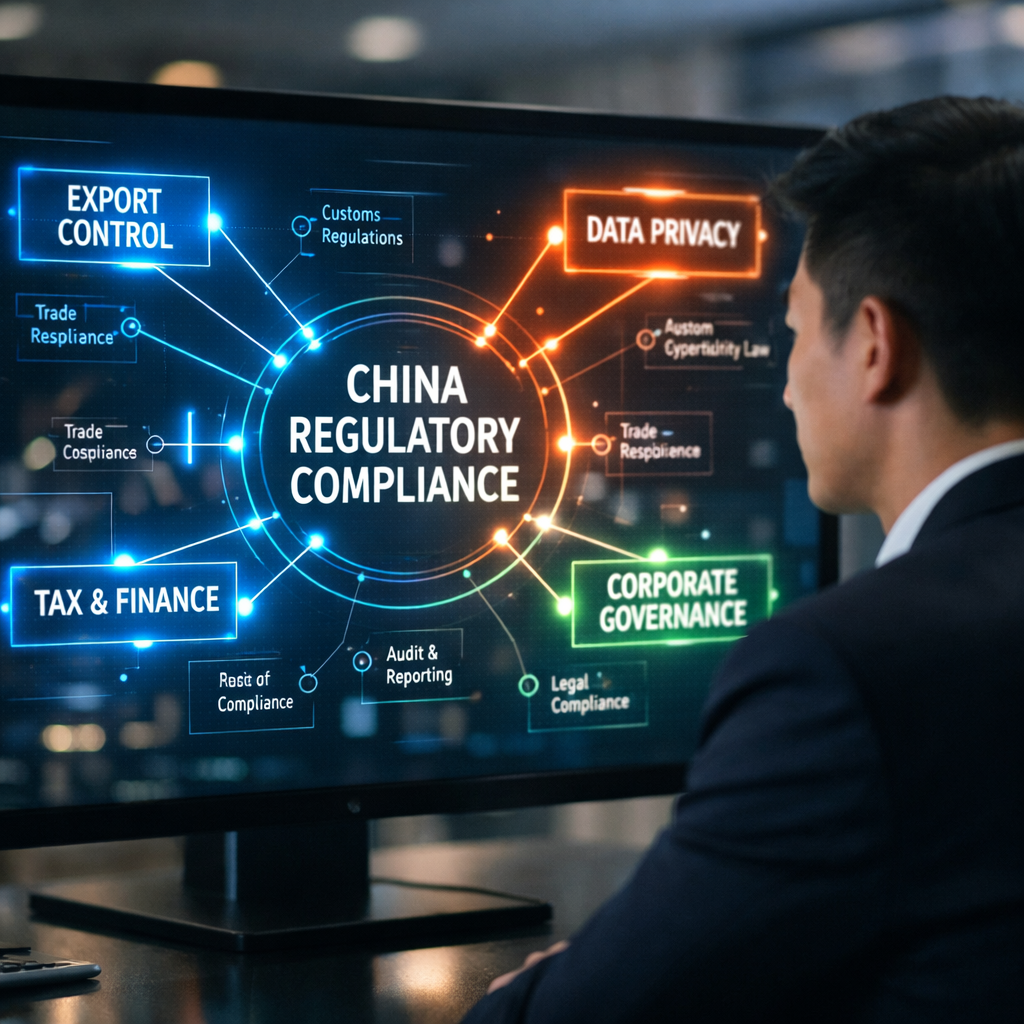
The Broader Regulatory Context: Interconnected Compliance Obligations
The amended Company Law doesn’t exist in isolation. Foreign companies must understand how it intersects with China’s expanding web of regulatory requirements across multiple domains. Viewing governance compliance narrowly, without considering related regulatory contexts, creates blind spots that can prove costly.
Export Control Compliance: China’s export control regime has expanded dramatically in recent years, covering not just traditional military items but also dual-use technologies, critical minerals, and sensitive data. Companies subject to export controls face specific documentation requirements, internal compliance program mandates, and reporting obligations. The revised Company Law’s emphasis on due diligence and documentation aligns with export control expectations—proper governance structures help ensure export control compliance, while failures in corporate governance can expose export control violations.
Tax Reporting and Transfer Pricing: China’s tax authorities are increasingly sophisticated in identifying transfer pricing issues and profit-shifting arrangements. The new Company Law’s enhanced disclosure requirements and emphasis on related-party transaction oversight support tax compliance efforts. FIEs must ensure that their governance structures include proper review and documentation of related-party transactions, independent pricing analysis, and systematic reporting of cross-border transactions. Directors who approve related-party transactions without proper analysis now face both tax exposure and personal liability under the Company Law.
Data Privacy and Cybersecurity Obligations: China’s Personal Information Protection Law, Data Security Law, and Cybersecurity Law create comprehensive data governance requirements. Companies processing personal information or operating critical information infrastructure must implement specific technical and organizational measures. The Company Law’s governance requirements now extend to data protection—boards must ensure adequate data security measures, proper risk assessment, and compliance monitoring. Directors cannot delegate away their oversight responsibilities for data compliance any more than they can for financial compliance.
Cross-Border Data Transfer Restrictions: Recent regulatory developments around cross-border data transfers create specific obligations for companies moving data outside China. Board approval may be required for certain data transfer arrangements, and directors must ensure proper security assessments are conducted. The intersection of data transfer restrictions with enhanced director duties means boards cannot treat data transfers as purely technical matters to be handled by IT departments.
Labor and Employment Compliance: China’s employment laws contain specific requirements around employee representation, termination procedures, and benefits provision. The revised Company Law’s enhanced stakeholder focus—including explicit mention of employee interests—reinforces employment compliance obligations. Governance structures should include mechanisms for considering employment implications in major business decisions, particularly those involving restructuring, relocation, or significant operational changes.
Why Proactive Adjustment Creates Competitive Advantage
The temptation for many foreign companies will be to view these changes as burdensome compliance costs—more paperwork, more meetings, more documentation without corresponding business value. This perspective misses the strategic opportunity that proper governance structures create.
Companies that strengthen their governance infrastructure don’t just achieve compliance—they build operational resilience. Systematic decision-making processes reduce errors and missed opportunities. Proper documentation provides institutional memory that preserves knowledge when personnel change. Enhanced disclosure creates transparency that builds stakeholder trust. Independent oversight catches problems before they become crises.
Consider a practical scenario: an FIE needs to decide whether to extend substantial credit to a financially struggling customer. Under old practices, management might make this decision with minimal board involvement or documentation. Under the new framework, proper governance requires systematic analysis—reviewing the customer’s financial condition, evaluating collectability risks, considering alternative approaches, and documenting the decision rationale. This process doesn’t just satisfy compliance requirements—it produces better decisions by forcing disciplined analysis.
Similarly, the capital contribution requirements, while initially seeming like a regulatory burden, actually encourage companies to optimize their capital structures. Many FIEs historically registered with excessive authorized capital—far beyond operational needs—because there was no urgency to inject the capital. The new five-year deadline forces a realistic assessment: do we genuinely need this capital level, or should we reduce it to match our business needs? This exercise often reveals opportunities to streamline structures and reduce unnecessary complexity.
The enhanced liability provisions, while increasing risk for directors and officers, also create accountability mechanisms that align management interests with company interests. When directors face personal exposure for inadequate due diligence or conflicted transactions, they’re incentivized to demand better information, challenge questionable proposals, and ensure proper processes. This alignment benefits the company even if regulatory enforcement never occurs.
The Central Imperative: Act Now, Not When Problems Surface
The revised Company Law represents a fundamental reset of expectations around corporate governance in China. For foreign companies, the message is unambiguous: governance structures adequate under the old framework likely fall short under the new one. The question isn’t whether to adjust—it’s whether to adjust proactively or wait until regulators or stakeholders force the issue.
Companies that move quickly gain multiple advantages. First, proactive adjustment demonstrates good faith and reduces regulatory suspicion. When authorities examine your company’s governance practices, finding that you’ve already implemented improvements shows commitment to compliance rather than resistance to it. Second, early action prevents problems before they occur. Governance failures discovered during routine compliance reviews can be corrected quietly. The same failures discovered during investigations or litigation become public, costly, and potentially catastrophic. Third, systematic governance improvement takes time to embed into organizational culture. Starting now means robust practices are in place before high-stakes decisions must be made under pressure.
The stakes extend beyond regulatory compliance. In China’s evolving business environment, governance failures increasingly trigger consequences beyond government enforcement. Shareholders use enhanced legal protections to challenge questionable decisions. Creditors invoke piercing provisions to reach company assets. Commercial disputes uncover inadequate documentation and use it as leverage. Strong governance infrastructure protects against all these scenarios.
Navigating Complexity With Intelligence: The Role of AI-Powered Legal Solutions
For foreign companies navigating China’s complex and rapidly evolving legal landscape, traditional approaches to compliance are increasingly inadequate. The combination of language barriers, cultural differences, jurisdictional complexity, and constant regulatory change creates challenges that human expertise alone struggles to address efficiently.
This is where AI-powered legal intelligence platforms like iTerms AI Legal Assistant transform how companies approach China compliance. Built on FaDaDa’s decade of experience serving over 100,000 global clients in China’s legal technology market, iTerms brings certified legal expertise together with advanced AI capabilities specifically designed for cross-border scenarios.
The Company Law amendments exemplify why AI-powered solutions matter. Foreign companies need to understand not just what the law says but what it means in practice—how Chinese regulators interpret requirements, what documentation standards satisfy fiduciary duty obligations, what governance structures work in Chinese regulatory contexts. Generic legal translation or abstract legal theory doesn’t answer these questions. What’s needed is practical, scenario-based guidance grounded in real-world Chinese legal practice.
iTerms addresses this through its AI Legal Consultation Engine, which provides real-time, contextual answers to Chinese legal questions with scenario-based guidance tailored to specific business situations. Rather than forcing users to navigate dense legal text, the platform interprets requirements, explains implications, and suggests practical next steps. For a board trying to understand what “due diligence” means under the new Company Law, iTerms doesn’t just cite statutory language—it explains what documentation regulators expect to see, what analysis directors should conduct, and what red flags might trigger scrutiny.
Similarly, iTerms’ Contract Intelligence Center enables companies to create governance documents that align with the revised Company Law while reflecting their specific business needs. Rather than relying on generic templates that may not fit Chinese requirements or struggling with translation between Western legal concepts and Chinese frameworks, companies can generate structurally complete, legally rigorous documents through AI-powered drafting, access attorney-reviewed templates customized for China operations, or enhance existing documents to ensure compliance.
The platform’s innovative legal mapping technology addresses a critical challenge: cross-jurisdictional legal concept translation. Western legal concepts like “fiduciary duty” or “piercing the corporate veil” don’t translate directly into Chinese law—they exist within different legal frameworks with different underlying principles. iTerms solves this by mapping equivalent concepts across legal systems, ensuring that foreign companies understand not just the literal translation but the functional equivalent in Chinese legal practice.
For companies managing the practical compliance actions outlined earlier—governance audits, capital compliance plans, documentation improvements—AI-powered tools accelerate implementation while reducing costs. What might traditionally require extensive outside counsel hours and repeated consultations becomes accessible through intelligent, on-demand guidance. This doesn’t replace human judgment—boards and management must still make decisions—but it provides the legal intelligence foundation that informed decisions require.
Conclusion: Governance as Strategic Infrastructure
China’s Company Law amendments mark a turning point in how the country regulates corporate behavior and accountability. The changes aren’t cosmetic or purely technical—they represent fundamental shifts in governance expectations, director responsibilities, and enforcement approaches. For foreign companies, the implications are clear and urgent.
The companies that will thrive in China’s evolving regulatory environment are those that view governance not as a compliance burden but as strategic infrastructure. Strong governance structures enable better decisions, reduce operational risks, build stakeholder trust, and create sustainable competitive advantage. The revised Company Law provides both the mandate and the opportunity to build this infrastructure.
The time for action is now. Conduct your governance audit, implement capital compliance plans, strengthen documentation practices, establish due diligence protocols, and update corporate documents. Do these things before regulators come knocking, before stakeholders raise challenges, before governance failures create crises.
And recognize that navigating China’s complex legal landscape requires more than good intentions—it requires sophisticated legal intelligence that bridges jurisdictional gaps, interprets practical requirements, and provides actionable guidance. Whether you’re adjusting governance structures, updating corporate documents, or trying to understand what new legal requirements mean for your business, AI-powered legal solutions designed specifically for China operations can transform how efficiently and effectively you achieve compliance.
China is overhauling its Company Law, and your board must respond. The question isn’t whether to adjust—it’s whether you’ll adjust proactively and strategically, or reactively and expensively. Choose wisely.