
When Mark Thompson, CEO of a mid-sized manufacturing equipment supplier in Ohio, discovered his Chinese supplier had shipped defective components worth $850,000, his first instinct was clear: sue them in China. His U.S. attorney prepared a comprehensive complaint, hired a private process server in Shanghai, and filed the lawsuit. Six months later, the Chinese court dismissed the case without ever examining its merits. The reason? The service of process was invalid from day one.
Mark’s story isn’t unique. Every year, hundreds of international businesses and expatriates face similar failures in Chinese litigation—not because their cases lack merit, but because they fundamentally misunderstand how China’s legal system operates. According to recent insights from legal practitioners working with cross-border disputes, approximately 40% of initial filings by foreign plaintiffs encounter procedural obstacles that could have been avoided with proper preparation.
The harsh reality is that China’s legal landscape operates on principles vastly different from Western jurisdictions. What seems straightforward in New York, London, or Sydney can become a legal minefield in Beijing or Shanghai. Understanding these differences before initiating legal action isn’t just advisable—it’s essential to avoid wasting time, money, and strategic leverage.

The Service of Process Trap: Why Your Lawsuit Dies at the Starting Line
The most common—and most devastating—mistake foreign litigants make involves service of process. In Western legal systems, you might be accustomed to relatively flexible service methods: hiring private process servers, sending documents via certified mail, or even using electronic service in some jurisdictions. In China, these approaches don’t just fail—they can invalidate your entire case before it begins.
China is a signatory to the Hague Service Convention, which establishes formal protocols for serving legal documents across international borders. Under this framework, service of process in China must follow a specific, non-negotiable pathway: documents must be transmitted through China’s Central Authority, which is the Ministry of Justice. There are no shortcuts, and attempting them creates serious legal vulnerabilities.
Consider what happened to a European pharmaceutical company that attempted to serve a Chinese contract manufacturer through a local courier service. The documents were physically delivered to the defendant’s office, signed for by a receptionist, and the company believed service was complete. When they appeared in court, the Chinese judge immediately rejected the case. Why? Because Chinese courts only recognize service accomplished through official channels as specified in the Hague Service Convention.
The practical implications are significant. Private process servers, no matter how professional or well-connected, cannot provide valid service in China. Regular mail, even registered or certified, doesn’t satisfy Chinese legal requirements. Email service, which some jurisdictions now permit, remains generally unrecognized in Chinese civil litigation. Electronic platforms, unless specifically authorized by Chinese authorities, won’t validate your service attempt.
The only reliable method is transmission through the Central Authority designated by China under the Hague Service Convention. This involves submitting your legal documents to your country’s designated authority, which then forwards them through diplomatic channels to China’s Ministry of Justice. The Ministry reviews the documents, ensures they meet Chinese requirements, and arranges for formal service on the defendant.
This process isn’t fast. Depending on document complexity, translation requirements, and case volume at the Ministry, service through the Central Authority typically takes three to six months. Some cases have experienced delays exceeding a year. For businesses accustomed to the pace of Western litigation, this timeline feels frustratingly slow. But rushing the process by attempting alternative service methods doesn’t accelerate your case—it terminates it.
A Canadian technology firm learned this lesson expensively. Facing a critical intellectual property dispute with a Chinese manufacturer, they paid a Shanghai law firm to effect “local service” of their complaint. The law firm delivered the documents directly to the defendant’s legal department, obtained a signature, and reported success. The Canadian company proceeded with litigation strategy, incurring substantial legal fees over eight months. When the Chinese court finally addressed jurisdiction, it ruled the service invalid and dismissed the case. The company had to restart the entire process, losing critical time while their IP continued to be infringed.
Documentation Requirements: Where Western Assumptions Fail
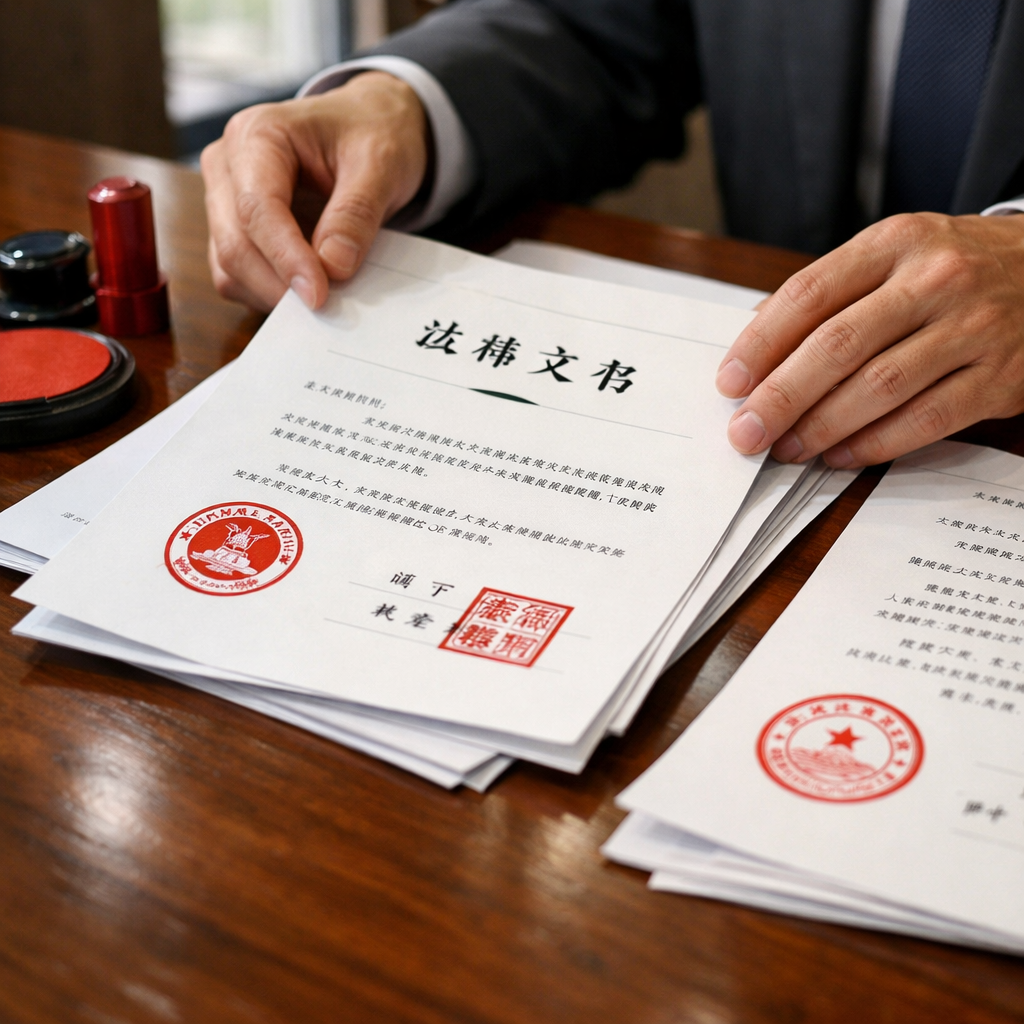
Beyond service methodology, the content and format of your legal documents create another failure point. Chinese courts impose strict documentation requirements that differ significantly from Western jurisdictions, and failing to meet these standards can result in rejection—even after you’ve successfully navigated the service process.
First, all documents submitted to Chinese courts must be in Chinese. This isn’t a courtesy—it’s a legal requirement for international business documentation. Simply attaching an English-language complaint with a Chinese cover letter won’t suffice. Every page, every exhibit, every piece of evidence must be professionally translated into Chinese by a qualified translator. The Chinese court will not accept documents in any other language, and they will not provide translation services.
Translation quality matters enormously. Chinese legal terminology doesn’t always map cleanly onto Western concepts. For example, the common law concept of “consideration” in contract law doesn’t have a perfect Chinese equivalent. Chinese law uses different frameworks for analyzing contractual validity, and translators must understand both legal systems to convey your arguments accurately. Using a general translation service, rather than one specializing in legal translation, often produces documents that confuse Chinese judges or misrepresent your legal position.
An Australian mining company discovered this when their general translator rendered “fiduciary duty” in a way that suggested criminal fraud rather than civil breach of trust. The mistranslation so alarmed the Chinese court that they ordered an investigation into criminal activity—derailing the civil case for months while the company scrambled to clarify their actual claims.
Document formatting also follows Chinese conventions. Court filings must include specific certifications, stamps, and organizational structures that Western lawyers rarely encounter. For instance, evidence submitted to Chinese courts typically requires notarization in your home country, followed by authentication (often called “apostille” under the Hague Convention) or legalization by the Chinese embassy or consulate. Without these certifications, Chinese courts may reject your evidence as unverified.
Here’s where many cases fail: foreign litigants submit documents that would be perfectly acceptable in their home courts—sworn affidavits, business records with corporate authentication, photographs with explanatory captions. Chinese courts frequently reject these materials because they lack the specific certifications required under Chinese Civil Procedure Law. The evidence might be genuine and persuasive, but without proper authentication through Chinese diplomatic channels, it’s inadmissible.
Creating a clear documentation trail from the beginning is crucial. Every document you plan to use as evidence should be notarized by a recognized notary in your jurisdiction, then submitted to the Chinese embassy or consulate for authentication. This authentication confirms that your notary is legitimate and that the document is properly executed under your country’s laws. Chinese courts give substantial weight to properly authenticated documents, while treating unauthenticated materials with skepticism.
Recent Changes in Chinese Civil Procedure: What You Need to Know
The legal landscape isn’t static. China regularly updates its Civil Procedure Law, and recent revisions have created both opportunities and challenges for foreign litigants. Understanding these changes is essential for anyone considering legal action in China.
The 2023 amendments to the PRC Civil Procedure Law introduced several significant modifications affecting international litigation. One crucial change involves the streamlining of procedures for cases with different complexity levels. Chinese courts now categorize civil cases into simplified, ordinary, and complex tracks, with different procedural requirements and timelines for each.
For international litigants, this categorization matters because it affects how quickly your case proceeds and what procedural requirements apply. A straightforward contract dispute might qualify for the simplified track, with faster hearings and reduced documentary requirements. A complex IP case involving multiple defendants and technical evidence will fall into the complex track, with more extensive procedural steps but also greater opportunity for thorough evidence presentation.
The amendments also clarified provisions regarding preservation of assets and evidence—crucial considerations for foreign plaintiffs worried about defendants hiding assets or destroying documentation during litigation. Chinese courts now have enhanced authority to freeze assets, restrict conduct, and preserve evidence when plaintiffs demonstrate legitimate concerns about defendants’ potential actions. However, these provisional measures require proper application with supporting evidence, and foreign litigants must understand the specific requirements to benefit from these protections.
Another significant development involves China’s approach to cross-border evidence gathering. Historically, obtaining evidence located outside China for use in Chinese litigation was extremely difficult. The revised Civil Procedure Law includes provisions that may facilitate evidence collection through mutual legal assistance treaties, but implementation remains uneven. Foreign litigants should work with Chinese counsel who understand which evidence collection methods Chinese courts currently recognize and what documentation standards apply.
Perhaps most significantly for international businesses, the revised law addresses jurisdictional issues in cross-border commercial disputes. Chinese courts now apply more sophisticated analysis when determining whether they have jurisdiction over cases involving international elements. This creates both opportunities—Chinese courts may accept jurisdiction in cases they previously declined—and risks, as courts may assert jurisdiction in situations where foreign parties believed Chinese courts lacked authority.
For foreign business owners and expatriates, these changes mean that assumptions based on even relatively recent experience may no longer be accurate. A legal strategy that worked in 2022 might fail in 2025 due to procedural revisions. Staying informed about ongoing developments in Chinese civil procedure isn’t optional—it’s a business necessity for anyone with significant China exposure.
Practical Best Practices: How to Minimize Risk Before Filing
Given these complexities, how should international businesses and individuals approach potential litigation in China? The answer begins long before you file any lawsuit.
First, establish relationships with qualified Chinese legal counsel before disputes arise. Many foreign businesses wait until conflict erupts to seek Chinese attorneys, but by then, strategic options have already narrowed. A qualified Chinese attorney can help you structure contracts, document business relationships, and create evidence trails that will prove invaluable if litigation becomes necessary.
When selecting Chinese counsel, prioritize firms with genuine cross-border experience. The attorney should be fluent in both Chinese law and your home jurisdiction’s legal concepts, able to explain how Chinese courts will interpret contractual terms and what evidence Chinese judges find persuasive. Many foreign litigants hire Chinese attorneys who are technically competent but lack the cultural fluency to effectively translate Western business expectations into Chinese legal arguments.
Second, maintain meticulous documentation throughout your business relationships with Chinese parties. Chinese courts place heavy emphasis on written evidence, particularly contracts, correspondence, and transaction records. Verbal agreements, which might be enforceable in some Western jurisdictions, carry minimal weight in Chinese litigation. If an agreement isn’t documented in writing with clear Chinese-language terms, you’ll struggle to enforce it.
This documentation should include Chinese-language versions of all important communications and agreements. Many international businesses operate entirely in English when dealing with Chinese partners, creating a paper trail the Chinese courts will find difficult to evaluate. Even if your Chinese counterparty speaks perfect English, ensure critical documents exist in both languages, with the Chinese version explicitly designated as controlling in case of conflicts.
Third, understand the mutual legal assistance framework before you need it. China has mutual legal assistance treaties with numerous countries, facilitating evidence gathering, service of process, and enforcement of judgments. However, these treaties operate through government channels with specific procedural requirements. Attempting to use these mechanisms on the fly, without prior understanding, typically results in delays and mistakes.
For example, if you need to serve Chinese defendants, research your country’s Central Authority procedures well before filing suit. Understand what documentation they require, how long processing typically takes, and whether they have specific format requirements. Some countries’ Central Authorities require extensive notarization before they’ll transmit documents to China; discovering this after you’ve already filed your lawsuit can cause months of delay.
Fourth, consider alternative dispute resolution mechanisms before committing to litigation. China’s courts, while increasingly sophisticated, remain unpredictable for foreign litigants. Arbitration clauses in contracts—particularly those specifying well-regarded international arbitration venues like CIETAC or ICC—often provide foreign businesses with more reliable dispute resolution than litigation in Chinese courts.
However, arbitration clauses must be carefully drafted. Chinese law imposes specific requirements on arbitration agreements, and poorly drafted clauses may be unenforceable. Working with legal counsel experienced in China arbitration when drafting contracts can save enormous headaches later.
The Cost of Getting It Wrong
The financial and strategic costs of procedurally defective China litigation extend far beyond wasted legal fees. When your case fails on procedural grounds, you lose time—often six months to a year before you can restart with proper procedures. During that time, your Chinese defendant may be dissipating assets, destroying evidence, or establishing facts on the ground that make your eventual recovery difficult or impossible.
You also lose leverage. Chinese companies quickly learn when foreign plaintiffs don’t understand Chinese legal procedures. A case that’s dismissed for improper service signals to the defendant that they’re dealing with unsophisticated foreign opposition. This emboldens defendants to be more aggressive in business disputes, knowing their foreign counterparties lack the expertise to effectively pursue Chinese litigation.
Furthermore, procedural failures damage your credibility with Chinese courts. When you restart litigation after a procedural dismissal, Chinese judges remember. They may view you as a litigant who doesn’t respect Chinese legal processes, making them less sympathetic to your substantive arguments even when you’ve corrected procedural defects.
For expatriates living in China, procedural missteps in litigation can create additional complications. China’s residence permit system requires good legal standing, and involvement in messy, procedurally defective litigation can trigger administrative scrutiny. While properly conducted litigation is your legal right, cases that Chinese authorities view as reflecting ignorance of Chinese law can affect your relationship with local officials.
Moving Forward with Confidence
The complexities of Chinese litigation shouldn’t paralyze foreign businesses and individuals from pursuing legitimate legal remedies. Chinese courts, despite their differences from Western systems, provide genuine recourse for parties who understand and follow proper procedures. The key is approaching Chinese litigation with appropriate preparation and realistic expectations.
This preparation begins with education. Understanding how Chinese courts differ from your home jurisdiction isn’t just academic knowledge—it’s practical intelligence that protects your business interests and personal rights. Reading authoritative sources like the Asia Business Law Journal, consulting with experienced cross-border legal counsel, and investing time in understanding Chinese legal culture pays dividends when disputes arise.
It continues with prevention. Many China legal disputes become litigation because parties failed to properly structure their relationships from the beginning. Clear contracts with Chinese-language terms, proper documentation of business transactions, and realistic dispute resolution mechanisms (including arbitration clauses) prevent many cases from ever reaching court.
When litigation becomes necessary, success requires patience and precision. The formal mechanisms established by international treaties and Chinese law exist for good reasons—they ensure that defendants receive proper notice, that courts have reliable evidence, and that judgments rest on solid legal foundations. Shortcuts don’t work in Chinese litigation. The only path to success runs through proper procedures, even when those procedures seem frustratingly slow or complex.
For international businesses, developing China legal competence should be viewed as core business intelligence—as essential as understanding Chinese market conditions, regulatory requirements, or consumer preferences. Companies that treat Chinese legal compliance and dispute resolution as afterthoughts inevitably pay higher costs than those that invest in proper legal infrastructure from the beginning.
For expatriates, understanding Chinese legal procedures protects both your business interests and personal rights. Whether you’re entering employment contracts, purchasing property, or establishing business relationships, knowing how Chinese law operates—and how to effectively pursue legal remedies when necessary—provides security and confidence in your China life.
The legal landscape will continue evolving. China regularly updates its civil procedure laws, courts gain experience handling international disputes, and the relationship between Chinese and foreign legal systems becomes increasingly sophisticated. Staying informed about these developments isn’t a one-time effort but an ongoing commitment for anyone with significant China exposure.
Your China legal strategy should begin long before any dispute arises—with proper contract drafting, clear documentation, qualified legal counsel, and realistic understanding of how Chinese courts operate. When litigation becomes necessary, success depends on following formal procedures precisely, even when they seem burdensome or slow. The cases that fail before they start are almost always those where parties prioritized speed and convenience over procedural correctness.
In China’s legal system, patience and precision aren’t just virtues—they’re requirements. Understanding this fundamental truth, and structuring your legal approach accordingly, separates successful foreign litigants from those whose cases fail before they even begin.