
The legal landscape in China is undergoing a profound transformation. For foreign businesses navigating the complex intersection of Chinese regulations, cross-border commerce, and evolving compliance requirements, artificial intelligence has emerged as a powerful ally. AI lawyers—sophisticated legal technology platforms powered by advanced natural language processing and machine learning—are reshaping how international companies approach legal challenges in the Chinese market.
Consider this: A mid-sized European manufacturer recently faced a critical decision about expanding operations into China. Traditional legal consultation would have required weeks of back-and-forth correspondence with Chinese law firms, translating documents, and reconciling legal concepts that don’t always align between Western and Chinese legal frameworks. Instead, the company used an AI legal platform to conduct preliminary research, draft initial contracts, and identify key compliance risks—all within 48 hours. This didn’t replace their legal team; it empowered them to work smarter.
This scenario isn’t futuristic speculation. It’s happening right now. AI-powered legal tools are providing rapid legal research, contract analytics, and regulatory monitoring for businesses of all sizes. Yet understanding what these tools can genuinely accomplish—and where they fall short—remains crucial for any company serious about doing business in China.

The Real Capabilities of AI Lawyers in China Business
AI lawyers excel at tasks that require processing vast amounts of legal information quickly and identifying patterns that would take human lawyers considerably longer to discover. For businesses operating in China, this translates into several concrete advantages.
Comprehensive due diligence represents one of the most powerful applications. When evaluating potential Chinese partners, suppliers, or acquisition targets, AI platforms can rapidly analyze corporate documentation, regulatory filings, and public records to flag potential red flags. A U.S. technology company recently used AI-powered due diligence tools to review over 300 Chinese supplier contracts in three days—a task that would have required weeks using traditional methods. The AI identified inconsistencies in payment terms, spotted unusual liability clauses, and highlighted suppliers with questionable compliance histories.
Contract lifecycle management has been revolutionized by AI capabilities. Modern AI legal platforms don’t just store contracts—they understand them. They can automatically extract key terms, identify renewal dates, flag non-standard clauses, and even suggest improvements based on best practices and recent regulatory changes. For companies managing hundreds of contracts with Chinese partners, distributors, and service providers, this capability transforms contract management from a reactive administrative burden into a proactive risk management tool.
Compliance risk management becomes dramatically more efficient with AI assistance. China’s regulatory environment changes frequently, with new rules affecting data privacy, foreign investment, labor practices, and industry-specific requirements emerging regularly. AI legal tools can monitor regulatory developments in real-time, automatically assess how changes might impact your specific business operations, and prioritize compliance actions based on risk levels. One multinational retail chain uses AI monitoring to track changes across 14 different Chinese regulatory domains, receiving customized alerts that allow their legal team to focus on the most critical compliance issues.
The AI lawyer approach also excels at legal research and analysis. When your team needs to understand how Chinese courts have interpreted specific contract provisions, how regulatory agencies have enforced particular rules, or how similar businesses have structured their China operations, AI can rapidly synthesize relevant case law, regulatory guidance, and legal commentary. This isn’t just keyword searching—advanced AI platforms understand legal concepts, can bridge terminology differences between English and Chinese legal language, and provide contextual analysis that helps non-specialist business leaders make informed decisions.
Understanding the Boundaries: What AI Lawyers Cannot Do
Despite these impressive capabilities, AI lawyers have significant limitations that business leaders must understand to use these tools effectively and responsibly.
Human oversight remains non-negotiable. AI can draft a contract, but it cannot replace the judgment of an experienced attorney who understands your specific business context, negotiating position, and strategic objectives. A logistics company learned this lesson when an AI-generated distribution agreement for their China operations included technically correct but commercially unrealistic liability caps. The AI understood Chinese contract law but couldn’t assess whether the terms made business sense for that particular relationship.
Accuracy issues persist, particularly in rapidly evolving legal areas or highly specialized contexts. AI models are trained on historical data, which means they can miss recent regulatory changes or struggle with novel legal questions. When China introduced new data localization requirements for specific industries, some AI platforms initially provided guidance based on older frameworks, potentially exposing companies to compliance risks. ⚠️ The lesson: AI-generated legal analysis requires verification, especially for high-stakes decisions.
Confidentiality concerns demand careful attention. When you input contract details, business information, or strategic plans into an AI platform, you’re sharing sensitive data. Not all AI legal tools provide adequate data security, and some may use your inputs to train their models—potentially exposing your confidential information. International businesses must carefully evaluate whether AI platforms comply with both Chinese data protection regulations and their home jurisdiction requirements.
Cultural and contextual nuance often eludes AI systems. Chinese business law isn’t just about statutes and regulations—it’s deeply influenced by business customs, relationship dynamics, and unwritten expectations. An AI might correctly identify that a contract complies with Chinese law but miss that the payment terms would be considered disrespectful in the local business culture, potentially damaging an important partnership before it begins.
Complex negotiation strategy requires human expertise. While AI can suggest contract terms and identify potential issues, it cannot navigate the subtle dynamics of negotiating with Chinese counterparties. Understanding when to push for specific provisions, when to compromise, and how to frame requests in culturally appropriate ways requires experienced legal professionals who understand both the law and the business environment.
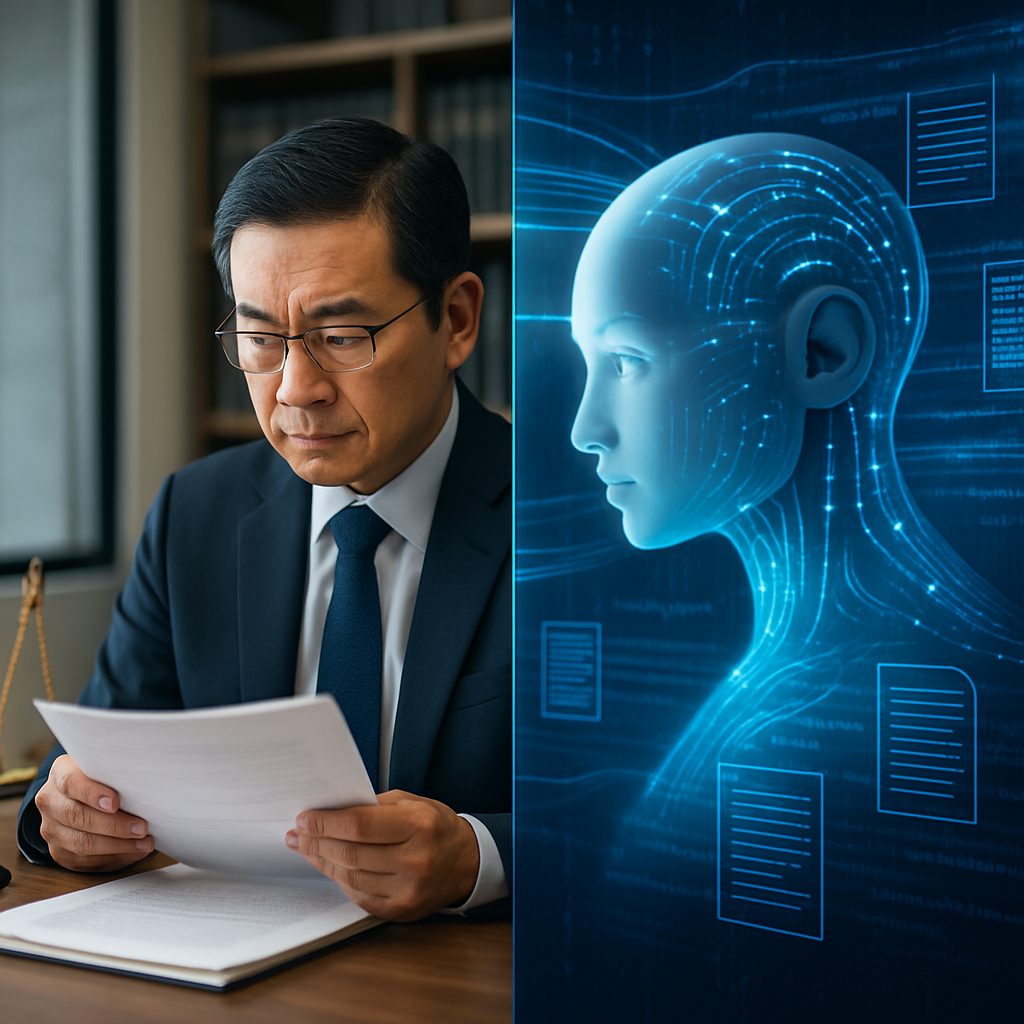
💡 This is why the most effective approach combines AI capabilities with expert legal guidance. AI handles the heavy lifting of research, document review, and routine analysis, while experienced attorneys provide strategic counsel, verify AI outputs, and apply judgment to complex situations.
Strategic Applications for China Business
Understanding the capabilities and limitations of AI lawyers allows businesses to deploy these tools strategically for maximum impact.
Market entry planning benefits enormously from AI-assisted research. When considering entering the Chinese market, companies can use AI platforms to rapidly assess regulatory requirements for their specific industry, review common business structure options, and identify key compliance obligations. A Canadian pharmaceutical company used AI legal research to evaluate five different market entry strategies simultaneously, comparing regulatory pathways, cost implications, and timeline considerations. This comprehensive analysis, completed in days rather than months, informed their board’s decision and accelerated their China entry by nearly six months.
Mergers and acquisitions in China present unique legal complexities where AI excels at preliminary analysis. AI tools can quickly review target company contracts, identify potential liabilities, flag regulatory approval requirements, and highlight integration challenges. However, the final due diligence and negotiation strategy still require experienced M&A attorneys who understand Chinese corporate law and deal-making culture.
Intellectual property strategy increasingly relies on AI-powered analysis. Protecting IP in China requires understanding not just patent and trademark law but also practical enforcement mechanisms and strategic registration approaches. AI platforms can analyze competitor IP portfolios, identify potential infringement risks, and suggest registration strategies based on your specific technology and market position. One technology startup used AI analysis to identify that their key patents had been cited in 17 Chinese patent applications, allowing them to proactively address potential IP challenges before entering the market.
Regulatory compliance programs become more manageable with AI monitoring and analysis. Companies subject to Chinese data privacy regulations, environmental standards, or industry-specific requirements can use AI to maintain real-time compliance dashboards, automatically update policies when regulations change, and identify compliance gaps before they become problems.
China-Specific Considerations for AI Legal Tools
The Chinese legal and regulatory environment presents unique factors that affect how businesses should implement and rely on AI legal assistance.
Data localization requirements directly impact AI tool selection. ⚠️ Chinese regulations require certain categories of data to be stored and processed within China. If you’re using an AI legal platform to analyze China business contracts or operations, you need to ensure the platform complies with Chinese data localization rules. Some international AI legal platforms have established Chinese data centers specifically to address this requirement, while others may not be suitable for processing certain types of China-related legal information.
The regulatory landscape itself shapes how AI tools function. China’s approach to AI regulation is comprehensive and evolving, with specific requirements for algorithm transparency, content generation, and data usage. AI legal platforms operating in or serving the Chinese market must themselves comply with Chinese AI regulations—a meta-compliance challenge that affects tool selection and usage.
Bilingual communication requirements make specialized AI capabilities essential. Effective AI legal tools for China business must truly understand both English and Chinese legal concepts—not just translate words but bridge fundamentally different legal frameworks and terminology. Generic translation tools fail at this task because legal concepts often don’t map directly between systems. The Chinese concept of “administrative punishment” doesn’t precisely correspond to Western regulatory enforcement models, and AI tools must understand these nuances to provide accurate guidance.
Cross-border legal complexity means AI tools must integrate knowledge of multiple legal jurisdictions. A contract between a U.S. company and Chinese manufacturer might be governed by Chinese law but reference international commercial terms, require compliance with U.S. export regulations, and include dispute resolution in a third jurisdiction. AI platforms designed specifically for cross-border China business can navigate these multi-jurisdictional issues far more effectively than general-purpose legal AI tools.
Best Practices for Implementation
Successfully integrating AI lawyers into your China business operations requires thoughtful implementation and ongoing governance.
Start with clear human-in-the-loop governance. Establish explicit protocols for when AI outputs require attorney review, who has authority to act on AI recommendations, and how to escalate complex issues. A European manufacturing company created a three-tier system: routine document review by AI with spot-checking by paralegals, significant contracts reviewed by AI then approved by attorneys, and strategic legal questions requiring attorney analysis even when AI provides initial research.
Prioritize data security from the outset. Before inputting any sensitive business information into an AI legal platform, conduct thorough due diligence on the platform’s security measures, data handling practices, and compliance with relevant regulations. Establish clear guidelines about what information can be entered into AI systems and what requires traditional confidential attorney-client communication channels.
Practice localization discipline. When using AI tools for China business matters, ensure the platform has genuine Chinese legal expertise, not just translation capabilities. Test the system with known scenarios to verify accuracy. One investment firm tested three different AI legal platforms by asking the same questions about Chinese foreign investment restrictions—the answers varied significantly in accuracy and relevance.
Pilot before scaling. Implement AI legal tools gradually, starting with lower-risk applications where errors wouldn’t be catastrophic. Use early experiences to refine processes, train users, and identify limitations before expanding to more critical legal functions.
Maintain legal relationship continuity. 💡 AI tools should enhance, not replace, your relationships with experienced China legal counsel. The most successful implementations treat AI as a force multiplier that allows attorneys to focus on higher-value strategic guidance while handling routine analysis more efficiently.
Invest in user training. Even sophisticated AI platforms require users to understand how to formulate effective queries, interpret results appropriately, and recognize when AI limitations require human expertise. Regular training ensures your team maximizes the value of AI tools while avoiding costly mistakes.
The Path Forward
AI lawyers represent a transformative tool for international businesses navigating China’s complex legal landscape, but they are exactly that—a tool, not a replacement for sound legal judgment and experienced counsel.
The value proposition is clear: AI legal platforms can dramatically accelerate legal research, improve contract management, enhance regulatory compliance monitoring, and reduce costs for routine legal tasks. For businesses operating in or with China, these advantages are particularly valuable given the complexity, language barriers, and evolving regulatory environment.
The limitations are equally clear: AI cannot replace strategic legal thinking, cultural understanding, complex negotiation expertise, or the ethical judgment required in difficult situations. Accuracy requires verification, confidentiality demands careful attention, and context often requires human interpretation.
The winning approach combines the speed and analytical power of AI with the strategic insight and judgment of experienced legal professionals. Companies that effectively integrate AI legal tools into their China operations gain competitive advantage through faster decision-making, better risk management, and more efficient resource allocation. Those that either over-rely on AI without proper oversight or ignore these technologies entirely face increased costs and missed opportunities.
As AI legal technology continues advancing and China’s regulatory environment keeps evolving, the businesses that thrive will be those that thoughtfully adopt these powerful tools while maintaining the human expertise necessary to apply them wisely. The AI lawyer isn’t here to replace your legal team—it’s here to make them more effective, allowing human experts to focus on the strategic, cultural, and contextual elements that machines cannot master.
For international businesses serious about China operations, the question isn’t whether to use AI legal tools, but how to implement them strategically as part of a comprehensive approach to legal compliance and risk management that combines technological innovation with experienced professional guidance.