
When Sarah, a manufacturing consultant from California, first ventured into establishing supply agreements with Chinese factories, she faced a daunting challenge. Her contracts needed to be precise, compliant with Chinese law, and error-free—yet every draft seemed to uncover new issues. One misplaced clause cost her client thousands in unexpected tariff obligations. Another ambiguous term led to a three-month dispute over delivery schedules. For foreign business owners, expatriates, international legal professionals, and global corporate clients working with China, the stakes couldn’t be higher. A single error in a Chinese contract can derail partnerships, trigger regulatory penalties, or expose businesses to unforeseen liabilities.
The complexity of drafting Chinese contracts lies not just in language barriers but in fundamental legal differences. Chinese contract law operates under principles that may contradict Western legal frameworks. Terms that seem straightforward in English can carry entirely different implications when translated into Chinese legal contexts. For international businesses seeking to manufacture, trade, or establish operations in China, achieving accuracy and compliance isn’t optional—it’s essential for survival. Yet traditional contract drafting processes are time-consuming, expensive, and vulnerable to human error, especially when navigating the nuances of cross-border agreements.
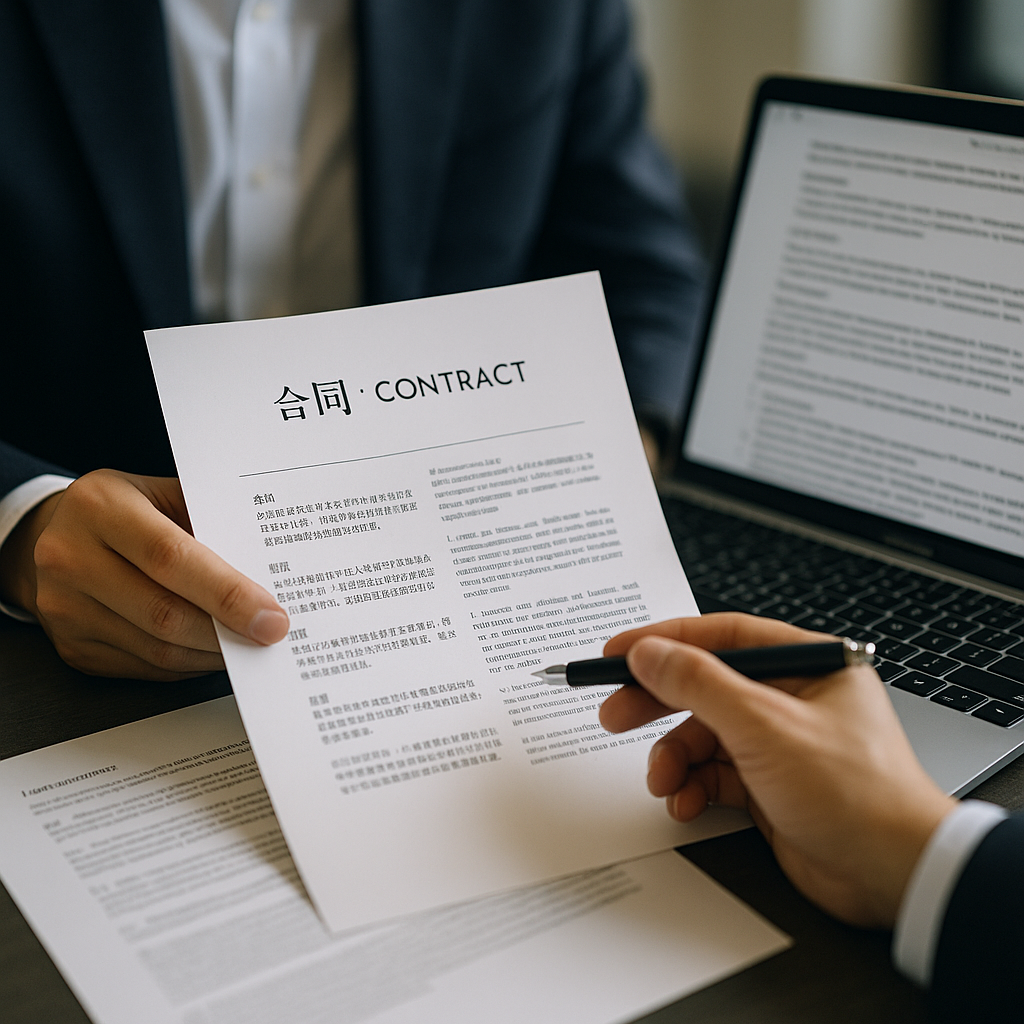
Understanding AI Legal Writing Generators for Chinese Contracts
AI legal writing generators represent a revolutionary shift in how contracts are created, particularly for cross-border work involving Chinese law. These sophisticated tools combine advanced natural language processing with specialized legal knowledge databases to automate and standardize contract creation. Unlike general-purpose AI models, legal writing generators are purpose-built to understand legal terminology, clause structures, and jurisdictional requirements specific to Chinese business law.
At their core, these tools work by analyzing vast libraries of vetted legal documents, identifying patterns in successful contracts, and applying machine learning to generate new agreements that mirror best practices. When you input basic parameters—such as contract type, parties involved, and key terms—the AI draws from its knowledge base to construct a structurally sound document that adheres to Chinese legal standards while maintaining clarity for international parties.
The importance of standardizing language and structure in Chinese contracts cannot be overstated. Chinese contract law requires specific formulations for enforceability. For example, force majeure clauses must reference particular provisions of Chinese law to be valid. Payment terms need precise wording to align with China’s foreign exchange regulations. Termination clauses must follow statutory notice requirements. AI legal writing generators embed this specialized knowledge into every document they create, ensuring that even users unfamiliar with Chinese legal intricacies produce compliant agreements.
For bilingual agreements—essential in most China business scenarios—AI tools offer unique advantages. They maintain consistency between Chinese and English versions, reducing the risk of discrepancies that could be exploited during disputes. Advanced AI understands that legal translation isn’t word-for-word conversion but concept-for-concept mapping across different legal traditions. This capability proves invaluable for expatriates negotiating employment contracts, entrepreneurs establishing joint ventures, or global corporations managing supplier relationships across borders.
Enhancing Drafting Accuracy Through Intelligent Automation
The real power of AI legal writing generators emerges in their ability to dramatically improve accuracy through three key mechanisms: comprehensive clause libraries, automated consistency checks, and proactive risk detection.
Clause libraries serve as the foundation of quality AI-generated contracts. Leading platforms maintain databases of attorney-reviewed provisions covering every conceivable business scenario in China—from intellectual property licensing to distribution agreements, from employment terms to data privacy commitments. When drafting a non-disclosure agreement for a foreign technology company partnering with a Chinese manufacturer, the AI doesn’t create clauses from scratch. Instead, it selects and customizes pre-vetted language that has been refined through thousands of successful agreements. This approach eliminates the common pitfall of reinventing the wheel while ensuring every provision meets current legal standards.
Consider a practical example: When drafting an NDA protecting trade secrets shared with a Chinese business partner, the AI automatically includes provisions addressing China’s Trade Secret Law, which came into effect in 2019. It incorporates specific language about confidentiality obligations that align with Chinese court precedents while remaining comprehensible to Western legal teams. The generator ensures that the definition of “confidential information” is sufficiently broad under Chinese interpretation while avoiding overly vague terms that could be challenged. Without AI assistance, even experienced international attorneys might miss these nuances, potentially leaving their clients’ intellectual property vulnerable.
Automated consistency checks represent another crucial accuracy enhancement. Contracts often reference the same terms, dates, or obligations across multiple sections. Human drafters, especially when working under time pressure, can inadvertently create contradictions—defining “territory” as “Greater China” in one clause but “Mainland China” in another, or specifying different notice periods in related provisions. AI tools scan the entire document instantly, flagging inconsistencies before they become problems. For service level agreements with Chinese vendors, where performance metrics might be referenced in scope definitions, payment terms, and termination provisions, this automated cross-checking ensures perfect alignment throughout the document.
Risk detection capabilities push AI legal writing generators beyond simple automation into genuine value creation. Advanced systems analyze drafted contracts against databases of disputed clauses, regulatory changes, and judicial interpretations. When a foreign business owner inputs terms for a manufacturing agreement, the AI might flag that the proposed warranty period exceeds what Chinese consumer protection laws typically allow, or that the liability cap could be challenged under Chinese judicial precedents. For international legal professionals advising clients on China ventures, these proactive alerts transform AI tools from mere drafting assistants into strategic risk management platforms.
The impact becomes especially clear in complex scenarios. Imagine a European e-commerce company establishing terms of service for Chinese consumers. Chinese consumer protection laws are strict and continuously evolving. An AI generator specifically trained on Chinese legal requirements would automatically include mandatory cooling-off periods for online purchases, ensure compliance with the Personal Information Protection Law regarding data collection, and structure dispute resolution clauses that acknowledge Chinese courts’ jurisdiction while providing mechanisms acceptable to both parties. Manual drafting of such agreements could take days and still miss critical requirements; AI delivers compliant first drafts in minutes.
Best Practices for Implementing AI in Chinese Contract Work
Successfully adopting AI legal writing generators for Chinese contracts requires more than simply using the technology—it demands a thoughtful implementation strategy that maximizes benefits while maintaining quality control.
First, select domain-specific tools designed for Chinese legal work rather than general contract generators. Platforms like iTerms AI Legal Assistant, built on a decade of Chinese legal technology expertise, offer specialized understanding that generic tools cannot match. These purpose-built solutions incorporate nuances of Chinese contract interpretation, understand the relationship between Chinese and international legal concepts, and stay current with regulatory changes across multiple Chinese legal domains. When choosing a tool, verify that it has been trained specifically on Chinese legal documents, tested for accuracy in cross-border scenarios, and regularly updated to reflect new laws and judicial interpretations.
Second, establish rigorous human review protocols. AI should accelerate and enhance the drafting process, not replace human judgment entirely. For foreign business owners without extensive legal background, this means partnering with qualified legal counsel for final review of AI-generated contracts. For international legal professionals, it means using AI to create strong first drafts that free up time for strategic analysis rather than routine drafting. For global corporate clients managing high-volume contract work, it means implementing tiered review systems where AI handles standard agreements while human experts focus on complex or high-value transactions.
A manufacturing company working with Chinese suppliers might establish a workflow where AI generates initial purchase agreements, an in-house legal coordinator reviews for business-specific terms, and outside Chinese legal counsel provides final verification before execution. This layered approach combines AI efficiency with essential human oversight.
Third, maintain and continuously refine a vetted clause library. While AI tools come with extensive built-in libraries, organizations benefit from customizing these resources with clauses specific to their industry and risk profile. A medical device company conducting clinical trials in China needs specialized provisions addressing regulatory approvals, data rights, and liability allocations that differ from standard commercial agreements. By building a curated library of pre-approved clauses, companies ensure AI-generated contracts reflect their unique requirements while maintaining legal compliance.
Fourth, prioritize data security when implementing AI legal tools. Contract drafts often contain confidential business information, trade secrets, and sensitive personal data. Choose AI platforms that offer robust data protection measures—end-to-end encryption, secure cloud storage, compliance with both Chinese data protection laws and international standards like GDPR. Verify that the platform doesn’t use your proprietary contracts to train public models, ensuring your competitive information remains confidential. For enterprises handling particularly sensitive IP or strategic plans, consider solutions offering private deployment options that keep all data within controlled environments.
Finally, invest in training for teams using AI contract generators. Understanding the tool’s capabilities and limitations enables users to formulate effective prompts, recognize when human intervention is needed, and maximize the value AI provides. A legal professional skilled in leveraging AI can accomplish in one hour what might traditionally take a full day, but only if they understand how to guide the tool, interpret its output, and identify areas requiring deeper analysis.
Understanding Limitations and Essential Cautions
While AI legal writing generators offer tremendous benefits, responsible adoption requires clear-eyed recognition of their limitations and careful attention to potential pitfalls.
The most critical limitation is that AI, regardless of sophistication, lacks the contextual judgment that human legal expertise provides. Chinese business law is not merely a collection of rules—it’s a dynamic system shaped by judicial interpretation, enforcement patterns, and business customs that vary by region and industry. An AI tool might generate a technically correct employment contract, but only an experienced practitioner would recognize that certain termination provisions, while legal on paper, could create practical enforcement challenges in specific Chinese provinces or industries with strong labor protections.
Moreover, China’s legal landscape evolves rapidly. New regulations affecting technology companies, data privacy, foreign investment, and cross-border trade emerge regularly. While leading AI platforms update their knowledge bases frequently, there’s always a lag between regulatory changes and AI comprehension. In 2023, when China introduced new rules governing cross-border data transfers, it took time for AI systems to fully incorporate these requirements into their drafting logic. During such transitional periods, human oversight becomes especially critical.
The risk of over-relying on templates represents another significant concern. AI tools excel at creating standard agreements, but business relationships often require custom provisions addressing unique circumstances. A joint venture between a foreign investor and a Chinese state-owned enterprise might need specialized governance structures that standard templates don’t accommodate. A licensing agreement involving emerging technologies might require carefully crafted IP provisions that go beyond typical formulations. In these situations, AI-generated drafts serve as starting points, not finished products.
Compliance complexity adds another layer of caution. Different industries face different regulatory requirements in China. A contract governing pharmaceutical manufacturing must address Good Manufacturing Practice regulations and China’s Drug Administration Law. An agreement for financial services needs provisions complying with China’s Banking and Insurance Regulatory Commission requirements. While AI tools can handle multiple compliance frameworks, users must ensure they’re engaging the appropriate specialized knowledge for their specific context. Misclassifying a contract type or overlooking industry-specific requirements can lead to AI generating documents that miss critical compliance elements.
For international legal professionals advising clients on China matters, the ethical dimension deserves attention. Professional responsibility rules in most jurisdictions require attorneys to provide competent representation. Using AI tools doesn’t diminish this obligation—lawyers remain responsible for the accuracy and appropriateness of contracts they help create, regardless of the technology employed. This means maintaining sufficient understanding of Chinese legal requirements to critically evaluate AI output, rather than blindly accepting it.
The human element remains irreplaceable in addressing what might be called “legal creativity“—finding innovative solutions to novel business challenges, negotiating balanced risk allocations that reflect parties’ relative bargaining power, and crafting provisions that bridge different legal and business cultures. When a European retailer and a Chinese manufacturer need to allocate responsibilities for quality control in ways that satisfy both EU product liability standards and Chinese manufacturing realities, human expertise in cross-cultural negotiation and creative problem-solving becomes essential.
The Future of Contract Drafting: AI as Your Strategic Partner
The emergence of AI legal writing generators doesn’t signal the obsolescence of human legal expertise—it represents an evolution in how that expertise is deployed. For foreign business owners navigating China’s complex legal environment, these tools democratize access to sophisticated legal intelligence that was once accessible only through expensive international law firms. An entrepreneur establishing their first Chinese supplier relationship can now generate compliance-ready contracts that protect their interests while respecting Chinese legal requirements, dramatically lowering barriers to entry.
For international legal professionals, AI transforms the value proposition. Instead of spending hours drafting routine agreements, attorneys can focus on strategic advisory work—helping clients understand Chinese business practices, structuring deals that balance opportunity and risk, and providing the contextual wisdom that only human experience delivers. The efficiency gains translate to better client service at lower costs, making quality Chinese legal support accessible to mid-market companies that previously couldn’t afford it.
Global corporate clients managing extensive China operations gain scalability and consistency. AI-powered contract generation enables legal teams to handle increased volumes without proportional staff increases, while ensuring every agreement meets the same high standards regardless of which team member initiates it. The data generated through AI platforms also provides valuable insights—identifying patterns in negotiated terms, tracking regulatory compliance across contract portfolios, and highlighting areas where standard templates need updating.
This aligns perfectly with iTerms AI Legal Assistant‘s philosophy of serving as a definitive bridge for international businesses and individuals navigating China’s legal landscape. By combining FaDaDa’s decade of trusted Chinese legal technology expertise with cutting-edge AI capabilities, iTerms offers not just a drafting tool but a comprehensive legal intelligence platform. The contract generation capabilities integrate seamlessly with AI-powered legal consultation, providing contextual guidance that helps users understand not just what their contracts say but why specific provisions matter in Chinese legal and business contexts.
The key to success lies in embracing AI as a strategic partner rather than a replacement for human judgment. Use it to accelerate routine work, enhance accuracy through automated checks, and access specialized knowledge efficiently. But pair that technological power with robust human review, ongoing legal education, and qualified expert guidance when stakes are high or circumstances complex.
For anyone working at the intersection of international business and Chinese law—whether you’re establishing manufacturing partnerships, employing staff in China, protecting intellectual property, or managing cross-border transactions—AI legal writing generators represent a powerful resource. They enable you to draft error-free Chinese contracts in minutes rather than days, while maintaining the legal rigor and compliance accuracy that successful China operations demand.
The future of cross-border legal work lies in this hybrid approach: leveraging AI’s speed, consistency, and specialized knowledge while preserving the irreplaceable value of human expertise, cultural understanding, and strategic judgment. As these tools continue evolving, they’ll become increasingly sophisticated in handling complexity and nuance. But the fundamental principle remains constant—technology serves its highest purpose when it amplifies human capability rather than attempting to replace it. In the challenging, opportunity-rich landscape of China business law, that partnership between AI innovation and human wisdom offers the surest path to contracts that are not just legally sound but strategically smart.