
If you’re running a business in China or living as an expatriate, understanding the country’s rapidly evolving AI-powered law enforcement landscape isn’t optional—it’s essential. While Western media often focuses on sensational aspects of Chinese surveillance, the reality on the ground is far more nuanced and directly impacts how you conduct business, manage compliance, and navigate daily life.
China has deployed what is arguably the world’s most extensive machine learning infrastructure for law enforcement. Three major systems form the backbone of this ecosystem: the Integrated Joint Operations Platform (IJOP), Kunpeng AI Police, and Police Cloud. Understanding how these systems operate is crucial for maintaining China business law compliance in an increasingly digitized regulatory environment. These aren’t experimental pilot programs—they’re operational technologies processing millions of data points daily, influencing everything from traffic management to fraud detection.
For foreign business owners establishing operations in China, this technological shift represents both an opportunity and a challenge. On one hand, AI-enabled policing creates a more predictable business environment with enhanced security and streamlined regulatory processes. On the other, it demands a sophisticated understanding of compliance requirements that extend beyond traditional legal frameworks.
Consider this: when you register a new company in China, AI systems immediately begin building a compliance profile based on your business activities, transaction patterns, and regulatory interactions. These systems don’t just react to violations—they predict potential compliance issues before they occur. This fundamental shift from reactive to predictive enforcement changes how international businesses must approach legal risk management.
The IJOP system, initially deployed in Xinjiang, has evolved into a comprehensive predictive policing platform that analyzes patterns across multiple data sources. While its origins have drawn international scrutiny, the underlying technology has expanded to commercial fraud detection and business compliance monitoring in major business hubs like Shanghai, Beijing, and Shenzhen. For companies engaged in cross-border trade or manufacturing partnerships, understanding how these systems categorize and flag business activities is crucial for maintaining operational continuity.
International legal professionals advising clients on China operations need to grasp that traditional legal risk assessment methodologies must now account for algorithmic decision-making processes. The legal landscape isn’t just about understanding statutes and regulations—it’s about understanding how AI systems interpret and apply those rules in real-time scenarios.
The Mechanics Behind AI-Enabled Policing
Machine learning in law enforcement operates through three core capabilities that directly affect business operations: real-time surveillance, facial recognition, and predictive analytics. Understanding these mechanisms helps demystify how the system works and, more importantly, how to ensure your business activities align with compliance expectations.
Real-time surveillance extends far beyond physical CCTV cameras. In China’s major business districts, integrated sensor networks combine video feeds with WiFi signals, mobile phone data, and Internet of Things (IoT) device information. These systems create comprehensive situational awareness that law enforcement uses to identify patterns ranging from traffic violations to unusual business activities.
For global corporate clients, this means that physical security of facilities, employee movement patterns, and visitor management all generate data points that feed into broader compliance monitoring systems. A manufacturing facility in Guangdong Province, for example, might have its waste disposal patterns, employee shift schedules, and supply chain logistics automatically monitored for environmental compliance and labor law adherence.
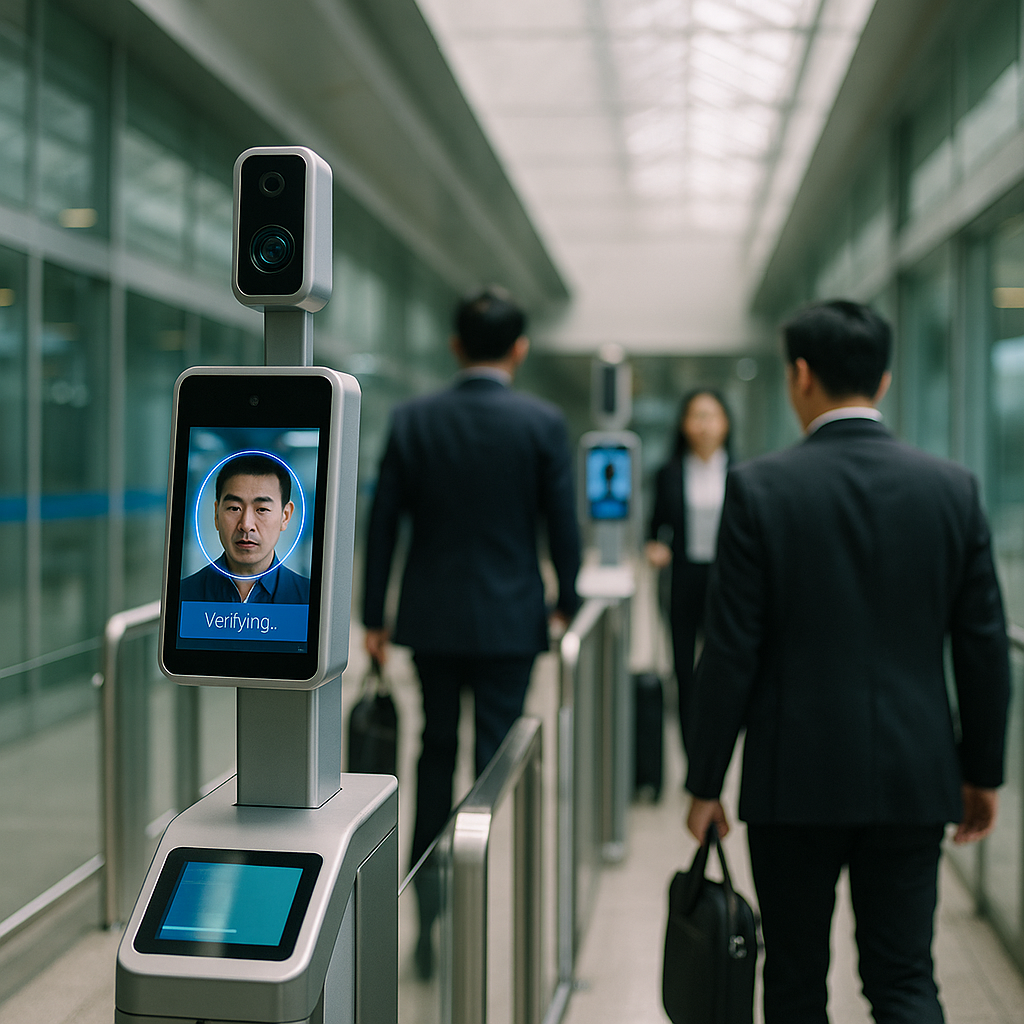
Facial recognition technology in China has achieved accuracy rates exceeding 99% under optimal conditions. Major airports, train stations, and business complexes use these systems not just for security but for streamlined access control and identity verification. Foreign executives frequently moving through China’s transportation hubs benefit from faster processing times, but this convenience comes with comprehensive identity tracking across jurisdictions.
The Kunpeng AI Police system demonstrates how machine learning enhances specific law enforcement functions. This platform specializes in fraud detection, analyzing transaction patterns, corporate registration anomalies, and communication metadata to identify potential economic crimes. For businesses engaged in complex supply chains or financial transactions, Kunpeng’s algorithms continuously assess activities against known fraud patterns.
A practical example: an international trading company importing electronics components sees its payment patterns, shipping schedules, and customs declarations automatically cross-referenced against industry benchmarks and historical fraud cases. If the AI detects deviations—perhaps unusual payment routing or inconsistent shipping manifests—it flags the activity for human review. This doesn’t necessarily indicate wrongdoing, but it does mean companies must maintain meticulous documentation that can withstand algorithmic scrutiny. Implementing legal automation tools can help businesses systematically track and document compliance activities in formats AI systems recognize.
Police Cloud represents the infrastructure layer enabling real-time data sharing across jurisdictions. When a foreign national applies for a business visa extension in Shanghai, Police Cloud instantly accesses their compliance history from previous cities, employment records, residential registration, and any administrative interactions. This seamless information flow eliminates traditional bureaucratic delays but also means that compliance issues in one jurisdiction follow you throughout China.
Predictive analytics capabilities focus on resource efficiency and crime prevention. Machine learning models analyze historical crime data, weather patterns, event schedules, and economic indicators to forecast where and when law enforcement resources should be deployed. For businesses, this translates to more responsive police services during legitimate emergencies but also more thorough monitoring during high-risk periods identified by algorithms.
The Beijing Municipal Public Security Bureau reported that AI-assisted systems helped solve over 10,000 criminal cases in a single year, reducing average case resolution time by 40%. While these statistics highlight law enforcement efficiency, they also underscore the comprehensiveness of data collection and analysis capabilities.
For international legal professionals, the challenge lies in advising clients without complete transparency into algorithmic decision-making processes. Unlike traditional legal procedures where precedent and statutory interpretation provide guidance, AI systems operate within proprietary frameworks that evolve continuously through machine learning. This opacity creates new dimensions of legal uncertainty that require adaptive compliance strategies.
Compliance and Governance in an AI-Enabled Environment
China’s regulatory landscape for AI deployment in law enforcement reflects a balancing act between technological advancement and governance frameworks still under development. The Cybersecurity Law, Data Security Law, and Personal Information Protection Law (PIPL) create baseline requirements that affect how businesses handle data privacy compliance in China, but their application to AI-enabled policing remains an evolving domain with significant implications for businesses.
The PIPL, which took effect in November 2021, establishes principles for personal information processing that theoretically apply to government AI systems. However, national security exemptions and public interest provisions create substantial carve-outs for law enforcement applications. Foreign businesses must navigate this dual reality: their own data processing activities face strict PIPL compliance requirements, while the government systems monitoring their compliance operate under more flexible frameworks.
Privacy concerns extend beyond theoretical civil liberties debates to practical business considerations. When your company’s employee data, customer information, and operational details feed into AI monitoring systems, questions arise about data security, cross-border data flows, and liability for breaches. The challenge intensifies for multinational corporations handling sensitive intellectual property or managing global privacy compliance obligations that may conflict with China’s data localization requirements.
Consider a European pharmaceutical company establishing a research facility in Shanghai. Employee biometric data collected for facility access becomes part of local police databases through integrated security systems. Customer information from clinical trials may be subject to both PIPL requirements and AI-enabled compliance monitoring. Intellectual property related to drug formulations exists within digital systems potentially accessible to state security apparatus under national security provisions.
These aren’t hypothetical scenarios—they represent daily realities for international businesses operating in China. The solution isn’t avoidance but rather sophisticated compliance architecture that acknowledges these complexities while implementing privacy-preserving approaches where possible.
Oversight gaps present another governance challenge. While China has established AI ethics guidelines and convened expert committees, independent oversight mechanisms for law enforcement AI systems remain limited. The National Ethics Committee for the New Generation of Artificial Intelligence issues recommendations, but enforcement mechanisms and transparency requirements lag behind the pace of technological deployment.
For businesses, this governance gap translates to uncertainty about algorithmic bias, appeal procedures when AI systems flag activities, and remediation processes when errors occur. Traditional legal concepts like due process and evidentiary standards must be reinterpreted when algorithms make preliminary determinations about compliance violations or security risks.
Smart businesses are adopting proactive compliance strategies that anticipate AI-enabled scrutiny. This includes maintaining comprehensive digital records that demonstrate compliance intent, implementing automated compliance monitoring systems that mirror government capabilities, and establishing clear procedures for addressing algorithmic flags before they escalate to formal enforcement actions.
The concept of “explainable AI” becomes crucial in this context. When an AI system flags your company’s activities, can you reconstruct the logic behind that determination? Can you provide counter-evidence in formats that AI systems recognize and process? These questions represent new frontiers in legal compliance strategy.
International legal professionals increasingly advise clients to implement “AI-ready” compliance frameworks. For businesses seeking comprehensive guidance, Chinese legal consultation services now offer AI-powered insights that bridge traditional legal expertise with technological compliance requirements. This means structuring business activities and maintaining documentation with the assumption that algorithms will analyze patterns, cross-reference databases, and identify anomalies without human context. The goal isn’t to game the system but to ensure legitimate business activities present clear, consistent patterns that AI systems correctly interpret.
Privacy-preserving approaches within this environment focus on minimizing unnecessary data collection, implementing robust internal access controls, and maintaining separate information silos where legally permissible. For instance, employee personal information needed for payroll processing should be isolated from operational data shared with external partners, reducing exposure if compliance monitoring systems request access.
Global Context and Geopolitical Implications
China’s AI-enabled policing doesn’t exist in isolation—it operates within a broader global competition over AI governance frameworks, surveillance technology exports, and competing visions of the relationship between state power and individual privacy. For businesses operating internationally, understanding these geopolitical dynamics is essential for managing cross-border operations and anticipating regulatory conflicts.
Western democracies have increasingly scrutinized Chinese AI surveillance technologies and the companies that produce them. The United States has imposed export controls on advanced semiconductors and AI chips to limit China’s access to cutting-edge hardware, while the European Union debates regulations that could restrict procurement of Chinese surveillance equipment. These actions reflect concerns about both human rights implications and strategic technology competition.
For global corporate clients with operations spanning multiple jurisdictions, these geopolitical tensions create complex compliance challenges. A multinational manufacturer with facilities in both China and the United States must navigate divergent expectations: Chinese authorities expect cooperation with local AI-enabled compliance monitoring, while U.S. regulators may scrutinize those same data-sharing arrangements under export control or national security frameworks. Understanding China technology transfer regulations becomes essential when AI systems process data that may contain proprietary information or dual-use technology.
The practical impact extends to supply chain management, technology procurement, and partnership structures. Companies must assess whether vendors providing AI-enabled security or compliance solutions could trigger sanctions exposure in other markets. This calculus becomes particularly complex for technology companies whose products might be incorporated into law enforcement systems.
International regulatory competition is driving divergent approaches to AI governance. While China emphasizes state-directed AI development with strong government oversight, the European Union focuses on rights-based frameworks limiting certain AI applications, and the United States adopts a more fragmented, sector-specific approach. Businesses operating across these jurisdictions face the challenge of compliance with potentially contradictory requirements.
China’s Belt and Road Initiative includes significant technology infrastructure components, with AI surveillance systems being exported to partner countries. For businesses operating in these markets, understanding how Chinese-developed AI policing systems function domestically provides insights into governance challenges they may encounter internationally.
Risk management strategies must account for these geopolitical realities. This includes conducting regular assessments of how evolving international sanctions might affect technology partnerships, maintaining operational flexibility to adapt to changing regulatory requirements, and developing scenario plans for potential disruptions in cross-border data flows or technology supply chains.
The foreign business community in China increasingly recognizes that legal compliance extends beyond domestic Chinese law to encompass extraterritorial regulations from home countries concerned about technology transfer, data security, and human rights due diligence. This multi-jurisdictional compliance environment requires sophisticated legal guidance that bridges different regulatory philosophies and enforcement priorities.
Future Directions in AI Governance
The trajectory of AI in law enforcement points toward increasing sophistication, broader deployment, and—hopefully—more robust governance frameworks that balance innovation with accountability. For businesses planning long-term China strategies, anticipating these developments is crucial for sustainable operations.
China’s 14th Five-Year Plan emphasizes AI development as a strategic priority, with specific targets for integrating AI across government services, including law enforcement. This policy direction signals continued investment in AI-enabled policing capabilities, likely incorporating emerging technologies like emotion recognition, gait analysis, and advanced behavioral prediction models.
The emphasis on “trustworthy AI” and “responsible AI” within Chinese policy documents suggests growing awareness of governance challenges. Recent regulations requiring AI content labeling, algorithmic transparency reports from platform companies, and restrictions on certain AI applications indicate evolving regulatory thinking. The question is whether these principles will extend to law enforcement AI systems with the same rigor applied to commercial applications.
International businesses should anticipate more comprehensive AI-specific regulations that clarify compliance requirements, establish appeal procedures, and potentially create transparency obligations for certain government AI systems. The Cyberspace Administration of China has signaled interest in developing industry-specific AI regulations, which could provide clearer frameworks for how businesses interact with AI-enabled enforcement systems.
Safety and accountability frameworks represent critical areas for development. As AI systems take on more consequential decision-making roles in law enforcement—from determining visa approvals to flagging potential regulatory violations—the need for robust testing, validation, and error correction mechanisms becomes paramount. Forward-thinking businesses should advocate for clear standards that ensure AI systems are accurate, unbiased, and subject to meaningful oversight.
The balance between technological innovation and human oversight remains fundamental. While AI can process vast datasets and identify patterns beyond human capability, critical decisions affecting businesses and individuals should retain human judgment as a final safeguard. This principle, increasingly recognized in international AI ethics frameworks, needs consistent application in law enforcement contexts.
For foreign business owners, expatriates, international legal professionals, and global corporate clients, the path forward requires engagement rather than resistance. Understanding how machine learning in law enforcement operates, implementing AI-aware compliance strategies, and contributing to governance discussions helps shape an environment where technological innovation supports legitimate business activities while respecting fundamental rights.
At iTerms AI Legal Assistant, we recognize that navigating China’s AI-enabled legal landscape requires more than traditional legal knowledge—it demands technological sophistication, cross-cultural understanding, and practical experience with how these systems operate in real-world contexts. Our AI-powered platform bridges this gap, providing international businesses with the tools and insights needed to succeed in an environment where machine learning increasingly mediates the relationship between business operations and regulatory compliance.
The reality is that AI in law enforcement isn’t going away—it’s expanding globally with different governance models and implementation approaches. China’s experience, whatever its controversies, provides valuable lessons about the intersection of technology, law, and governance that will shape business environments worldwide. Understanding these dynamics today prepares you for the compliance challenges of tomorrow, wherever your business operates.
The question isn’t whether machine learning will reshape law enforcement and regulatory compliance—it already has. The question is whether businesses will adapt their compliance strategies, legal frameworks, and operational practices to succeed in this new reality. Those who do will find opportunities in a more predictable, efficient, and secure business environment. Those who don’t risk being caught off guard by a legal landscape that increasingly operates at machine speed.