
China’s legal landscape is evolving at breakneck speed, and traditional compliance strategies simply can’t keep up. Machine learning is no longer a futuristic concept—it’s transforming how businesses interpret Chinese regulations, maintain compliance, and navigate the complex web of provincial, municipal, and national laws. For international businesses operating in or trading with China, understanding how AI is reshaping legal interpretation isn’t just an advantage; it’s becoming essential for survival.
The Chinese regulatory environment presents unique challenges that make it particularly suited for AI-powered solutions. Laws are frequently updated, enforcement varies significantly by region, and the sheer volume of regulations across sectors like data privacy, e-commerce, and manufacturing makes manual compliance tracking nearly impossible. Machine learning offers a way forward, but only when implemented with careful consideration of China’s specific legal framework and cultural context.
How Machine Learning Is Revolutionizing Legal Interpretation in China
Machine learning tools are fundamentally changing how legal professionals analyze Chinese statutes, regulations, and case law. These AI systems can process millions of legal documents, identify patterns, and extract relevant precedents in seconds—a task that would take human lawyers weeks or months to complete manually.
Consider the Data Security Law that took effect in 2021. This comprehensive legislation touches everything from cross-border data transfers to critical information infrastructure. A machine learning system can analyze the law alongside related regulations like the Cybersecurity Law and Personal Information Protection Law, identifying overlapping requirements and potential compliance gaps specific to your industry.
The Beijing Internet Court has been particularly innovative in applying AI to legal analysis. Their AI-assisted systems help judges review evidence, identify relevant case law, and ensure consistency in rulings—especially in rapidly evolving areas like intellectual property rights for AI-generated content. In one landmark case, Li v. Liu, the court used AI tools to analyze the originality criteria for AI-generated works, setting important precedents for copyright law.
However, the human element remains irreplaceable. Machine learning excels at pattern recognition and data processing, but legal interpretation requires understanding context, intent, and the nuances of how Chinese courts actually apply laws in practice. A 2023 case involving AI-generated images demonstrated this perfectly. The court determined that while an AI model itself cannot be an author under Chinese copyright law, the human who configured and guided the AI’s creative process could claim authorship—a nuanced distinction that pure algorithms might miss.
For foreign businesses, this combination of machine learning efficiency and human expertise creates powerful advantages. When your team needs to understand how China’s Algorithm Recommendation Regulation affects your e-commerce platform’s recommendation engine, an AI system can instantly pull relevant clauses, related enforcement actions, and comparable cases. But experienced legal professionals must interpret those findings within the context of your specific business operations and risk tolerance.
The speed advantage is particularly crucial given how quickly Chinese regulations evolve. When the Cyberspace Administration of China updates content labeling requirements for AI services—as they did with recent deepfake and chatbot regulations—machine learning systems can immediately flag affected areas of your compliance program and suggest necessary adjustments. This real-time analysis capability transforms compliance from a reactive scramble into a proactive management process.
Compliance Automation: Your 24/7 Regulatory Watchdog
Beyond interpretation, machine learning excels at continuous compliance monitoring—a critical capability in China’s dynamic regulatory environment. Modern AI systems can track regulatory changes across multiple government agencies, analyze their impact on your business operations, and alert you to potential compliance risks before they become enforcement actions.
Take China’s evolving AI governance framework as an example. The country has implemented a multi-level system of laws and regulations covering data compliance, algorithm compliance, cybersecurity, and ethics. The Interim AI Measures, China’s first specific administrative regulation on generative AI services, requires security reviews before release, algorithmic transparency, and extensive user protection measures. A machine learning compliance system can monitor your AI-powered services against these requirements in real-time, flagging potential issues like:
- Content that might trigger mandatory labeling requirements under the deepfake and synthetic media regulations
- Algorithm behavior that could violate recommendation algorithm transparency rules
- Data processing activities that might conflict with cross-border data transfer restrictions
- User interaction patterns that suggest inadequate content filtering
The practical impact for foreign manufacturers operating in China is substantial. Imagine you’re managing a smart factory that uses AI for quality control and supply chain optimization. Your machine learning compliance system continuously monitors:
- Changes to data localization requirements that might affect your cloud computing arrangements
- Updates to equipment safety standards that could impact your automated production lines
- New labor regulations affecting how you deploy AI in employee management
- Evolving environmental compliance requirements for your manufacturing processes
When Shenzhen updates its municipal regulations on industrial AI applications, your system doesn’t just notify you—it analyzes how those changes interact with existing national laws, identifies specific compliance gaps in your current operations, and prioritizes action items based on enforcement risk.
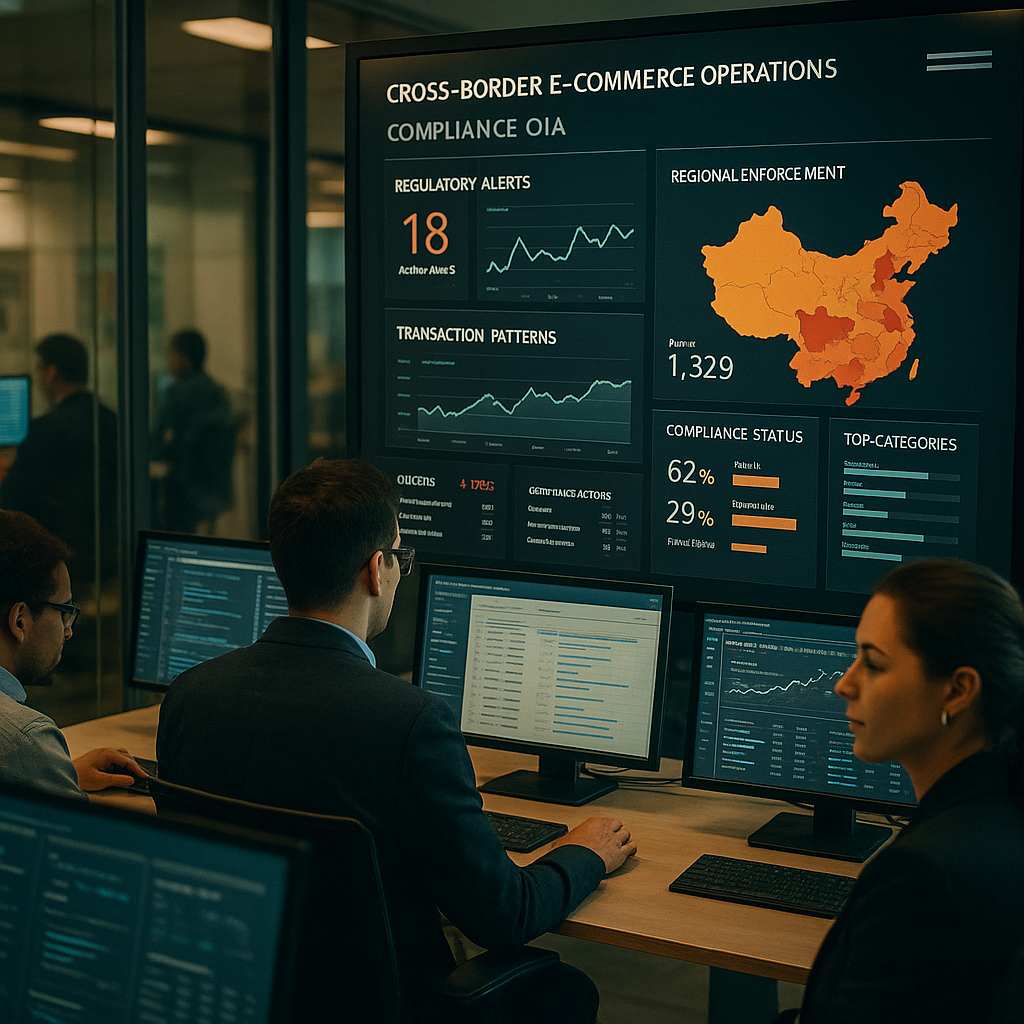
This automated vigilance is particularly valuable given China’s regional enforcement variability. The same national regulation might be interpreted and enforced differently in Shanghai versus Chengdu. Machine learning systems can track these regional patterns, helping you understand not just what the law says, but how local authorities actually apply it.
For companies engaged in cross-border e-commerce, compliance automation addresses the particularly complex intersection of Chinese consumer protection laws, payment regulations, customs requirements, and platform governance rules. Your AI system can monitor transaction patterns for potential regulatory red flags, ensuring your customer communications comply with advertising laws, and verifying that your return and refund processes meet Chinese consumer protection standards.
The Reality Check: Challenges That Can’t Be Ignored
Despite its transformative potential, machine learning in Chinese legal compliance faces significant challenges that international businesses must understand and address. The most fundamental issue is data bias. Machine learning models are only as good as the data they’re trained on, and if that data reflects historical biases or incomplete regulatory coverage, the AI’s recommendations could lead you astray.
China’s AI regulations explicitly recognize this concern. The Interim AI Measures requires providers to ensure training data authenticity and prevent discrimination in algorithm design. For foreign businesses, this creates a double-edged challenge: you must ensure your compliance AI isn’t biased, while simultaneously complying with regulations designed to prevent AI bias in your products and services.
Explainability presents another crucial challenge. Chinese courts and regulators increasingly demand transparency in AI decision-making. When your machine learning system flags a compliance risk or recommends a particular contract clause, can you explain why? This isn’t just about regulatory compliance—it’s about building trust with Chinese business partners and government authorities who may be skeptical of “black box” AI systems.
The Beijing Internet Court has been particularly focused on this issue, requiring clear documentation of how AI systems reach legal conclusions. In copyright cases involving AI-generated content, courts scrutinize not just the output but the entire creative process, including how the AI was configured and what instructions it received. This level of transparency must extend to compliance AI as well.
Data regulations create perhaps the most complex challenge. China’s Data Security Law, Cybersecurity Law, and Personal Information Protection Law impose strict requirements on data collection, storage, and processing—including data used to train machine learning models. If your compliance AI processes sensitive business information or personal data, you must ensure:
- Data is stored within China’s borders when required by law
- Cross-border data transfers comply with security assessment requirements
- Personal information processing has proper legal basis and user consent
- Data security measures meet Level-3 protection standards or higher for critical systems
The enforcement landscape adds another layer of complexity. Despite extensive regulations, enforcement remains inconsistent across regions and sectors. A machine learning system trained primarily on Beijing court decisions might poorly predict regulatory outcomes in Guangzhou. Your AI must account for regional enforcement patterns, local policy priorities, and the practical realities of how different government agencies approach compliance issues.
For companies dealing with emerging technologies, regulatory uncertainty compounds these challenges. China’s approach to AI governance is evolving rapidly, with new rules frequently announced. Recent regulations on generative AI require extensive content labeling, chatbot filtering, and pre-release security reviews. Your compliance strategy must be agile enough to adapt as these frameworks mature, and your machine learning systems must continuously update to reflect new legal interpretations and enforcement patterns.
The DeepSeek case illustrates these challenges perfectly. As Chinese AI models gain global prominence, they face regulatory scrutiny on multiple fronts: data security concerns, potential threats to information confidentiality, and compliance with both Chinese and international regulations. Foreign businesses using Chinese AI tools—or offering AI services in China—must navigate this complex, sometimes contradictory regulatory landscape.
Best Practices: Building a Robust AI-Enhanced Compliance Strategy
Successfully integrating machine learning into your Chinese legal compliance strategy requires more than just implementing technology—it demands a thoughtful approach that combines AI capabilities with human expertise and robust governance.
Start with comprehensive data governance. Your machine learning compliance tools will only be effective if they’re working with accurate, up-to-date information. This means establishing processes to:
- Continuously update your regulatory database with changes from national, provincial, and municipal authorities
- Validate AI-generated legal interpretations against expert human review
- Document the reasoning behind compliance decisions for regulatory inquiries
- Maintain audit trails showing how your AI systems reached specific conclusions
Implement continuous compliance monitoring rather than periodic reviews. China’s regulatory environment changes too quickly for quarterly compliance audits to be sufficient. Your machine learning systems should operate as real-time watchdogs, constantly scanning for regulatory updates, enforcement actions, and emerging compliance risks. When the Cyberspace Administration of China updates algorithm governance requirements, you should know within hours, not weeks.
Develop strong partnerships between your AI systems and legal experts who understand Chinese law. Machine learning excels at processing information and identifying patterns, but human judgment remains essential for:
- Interpreting how regulations apply to your specific business context
- Understanding the practical enforcement priorities of different government agencies
- Navigating the cultural and political considerations that influence Chinese legal outcomes
- Building relationships with regulators and demonstrating good-faith compliance efforts
Create industry-specific compliance protocols. Generic AI legal tools often miss the nuances of sector-specific regulations. A manufacturing company’s compliance needs differ dramatically from an e-commerce platform’s requirements. Your machine learning systems should be configured with deep knowledge of your industry’s regulatory landscape, including:
- Sector-specific safety and quality standards
- Industry association guidelines and best practices
- Historical enforcement patterns in your sector
- Common compliance pitfalls that regulators scrutinize
Maintain regulatory flexibility through modular compliance systems. Rather than building one monolithic AI compliance tool, develop interconnected modules that can be updated independently. When China introduces new regulations on facial recognition technology, you should be able to update that specific compliance module without rebuilding your entire system.
Invest in bilingual legal capabilities. Chinese regulations are published in Chinese, and subtle translation nuances can significantly affect legal interpretation. Your machine learning systems must handle authentic Chinese legal language, not just English translations. At iTerms, we’ve built advanced natural language understanding that bridges Chinese-English legal concepts, ensuring nothing gets lost in translation. At iTerms, we’ve built advanced natural language understanding that bridges Chinese-English legal concepts, ensuring nothing gets lost in translation.
The practical reality is that China’s AI compliance landscape will continue evolving. The country is actively building a powerful regulatory framework with enforceable rules, technical standards, and labeling requirements designed to push innovation while maintaining control. Your compliance strategy must be equally dynamic, continuously adapting to new requirements while maintaining operational efficiency.
The Future: What’s Coming in AI Governance and Compliance
China’s approach to AI governance is entering a new phase of standardization and institutionalization. The government is moving beyond broad regulatory principles toward detailed, enforceable technical standards that will shape how businesses deploy AI systems and maintain compliance.
Expect increasingly sophisticated risk assessment frameworks. China’s AI governance revolves around evaluating and mitigating risks at multiple levels—from individual algorithms to entire AI ecosystems. Future regulations will likely introduce more granular risk categories, requiring businesses to conduct detailed assessments of their AI systems’ potential impacts on national security, social stability, and individual rights.
Algorithmic transparency requirements will expand. Current regulations already mandate disclosure of recommendation algorithm principles and clear labeling of AI-generated content. Future rules will likely require deeper explanations of how AI systems make decisions, particularly in sensitive areas like credit scoring, employment, and content moderation.
Cross-border data governance will become more complex, not less. As Chinese AI companies expand globally and international businesses deploy AI in China, regulators will grapple with how to balance data security concerns with innovation needs. The DeepSeek situation—where a Chinese AI model faces scrutiny over data security and compliance—previews the regulatory challenges ahead.
Industry-specific AI standards will proliferate. Rather than one-size-fits-all regulations, expect detailed technical standards for AI applications in specific sectors: manufacturing, healthcare, financial services, autonomous vehicles, and more. Each industry will face tailored compliance requirements reflecting its unique risks and regulatory priorities.
For international businesses, the imperative is clear: your compliance strategy must evolve from reactive to predictive. Machine learning tools that merely track regulatory changes aren’t enough—you need AI systems that anticipate regulatory trends, identify emerging compliance risks, and recommend proactive measures before issues become enforcement actions.
The integration of AI into China’s judicial system will continue deepening. Courts are already using AI for case analysis, evidence review, and legal research. As these systems mature, they’ll influence how laws are interpreted and applied, creating feedback loops between AI-assisted legal interpretation and regulatory development.
China’s AI industrial policy will accelerate this evolution. With substantial government support for AI research, talent development, and computational infrastructure, China is positioning itself as a global AI leader. This ambition shapes regulatory approaches—balancing innovation promotion with risk management in ways that foreign businesses must understand and navigate.
The fundamental truth is that navigating Chinese legal compliance without AI capabilities is becoming increasingly untenable. The regulatory complexity, enforcement variability, and rapid pace of change exceed human capacity for manual monitoring. But AI alone isn’t the answer—you need machine learning systems built specifically for Chinese legal complexity, combined with deep human expertise that understands how regulations actually work in practice.
At iTerms, we’ve built our platform on this principle: advanced AI technology grounded in a decade of Chinese legal experience. Our machine learning systems don’t just read regulations—they understand the practical realities of compliance in China’s unique legal and business environment. From contract intelligence that ensures your agreements comply with Chinese law to real-time legal consultation that provides scenario-specific guidance, we bridge the gap between AI capability and practical Chinese legal knowledge. From contract intelligence that ensures your agreements comply with Chinese law to real-time legal consultation that provides scenario-specific guidance, we bridge the gap between AI capability and practical Chinese legal knowledge.
The question isn’t whether to upgrade your compliance strategy with AI—it’s whether you can afford to wait. Every day without machine learning capabilities is a day of mounting compliance risk, missed opportunities, and competitive disadvantage. China’s legal landscape isn’t slowing down, and your compliance strategy shouldn’t either.