
The legal landscape for international business in China has transformed dramatically. Gone are the days when foreign business owners spent weeks navigating complex contract negotiations, struggling with language barriers, and worrying about compliance gaps. Today, AI chatbots designed specifically for legal document management are stepping in as indispensable partners—offering instant guidance, bilingual support, and precision that would have seemed impossible just a few years ago.
For expatriates settling in China, international legal professionals advising clients on Chinese matters, and global corporations coordinating cross-border operations, these intelligent assistants have become more than convenient tools. They represent a fundamental shift in how legal work gets done. With China’s unique regulatory environment and the constant evolution of its commercial laws, having an AI-powered assistant that understands both Western legal frameworks and Chinese requirements isn’t just helpful—it’s essential.
Understanding What AI Chatbots Bring to Legal Document Work
AI chatbots for legal documents do far more than answer basic questions. These sophisticated systems can draft complete contracts from scratch, review existing agreements for potential risks, and process documents in both English and Chinese with remarkable accuracy. When a manufacturer in Germany needs to create a supply agreement with a Chinese factory, or when an Australian tech company requires an employment contract compliant with Chinese labor laws, these chatbots step in to bridge the gap.
The real power lies in their ability to align documents with Chinese regulations automatically. They understand that a standard Western employment contract won’t hold up in a Chinese court, and they know which clauses need adjustment to meet local compliance standards. They can flag potential issues before they become costly problems—like identifying when intellectual property protections need strengthening or when payment terms might conflict with Chinese foreign exchange controls.
For businesses working across borders, the bilingual processing capability solves one of the most persistent challenges in international commerce. These systems don’t just translate words; they translate legal concepts. They recognize that certain Western legal principles have no direct equivalent in Chinese law and vice versa, adjusting contract language accordingly to ensure enforceability in Chinese jurisdictions.
Real-World Players Changing the Game
Several notable platforms have emerged as leaders in this space, each bringing unique strengths to contract workflow automation. Inhouse, for instance, has built a reputation for helping legal teams manage high volumes of contracts with consistency and speed. Their AI engine learns from every document it processes, becoming smarter about company-specific preferences and industry nuances over time.
LawDroid Copilot takes a different approach, focusing on conversational interaction that feels natural to legal professionals who might be skeptical of automation. A lawyer in London representing a client entering the Chinese market can ask LawDroid detailed questions about specific contract provisions, receiving contextual answers that consider both UK and Chinese legal perspectives.
Consider the case of a mid-sized American import-export company that began using AI chatbots for their China contracts. Previously, they relied on expensive international law firms for every supplier agreement, facing turnaround times of two to three weeks and costs exceeding $5,000 per contract. After implementing a legal AI chatbot system, they reduced drafting time to under two hours and cut costs by 80%. More importantly, they caught compliance issues that human reviewers had previously missed, avoiding potential penalties that could have reached hundreds of thousands of dollars.
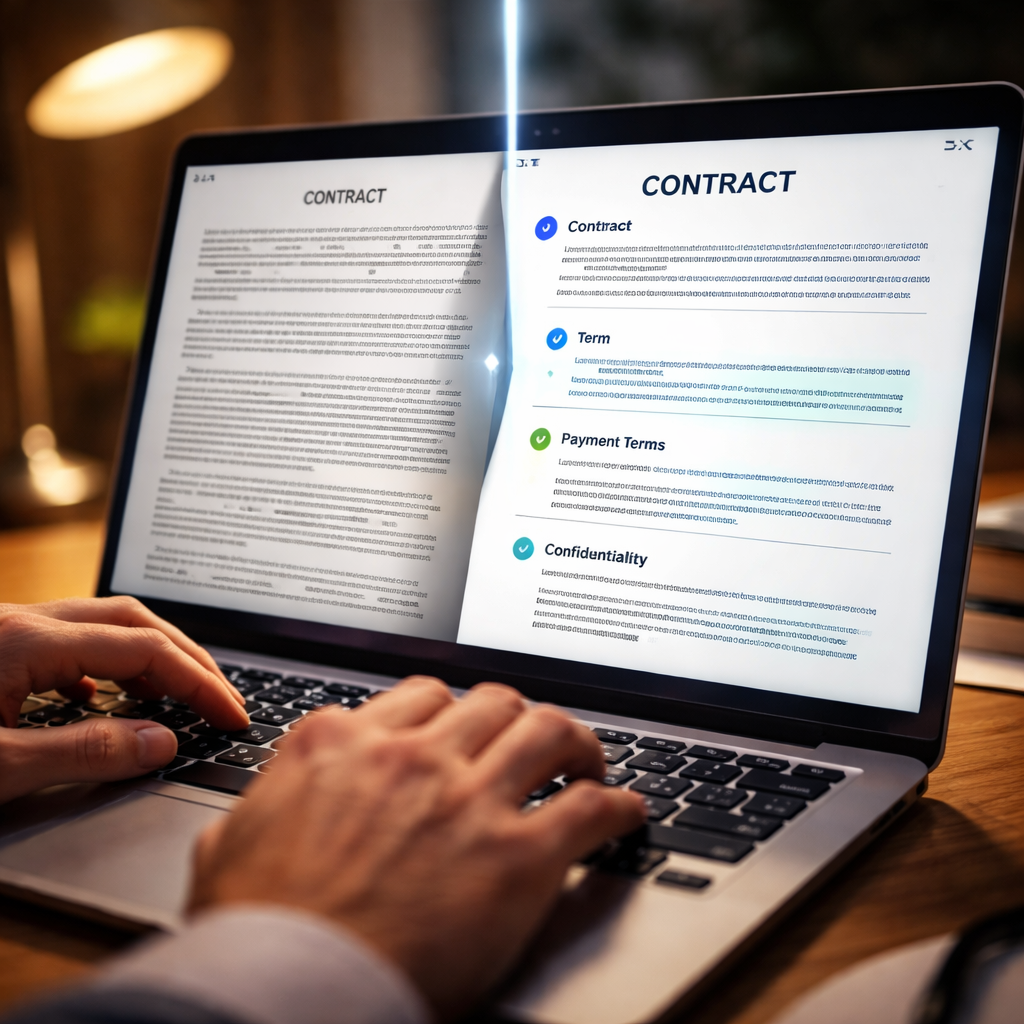
These platforms excel at facilitating cross-border collaboration. When teams in Shanghai, Los Angeles, and Frankfurt need to coordinate on a joint venture agreement, the AI chatbot serves as a common reference point—ensuring everyone works from the same compliance baseline while accommodating different jurisdictional requirements. It eliminates the confusion that often arises when legal teams from different countries interpret contract language differently.
Tangible Benefits for China Contract Teams
Time savings stand out as the most immediate advantage. What once took days or weeks now happens in hours. A contract that required multiple rounds of email exchanges between international counsel, lengthy video calls across time zones, and endless redlining can now reach a solid first draft through an AI chatbot conversation lasting fifteen minutes. This acceleration matters enormously in fast-moving business environments where delays mean lost opportunities.
Consistency improves dramatically when AI chatbots handle routine contract work. Every Non-Disclosure Agreement follows the same structure. Every purchase order includes the same critical protections. This standardization reduces risk significantly—companies no longer worry about whether the junior associate who drafted the contract remembered to include the arbitration clause or properly defined “confidential information” under Chinese standards.
Risk detection capabilities have evolved to impressive levels. Modern AI chatbots trained on Chinese legal requirements can identify subtle compliance issues that even experienced lawyers might overlook. They catch when a liability cap violates Chinese consumer protection laws, flag when termination provisions conflict with Chinese employment regulations, and notice when intellectual property clauses lack enforceability in Chinese courts.
The multilingual support transforms international negotiations. A French company negotiating with a Chinese partner no longer faces the anxiety of whether critical terms got lost in translation. The AI chatbot ensures that both the English and Chinese versions of the contract carry identical legal weight and meaning, while explaining any concepts that don’t translate directly between legal systems. This clarity accelerates deal-making and builds trust between parties.
For global corporate clients managing hundreds of contracts across Chinese operations, these systems provide centralized oversight. Legal teams can track which agreements are up for renewal, identify patterns in negotiation bottlenecks, and ensure corporate standards get applied consistently across all Chinese subsidiaries. The visibility alone prevents countless compliance headaches.
Navigating Challenges and Managing Risk
No technology comes without complications, and AI chatbots for legal work require careful handling. Accuracy remains paramount—a single mistake in a contract can create liability exposure worth millions. Companies must recognize that these tools, however sophisticated, still require human oversight. A chatbot might draft an excellent initial agreement, but a qualified legal professional should always review critical provisions, especially in high-stakes transactions.
Jurisdiction-specific compliance presents ongoing challenges. Chinese law evolves rapidly, with new regulations emerging regularly across sectors from data privacy to cross-border payments to technology transfer. AI systems must update continuously to reflect these changes, and companies using them need assurance that their chatbot partner maintains current legal knowledge. This makes choosing a provider with deep China expertise and strong update protocols essential.
Data privacy and security concerns loom large. When companies input sensitive contract information into third-party AI tools, they create potential vulnerabilities. Robust data protection measures become non-negotiable. Encryption, secure storage, access controls, and clear data retention policies must be in place. For businesses subject to China’s Personal Information Protection Law or similar regulations, understanding exactly how their AI chatbot provider handles data is critical.
Governance structures need establishment from the start. Which employees can access the AI chatbot? What types of contracts can they generate without legal review? When must they escalate to human counsel? Clear protocols prevent well-meaning staff from creating legally problematic documents. Companies should document their governance approach and train users thoroughly on both capabilities and limitations.
Implementation and Governance Considerations
Successfully integrating AI chatbots into contract workflows requires strategic planning. Companies benefit from starting with defined contract playbooks—standardized templates and clause libraries that reflect their specific risk tolerance and operational requirements. The AI chatbot then works within these guardrails, creating consistency while allowing flexibility where needed.
Risk management protocols should specify which contract types require additional human review. High-value agreements, contracts involving novel legal issues, and documents dealing with sensitive intellectual property might warrant extra scrutiny regardless of how sophisticated the AI system is. This layered approach balances efficiency gains with risk management.
User training makes or breaks implementation success. Legal teams, procurement staff, and business managers who will interact with the AI chatbot need clear guidance on its proper use. Training should cover not just how to operate the system, but when to trust its output and when to seek additional expertise. Understanding the chatbot’s strengths and limitations prevents both over-reliance and under-utilization.
Integration with existing systems amplifies effectiveness. When the AI chatbot connects to document management systems, CRM platforms, and contract lifecycle management tools, it becomes part of a seamless workflow rather than a standalone solution. Data flows automatically, reducing manual entry and creating comprehensive audit trails that support compliance documentation.
Practical Use-Case Scenarios in China
Consider a European pharmaceutical company establishing Chinese operations. They need employment contracts compliant with Chinese labor law, facility lease agreements, supplier contracts for raw materials, and distribution agreements for finished products. Their AI chatbot generates customized drafts for each scenario, incorporating relevant Chinese regulations while maintaining consistency with global corporate standards. What would have required months of expensive legal work happens in days, enabling faster market entry.
A technology startup from Silicon Valley seeking Chinese manufacturing partners faces NDA requirements, prototype development agreements, and eventually large-scale production contracts. Their AI chatbot walks them through each stage, ensuring intellectual property protections align with Chinese patent and trade secret laws. The system flags potential risks around technology transfer restrictions and suggests alternative structuring that protects their innovations while enabling the partnership.
For sector-specific compliance screening, AI chatbots prove invaluable. A financial services firm entering China’s market must ensure every contract complies with banking regulations, anti-money laundering requirements, and data localization rules. The chatbot automatically screens drafts against these regulatory frameworks, identifying issues before contracts get signed. This proactive compliance prevents regulatory sanctions and protects the company’s reputation.
Individual expatriates benefit significantly as well. An American executive relocating to Shanghai for a three-year assignment needs her employment contract reviewed for compliance with Chinese tax laws and social insurance requirements. The AI chatbot analyzes her draft contract, explains implications she hadn’t considered, and suggests modifications that protect her interests while satisfying Chinese regulations. This personalized guidance provides peace of mind during a major life transition.
The Future of AI Chatbots in China’s Legal Ecosystem
The trajectory points toward even more sophisticated capabilities. Bilingual contract tooling will advance beyond simple translation to capture cultural business nuances that affect enforceability. Future systems might recognize that certain negotiation approaches work better in Chinese business contexts and suggest communication strategies accordingly.
Public-facing legal services will expand access to justice. Smaller businesses that couldn’t afford comprehensive legal counsel will gain professional-quality guidance through AI chatbots. This democratization of legal knowledge supports entrepreneurship and cross-border commerce by lowering barriers to entry in the Chinese market.
Regulatory alignment will deepen as authorities recognize AI’s role in promoting compliance. We may see government-approved or certified AI legal assistants that offer standardized guidance on complex regulations. Such collaboration between technology providers and regulatory bodies could simplify compliance while maintaining legal rigor.
The integration of AI chatbots with broader business systems will create end-to-end automation. Imagine a purchase order automatically generating a compliant supply contract, routing it for electronic signature through FaDaDa’s trusted platform, and updating financial systems upon execution—all without manual intervention. This seamless flow represents the future of contract management.
Your Partner in China’s Legal Landscape
At iTerms, we’ve built our AI-powered legal assistant specifically for the challenges international businesses and individuals face in China. Drawing on FaDaDa’s decade of experience serving over 100,000 global clients, we understand that navigating Chinese legal requirements demands more than generic AI tools. It requires deep expertise in Chinese law, genuine bilingual capability, and practical business focus.
Our Contract Intelligence Center exemplifies this approach. Whether you need AI-powered drafting from scratch, template-based creation from our library of 10,000+ attorney-reviewed contracts, or enhancement of your existing drafts, we ensure China compliance at every step. Combined with our AI Legal Consultation Engine offering real-time scenario-based guidance, we provide the complete support global teams need.
The legal landscape connecting international business with China will only grow more complex. Having an intelligent assistant that truly understands both worlds—that can bridge Western and Chinese legal concepts, translate not just language but legal meaning, and provide practical guidance tailored to your specific situation—transforms challenges into opportunities.
This is the revolution in China contract work. AI chatbots aren’t replacing legal professionals; they’re empowering them with tools that make sophisticated legal protection accessible, affordable, and efficient. For businesses and individuals engaging with China, embracing this technology means competing more effectively, managing risk more intelligently, and moving forward with confidence.